There’s a Monster in the Kitchen – written by Patricia Strauch, illustrated by Natalia Aguerre, translated from the Spanish by Kit Maude
Tapioca Stories, 2023
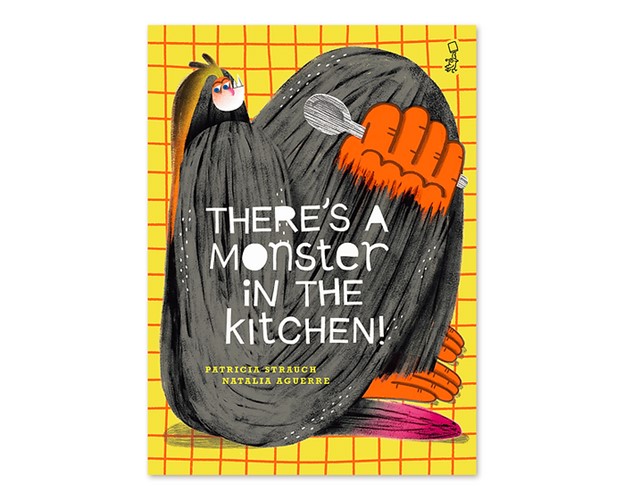
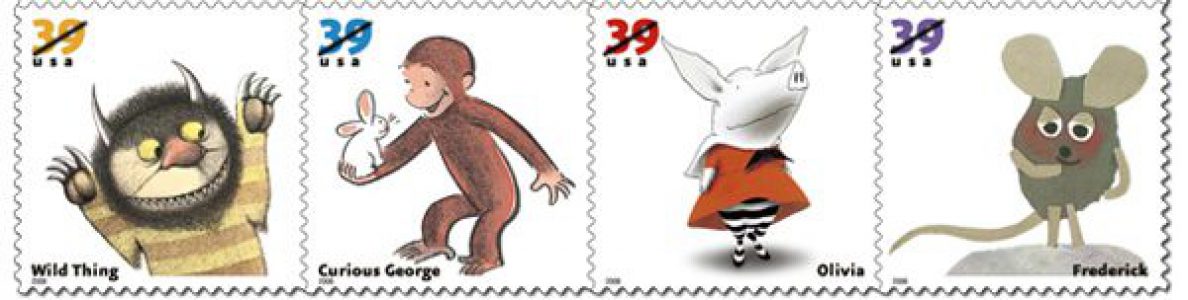
There are a legion of children’s books exploring the question of what constitutes a monster. From the many versions of Beauty and the Beast, to stories about the legendary golem of Jewish legend, to Sendak’s friendly but frightening wild things, and even lovable Grover’s The Monster at the End of This Book, authors have raised some intriguing possibilities. Can a seemingly hideous being be nothing worse than misunderstood? Might he be just as scared of you as you are of him? With a text that pushes boundaries and pictures which are ghastly and lovable at the same time, There’s a Monster in the Kitchen! Offers a new perspective on an old story.
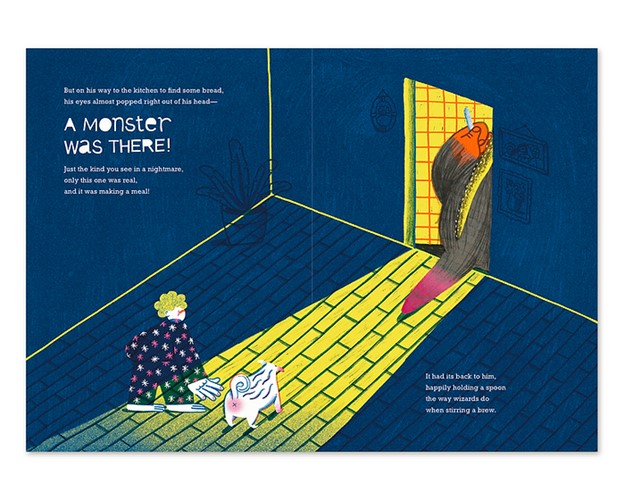
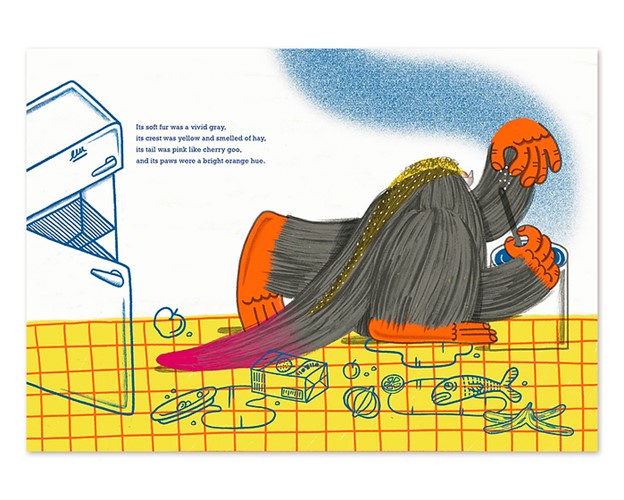
A little boy, Matías, wakes up one morning ready for breakfast. His bedroom is cluttered with the contradictions of childhood, with a comforting blanket and friendly artwork on the walls disturbed by curtains decorated with spiders and an alarming toy featuring a human eyeball. Right away, the reader is alerted that Matías is about to confront some variety of terror, but also that, like many children, his own imaginings have primed him for the experience. When he enters the kitchen, an ominously empty refrigerator, and the orderly countertop drawn on a grid but littered with disorganized food items, let him know that he is not alone. A horrific monster has made himself at home.
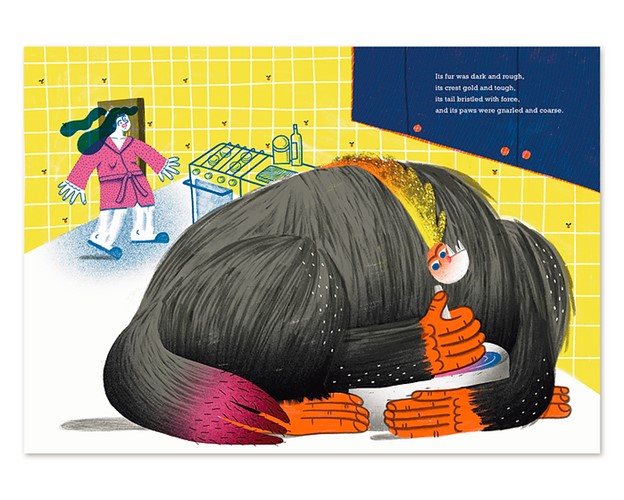
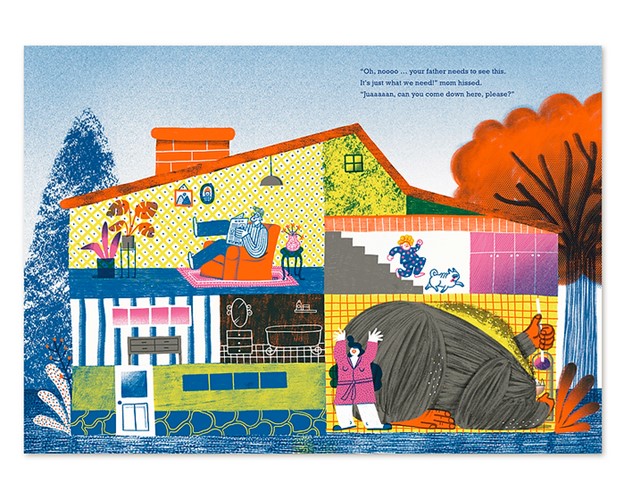
Patricia Strauch’s words and Natalia Aguerre’s images play with the idea of monstrosity. The huge creature’s fur is soft and its tail cherry-pink, yet later the same fur appears rough and its claws are “gnarled and coarse.” Matías’s mother runs to the kitchen anticipating rodents or roaches, the adult versions of monsters. The monster’s Picasso-inflected features show his own feelings of terror when he confronts the strange figures who seem intent on his destruction. Aguerre’s portrayal of the father emphasizes the relative identity. Seated on the top floor of his house quietly reading a newspaper, he hardly seems capable of threatening anyone. Yet his oversized eyeglasses, unruly hair, and casual striped shirt are potentially as scary to the monster as pointy paws and sharp teeth.
After the monster flees the house like a terrified Goldilocks discovered by bears, the parallel nature of two different worlds comes into focus. Narrating the day’s events to his family, the monster spreads his arms in the same gesture of disbelief acted out by the human father. Not only that, but the quiet domestic interior of the creature’s home features a vase of flowers, a small bookshelf, and a tasteful landscape painting on the wall. The word bubble encasing his description captures the most disturbing visual elements of the humans, with their “spine-tingling, pasty skin” and “their scary, murderous eyes.” The boy resembles a zombie, the mom looks about to use her ladle as a deadly weapon, and the dad’s strong embrace of his wife and son seems menacing, not protective.
All’s well that ends well, as the monster, relieved by the chance to tell what had happened, falls asleep curled up on a pillow. Like Matías, he uses art to explore his experiences, as evidence by the picture posted above his bed. There’s a Monster in the Kitchen avoids the hazards of cliché, instead propelling readers into a world where familiar and estranged elements collide, and are only partially resolved. There is no suggestion that monsters and humans will meet again in a moment of reconciliation, only that they will each continue their lives undisturbed, within the embrace of their families. Children reading the book may consider whether, given their similarities, coexistence could be an option.
 Imaginary Elevators