
Disagreement – Nani Brunini
Tapioca Stories, 2023
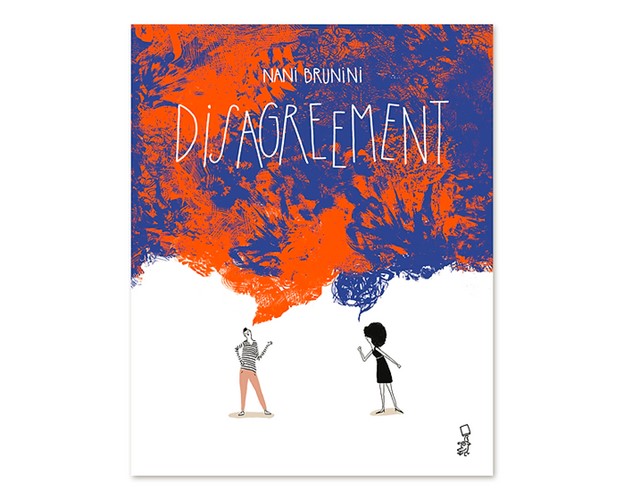
Disagreement was first published in Portugal in 2021, but there is no translator, because this is a wordless picture book. If you are skeptical, there is a long tradition of such books for children, although this one will also be relevant for adults. Just as there are people who view works of modern art and claim that a child could have created them, there may be readers who wonder why the author chose not to include words in his or her book. But they haven’t seen Disagreement, which visually conveys frustration, anger, and the motivation to transcend the human condition. People will always disagree.
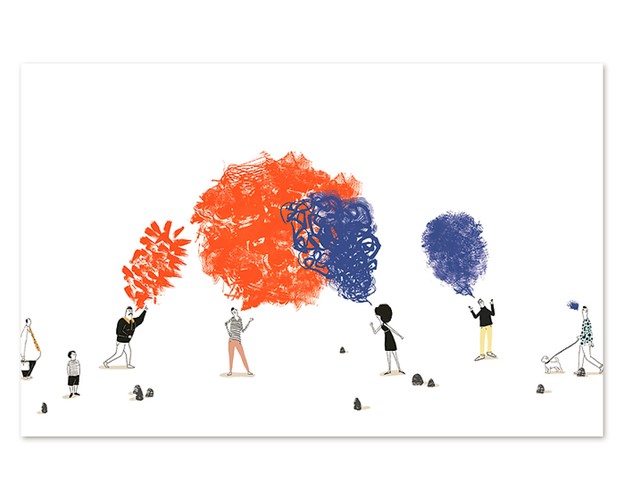
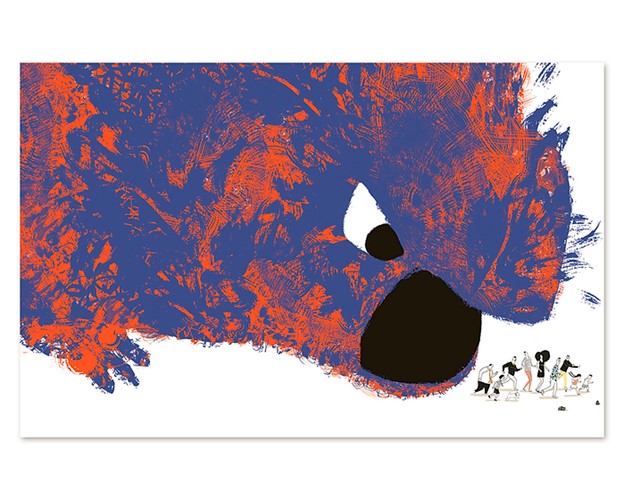
A man and a woman disagree. Instead of words, uneven swirls of color emerge from their minds and mouths. Others join in, contributing their own incomplete perspectives and a range of emotions, which seem to correspond to hostility, confusion, puzzlement, and other less easily identifiable feelings. Even children participate in this frightening Tower of Babel. The cumulative range of frightening discord is personified as a monster which dwarfs a miniature mass of fleeing humans unable to resolve their differences.
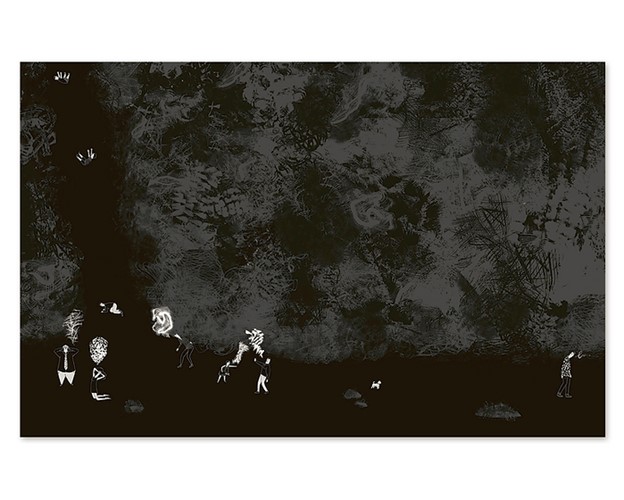
Some pages reflect chaos with black and white drawings. But black and white also provides a background for images of creativity, when one person uses his imagination to twist white ribbons into a prancing horse, a peaceful bird, and more abstract objects. Nani Brunini implies that negative and positive emotions are not necessarily opposites. Elsewhere, color is used sparingly and deliberately, culminating in a red and blue-violet hot air balloon which serves as a kind of Noah’s ark, spiriting the conflicted crowd to the safety of compromise.
Obviously, this is not a plot summary. Disagreement is a meditation of the failure to communicate and resolve differences, but Brunini avoids any simplistic ideas about agreeing to disagree or finding happiness in what we all have in common. I think that children will relate to the idea that even adults can’t always work out differences, and that sometimes just drawing a horse, embarking on a journey, or even walking away from a fight are steps towards acceptance, but not resolution, of problems. Sometimes emotions evade language, but there’s still a way to talk about them, as Brunini demonstrates in this wildly imaginative look at human imperfection.
 Imaginary Elevators