The Spark in Me – written and illustrated by Miguel Tanco
Tundra Books, 2024
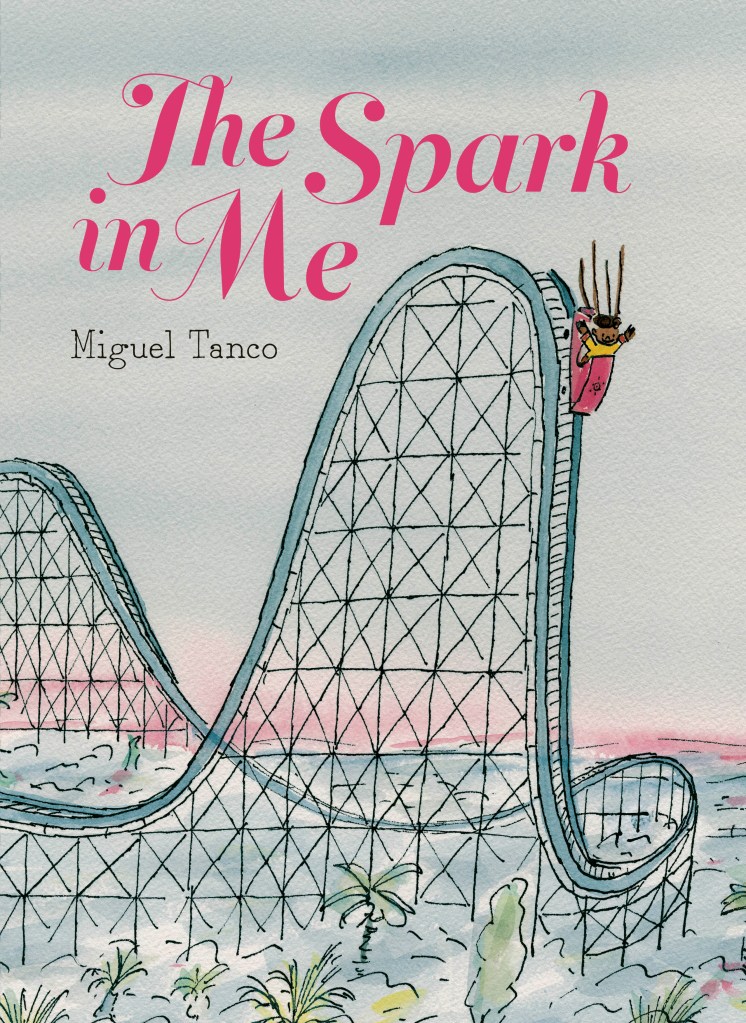
Miguel Tanco is one of my favorite children’s book authors and illustrators (see other my reviews here and here and here). Allusions to classic styles of illustrations, along with contemporary settings, fanciful images rooted in realism, and respect for children’s imagination, all contribute to his unique works of picture book art. The Spark in Me is not a sequel, but it is a companion volume to Count on Me. While you could characterize both books as STEM-themed, I would not want to reduce them to a didactic category. The girl in Spark is full of questions about how the world works. The answer, or at least, one answer, is rooted in concepts of physics. The book is rooted in her inquiring nature, but that nature also takes flight.

In Tanco’s work, people dream, but also use concrete objects to achieve their visions. The girl’s mother “is a dreamer,” who composes music for her guitar on multiple sheets of paper that cover the rug where she sits. The dad is so different; “he’s a very practical guy.” Maybe he is not so different after all, with his elaborate collection of tools arranged to fix a bicycle. The wrenches, nails, and screwdrivers are laid out in a more linear pattern than Mom’s music scores, but both parents are working out a vision.
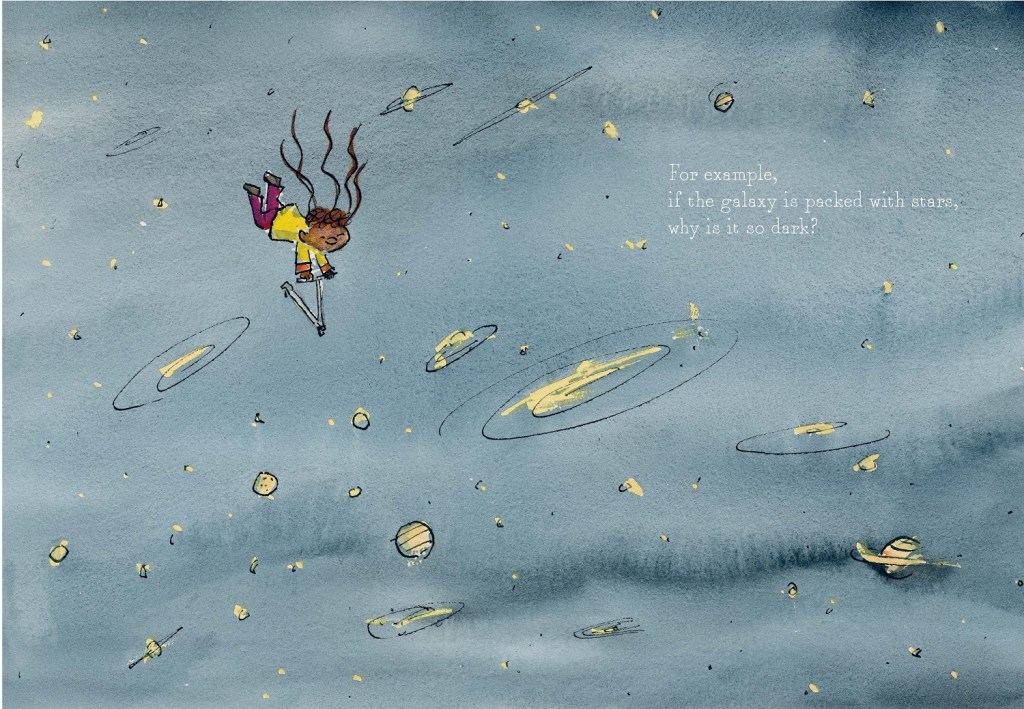
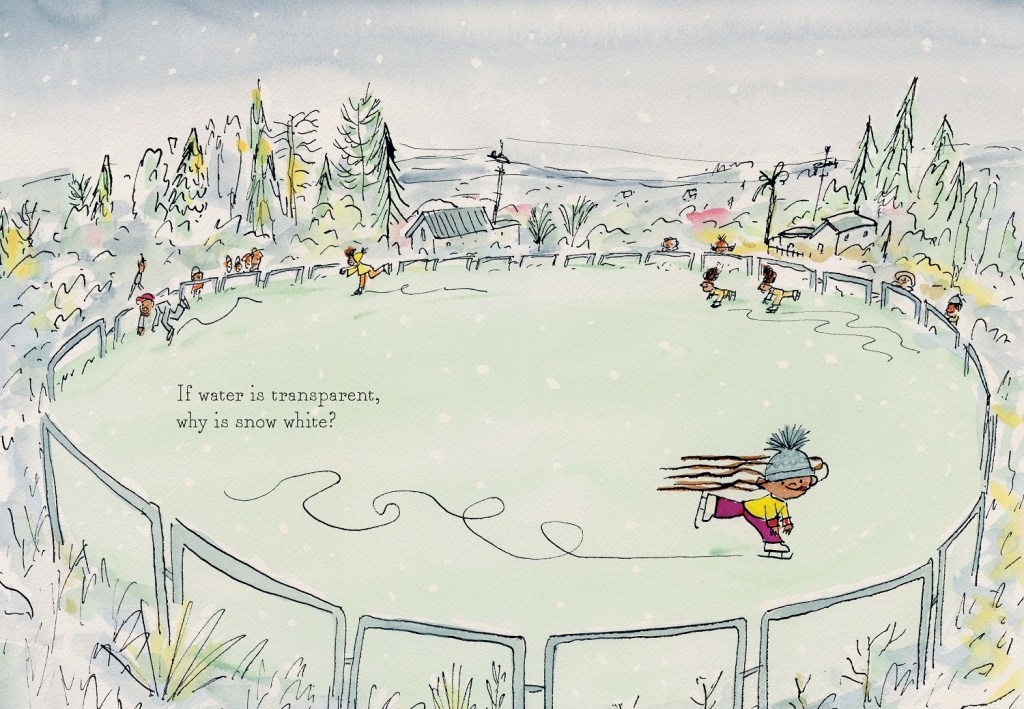
The girl, meanwhile, rides her scooter on earth, and soaring through the galaxy, as if she could build enough velocity to encounter all possible answers to her questions about how the world functions. Gravity does not stop her, nor is she discouraged by the lack of an immediate response. “If water is transparent, why is snow white?” is a thought that crosses her mind without preventing her joy in the moment. Skating apart from everyone else, she seems to be on her own.
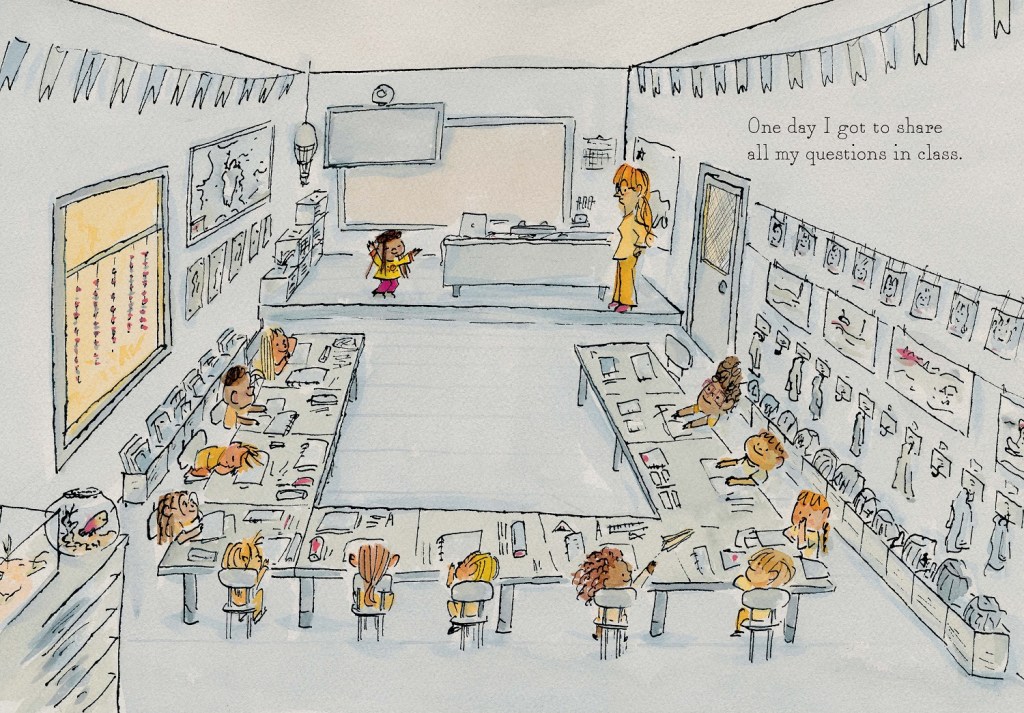
No one learns without cooperation. The natural world inspires the spark within her, but interaction with other inquisitive and encouraging people, young and older, begins to set her on a path. The excitement implicit in her statement, “One day I got to share all my questions in class,” is tangible. Every word in Tanco’s text seems deliberately chosen. She “shares,” rather than “asks,” and the parameters of “all my questions” is broad enough to prove that the teacher is receptive to listening. The interior of the classroom, unlike the outdoor scenes, is defined by squares and rectangles. These are not rigid or confining, just another setting for her ideas. Some kids are listening, others are throwing paper planes or falling asleep. The fish in the bowl is smiling.
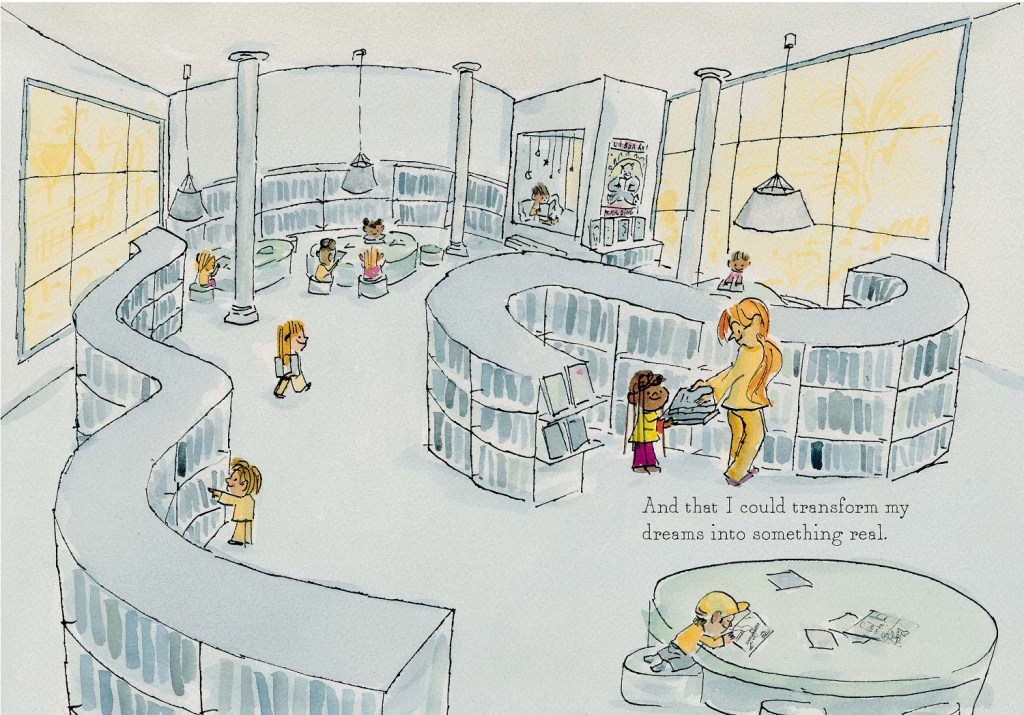
Who doesn’t love the library? This interior scene represents a different, more independent, kind of learning. The bookshelves are curved, differentiating them from the desks in the classroom. The librarian hands the girl a stack of books, proof that “I could transform my dreams into something real.” Soon she begins to construct her plans and make them concrete. The concluding section of the book, as in Count on Me, is a portfolio, here entitled “My Physics,” (note the possessive). Each page provides questions, definitions, and sketches. One entry on light even incorporates an error, in the form of a crossed out “though,” which is corrected to “through.” Miguel Tanco inhabits the world of children, consumed with both excitement and their sense of initiative, as they steer a course towards knowledge of the world.
 Imaginary Elevators