
Hiro: Winter and Marshmallows – written and illustrated by Marine Schneider, translated by Vineet Lal
Eerdmans Books for Young Readers, 2024

Two creatures from two different species are initially afraid of one another, but later make friends. A book needs to be innovative to stand out in this category. Marine Schneider (no relation), using carefully selected words beautifully translated by Vineet Lal, conveys the mutual hesitation of both boy and bear, neither one unwilling to break rules. Her striking images, rendered in colored pencils, watercolors, acrylic paint, and markers, accompany the words, but also operate as silent scenes full of impact. The parallel emotions of Émile, the boy; and Hiro, the bear, are familiar to children and evocative to adults, as well.
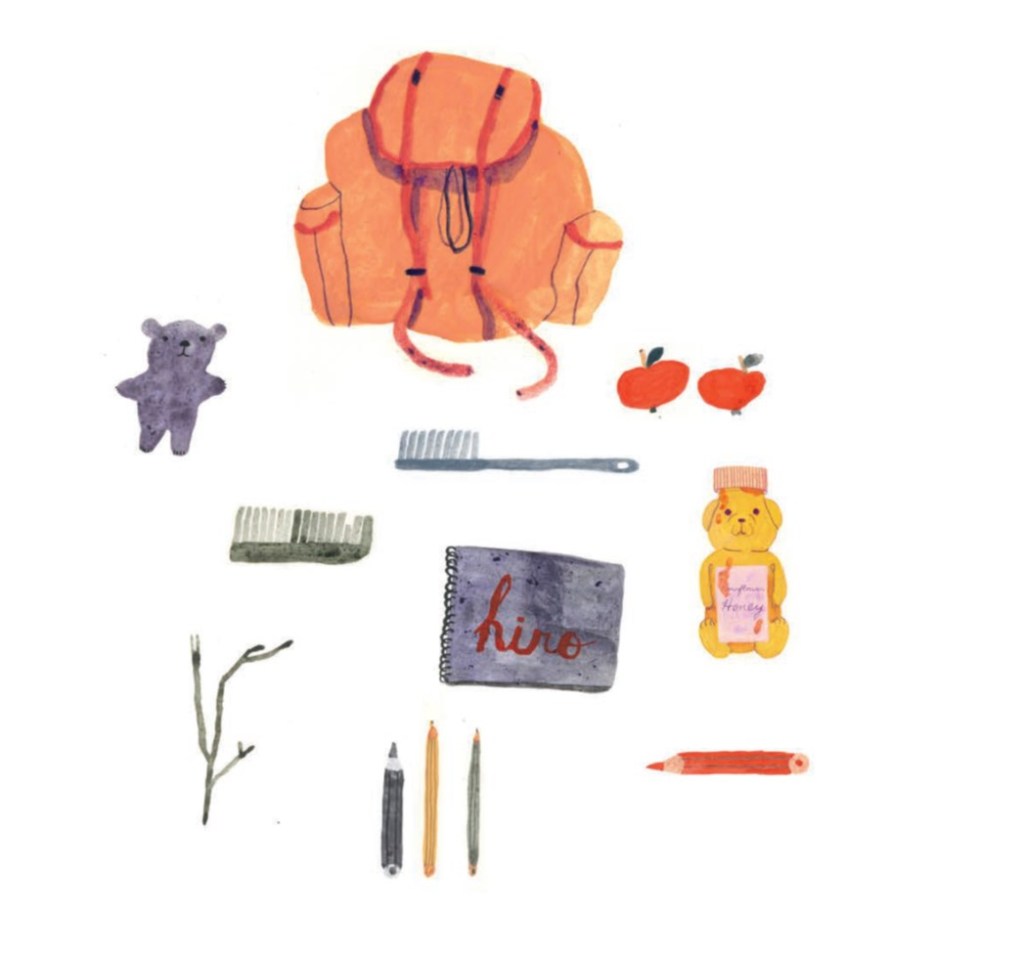
The title page features a backpack sitting in the snow, hinting at the outdoors, the articles both characters carry, and the needs they have in common. Hiro’s large family is full of enthusiastic hibernators, but she is dissatisfied at the idea of endless sleep. Her mother, as mothers will do, warns her of dangers, but Hiro decides to take her chances. Although she “isn’t the kind to disobey,” even compliant children, and bears, find within themselves traits that they had not suspected. Soon Hiro is packing her backpack with honey, pencils, and a comb.

Hiro uses all her senses to observe the world around her. Tracks in the snow, noises, and the smell of wood and marshmallows, lead her to a clearing. At this point in the story, three wordless two-page spreads show a changed world. With all the activity of a painting by Brueghel, the pictures pull readers into an immersive scene of play in the snow. Young humans are toasting marshmallows and enjoying the icy cold, but then they flee, leaving a space littered with objects left behind. Fear has changed everything.
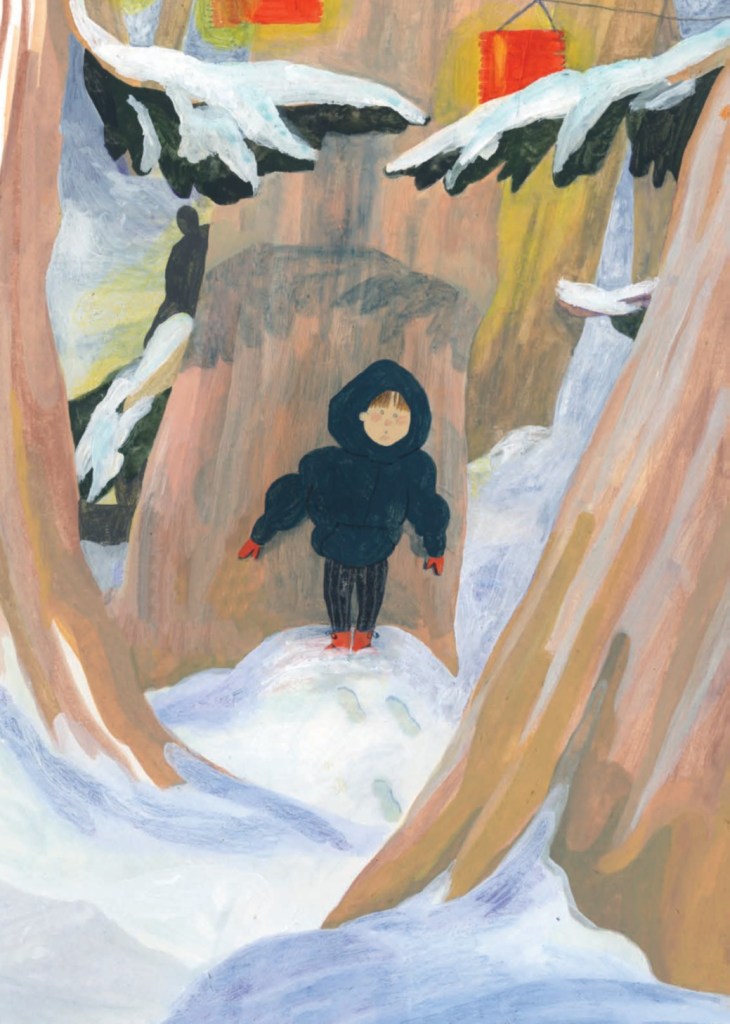
Émile stands behind a tree, a small boy in a black snowsuit with bright red mittens and boots. Although he has some trepidation, he is curious, and assures Hiro that he is “a marshmallow expert.” The two begin to converse about the most basic, and profound, idea: what is it like to be a bear, and also to be an Émile. Note that Hiro’s question is not generic. After all, Émile may be unique, or representative of all the other children who disappeared.
Schneider varies the scale of her images. By the time they have become friends, Émile looks larger, and Hiro, enormous. They are happier, having stepped outside their boundaries and connected. The blazing flames of their campfire rise high. Eventually, they return home, to the security of family and sleep.

 Imaginary Elevators
One thought on “One Human and One Bear”