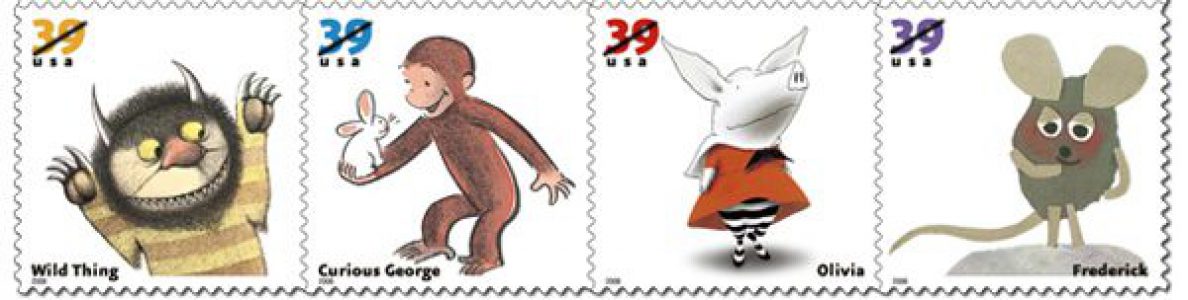
Taro Gomi’s Big Book of Verbs – written and illustrated by Taro Gomi
Chronicle Books, 2025 (Original Japanese edition, 2020)
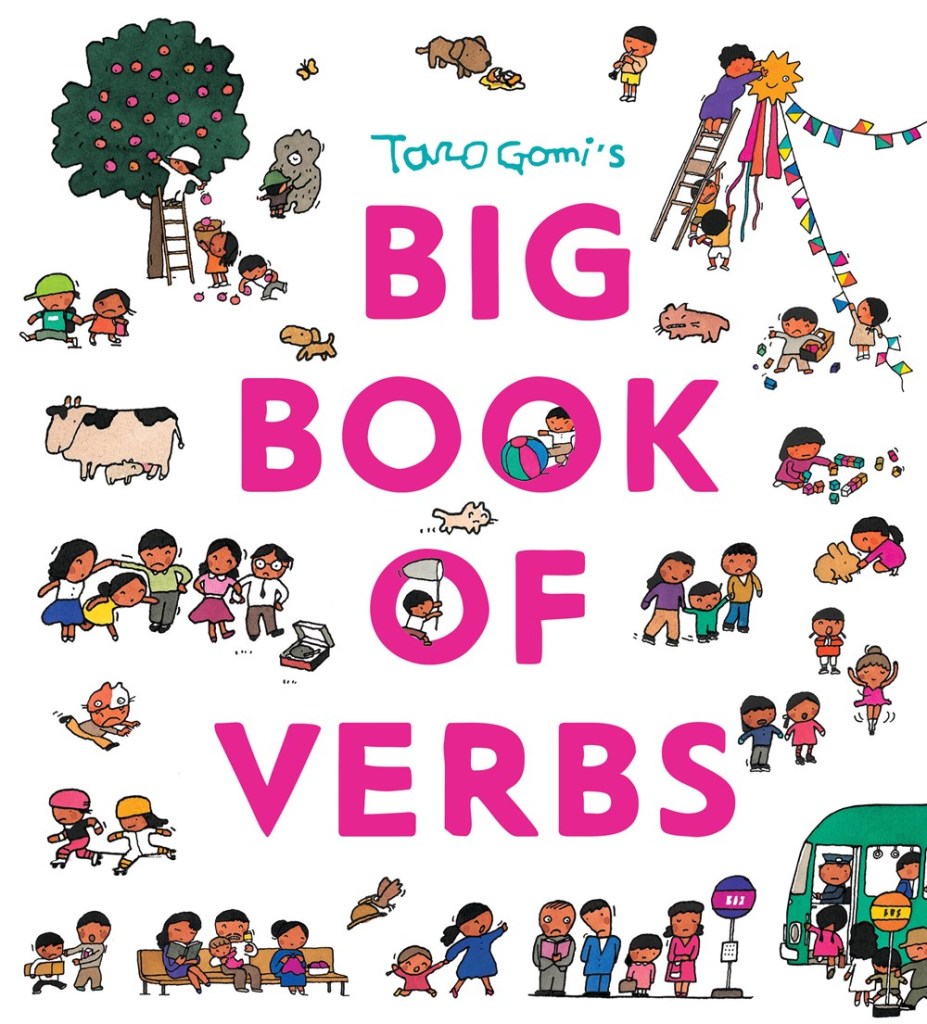
Children like to move, whether they are playing, responding to instructions, or participating in daily routines. Unlike for many adults, those routines do not yet seem perfunctory or automatic. In Taro Gomi’s Big Book of Verbs, the artist breaks down those actions, labels them, and imbues them with individualized characters.
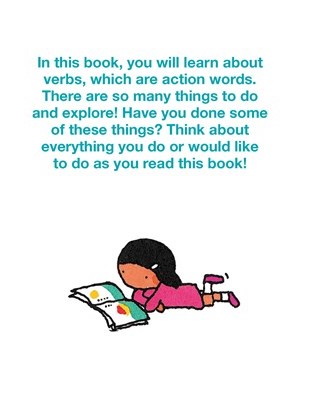
Why dedicate this type of children’s dictionary exclusively to verbs? Taro Gomi’s Big Book of Verbs is more inclusive in its parts of speech. As Gomi points out in his brief introduction, “There are so many things to do and explore! Have you done some of these things?” Of course, you have, and Gomi encourages readers to think carefully about each action’s meanings, whether rejecting a breakfast food, fighting with classmates, or boarding a bus.
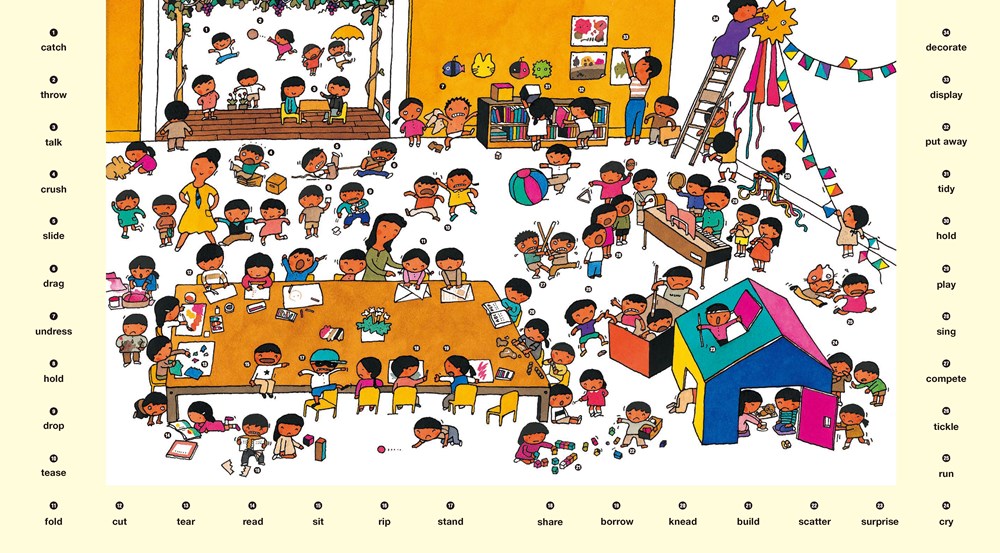
Gomi’s signature style features people with simple features that express a lot. Each word is numbered and corresponds to a picture. “Harvest” demonstrates the effort involved in pulling a plant from the ground. A day at the swimming pool encompasses a range of emotions, from fear to happiness. Sometimes feelings are more subtle. While the child about to leap from the diving board may be a bit frightened, she is also simply ready to “prepare” for her leap. Gomi never romanticizes childhood; both adults and children will appreciate the way that he portrays reality. Conflict, discomfort, and frustration are tied to actions, but so are joy, silliness, and determination.
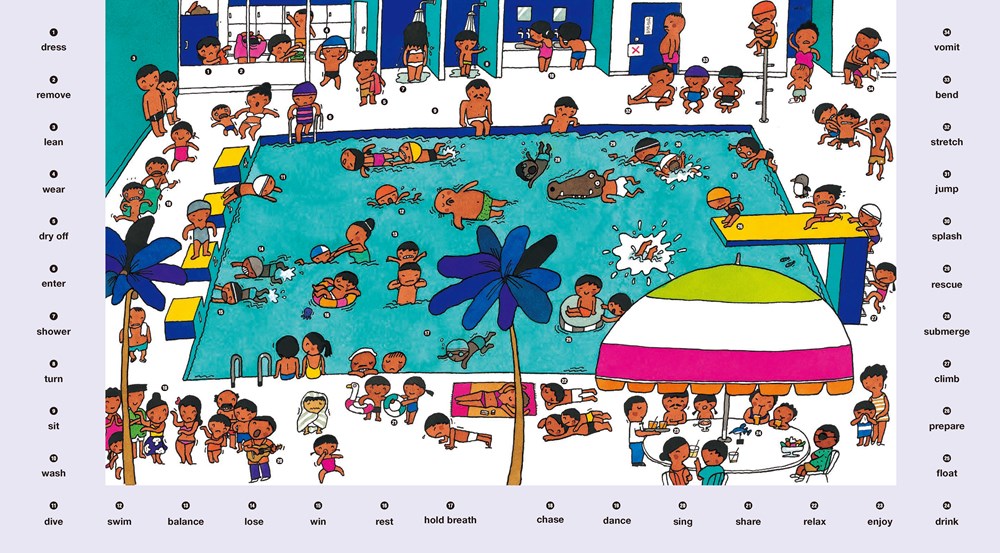
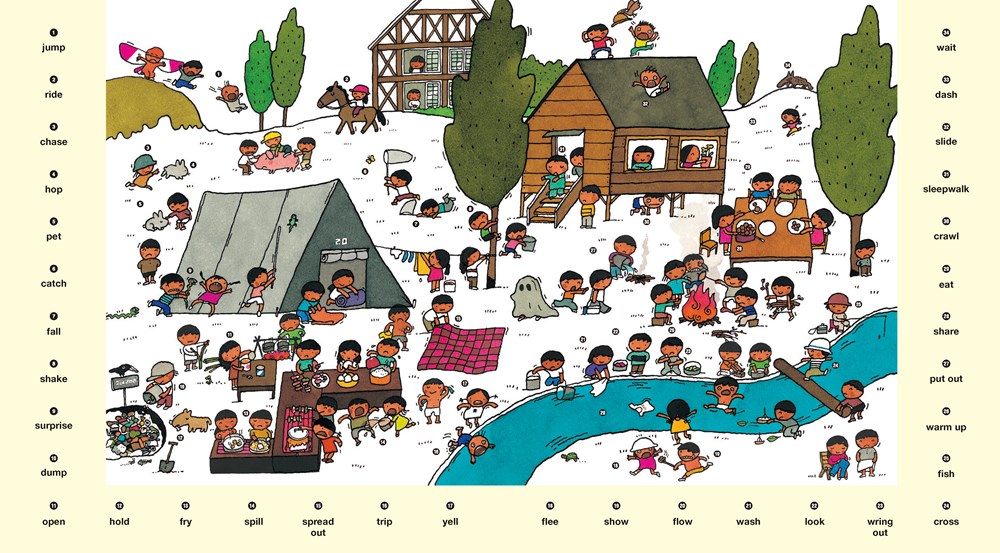
There are a number of humorous surprises tucked into the book. At the zoo, there are some lions who are as selfish and angry as the human visitors. (There’s also a calm elephant family, and monkeys having a great time.) An indoor arena features people skating, playing soccer, dancing ballet (“twirl”), and, as part of these interactions, defining both “apologize” and “forgive.” Yes, those are action words, too. The camping scene includes someone sleepwalking.
As in many books of this genre, including Richard Scarry’s classics, the possibilities of finding new elements of interest seem infinite. Why is that boy breaking a fence in the farm scene? Is the child drawing in his classroom tired or triumphant when he holds up his crayon? Two apes are relaxing near a t.v.; the one reclining defines the word “chill.” As Winnie-the-Pooh famously stated about bees, you never can tell with verbs.
 Imaginary Elevators