
Audrey Hepburn – written by Emily Easton, illustrated by Ellen Surrey
Golden Books (Penguin Random House), 2024
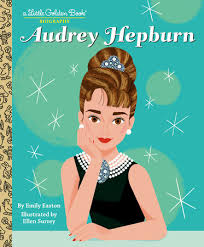
As you may know, while Golden Books still publish their classics (such as Daddies, or The Seven Little Postmen), they have added many other different subjects, which appear at an astounding rate (for example, here). Tony Bennett, Taylor Swift, Carol Burnett, Dolly Parton, Simone Biles, and Ruth Bader Ginsburg all have their own gold-spined mini-biographies. I used to think I was a Golden Book completist, but I can no longer say that is true. I’m limiting myself to books whose subject attracts or inspires, and those with decent to good illustrations. (I may have to compromise when those two qualities are in conflict. Since I love Audrey Hepburn, I had to write about this one. (Some other examples are here and here and here).
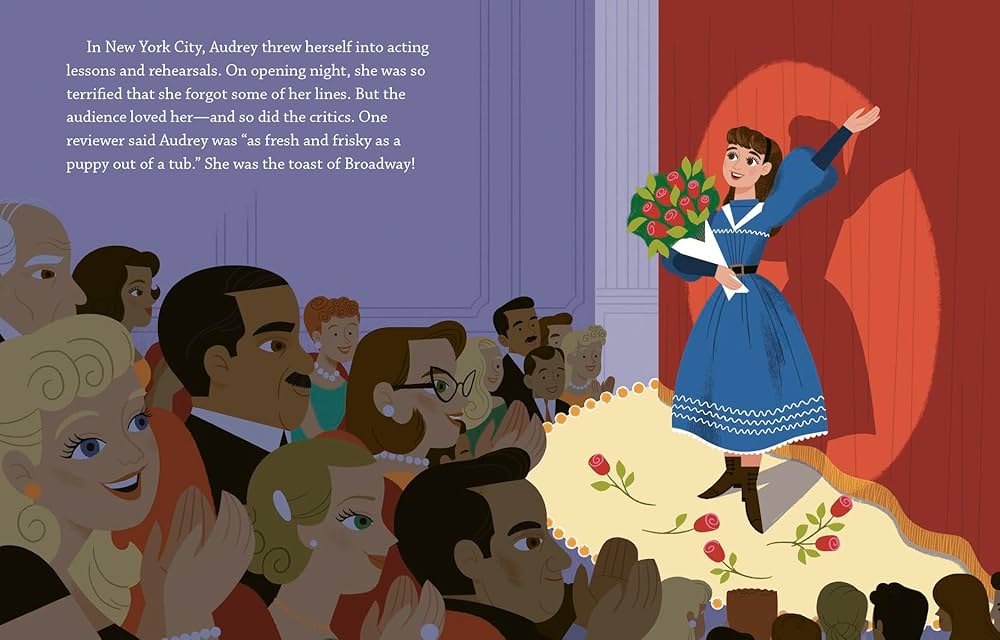
It’s impressive how much biographical information these slim books include. Readers learn about her ancestry. Did you know that her father claimed a distant connection to Mary, Queen of Scots? The book, written by Emily Easton and illustrated by Ellen Surrey, details Audrey’s abandonment by her father, her training as a dancer, and her family’s deprivation during World War II. Although she is best known as a film actress, there is a scene where she meets Colette, who personally insisted that Audrey be casted in the original stage production of “Gigi.” Even her Tony Award for “Ondine” finds its way into the book! The text is punchy, with a tone of excitement when Audrey works for the Dutch Resistance, becomes “the toast of Broadway,” and becomes a fashion icon. “Women wanted to dress just like Audrey! And her style is still beloved today.” So true.
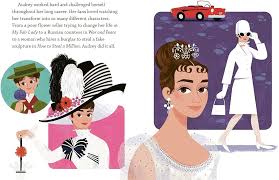
Of course, her cinematic fame follows, including “My Fair Lady,” “How to Steal a Million,” and “Breakfast at Tiffany’s.” After retiring from her acting career, Hepburn dedicated the rest of life to working on behalf of the world’s children, principally with UNICEF. If you assume that the book’s expected audience are adults, you’re probably right. There is definitely a nostalgia component of grownups who remember reading The Poky Little Puppy and would love any story that comes in this container. Nevertheless, Golden Books do offer an opportunity to introduce children to unfamiliar figures and cultural products that are not Disney. (Many of the Disney Golden Books are, by this time, classics.)
Audrey is on the cover in her little black dress and pearls from Breakfast at Tiffany’s. In the World War II section, she wears a plaid dress and a lavender scarf as she gladly accepts chocolates from an American G.I. He is down on one knee as he presents them, as if proposing marriage. Well, she is Audrey! Scenes from Funny Face show case both her gorgeous Givenchy gown, and the classic black turtleneck and cigarette pants with white socks worn for her Beatnik-inflected dance number. It will be fun to explain the cultural significance of these to the children sharing the book with you.
As the book tells reader, Audrey had two sons, although “her marriages to their fathers didn’t last.” But the author’s upbeat interpretation links her devoted care for her own children with her activism in children’s causes: “Audrey used her star power to draw attention to their needs.” That sunny sentence is consistent with the whole idea of Golden Books, but it’s also true.
 Imaginary Elevators