Fly Like a Bird – written and illustrated by Olga Ptashnik
Eerdmans Books for Young Readers, 2025
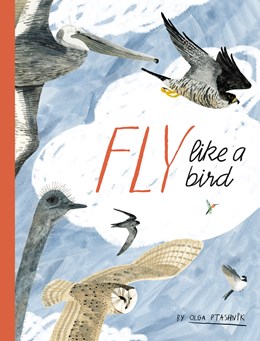
Breaking the mold may be a harsh-sounding metaphor for a children’s book about birds, which contains within itself a story of natural insecurity and a parent’s reassurance. Fly Like a Bird does actually break a mold in the “STEAM” books genre. The text and the artwork, by Olga Ptashnik, are both wonderful. Children, and adults, will also learn a lot about a wide range of birds.
A young chickadee expresses concern about the possibility that she will never accomplish the daunting task of learning to fly. Ptashnik captures the inner life a child with her words: “I can flap my wings, but I can’t fly. I’m just a tiny little bird…What if I never learn to fly?”
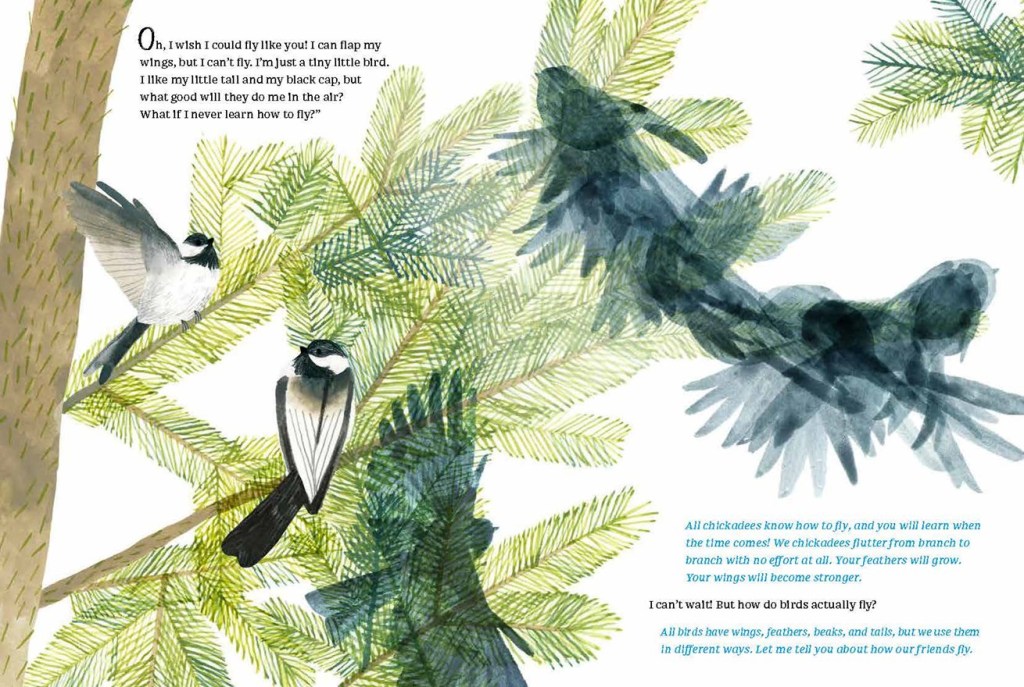
Right away, children will be drawn to the book’s tone and central idea. The question-and-answer format alternates black and blue font, as the parent answers with accessible information about different birds and their unique qualities. Digital artwork produces the colors of nature: green, gray, blue, black, red, in different shades.

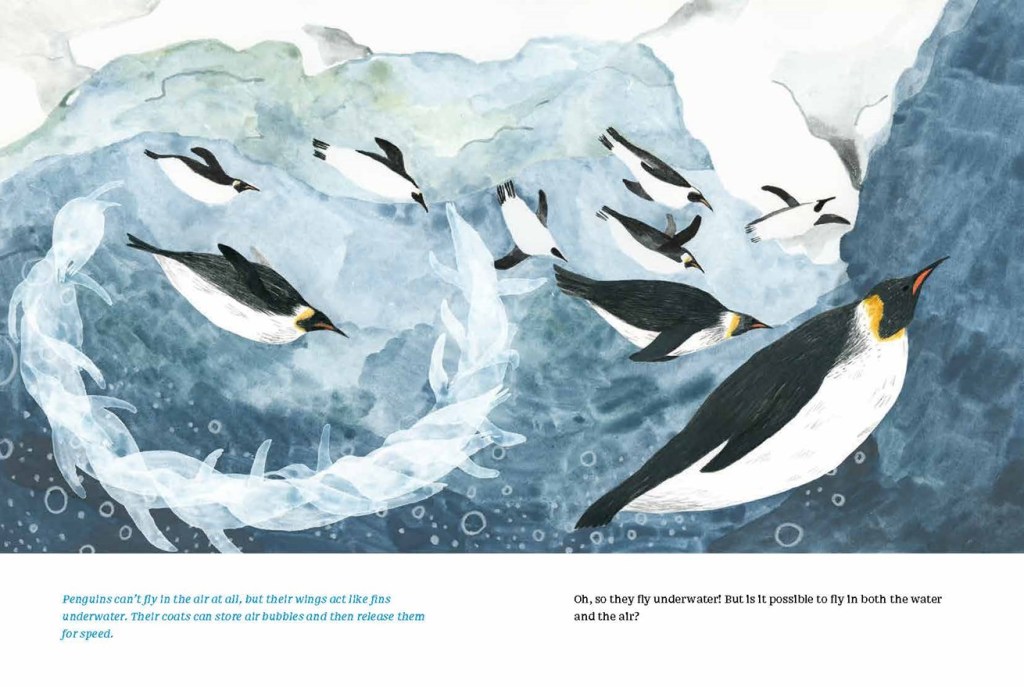
Hummingbirds are tiny; how do they produce the intense vibrations that give them their names, and also find nectar to drink? Penguins can’t fly, but their speedy swimming more than compensates for this unusual difference. The young bird processes the information: “Oh, so they fly underwater! But is it possible to fly in both the water and air?”

The peregrine falcon images bring the reader to a more human-populated location, as they fly high above elegant buildings and swoop down with incredible speed.
Each picture is composed to invite focus on different aspects of the scene. A large falcon appears commanding, hovering over the rooftops. A chain of apparently connected birds descends, and more distant birds appear smaller as they alight on structures and rise up further into the sky. Ptashnik anthropomorphizes a bit more here, breaking the fourth wall. The young bird expresses feelings of vulnerability associated with humans: “…but I don’t want to hurt other birds! How can tiny birds like us protect ourselves from predators?”
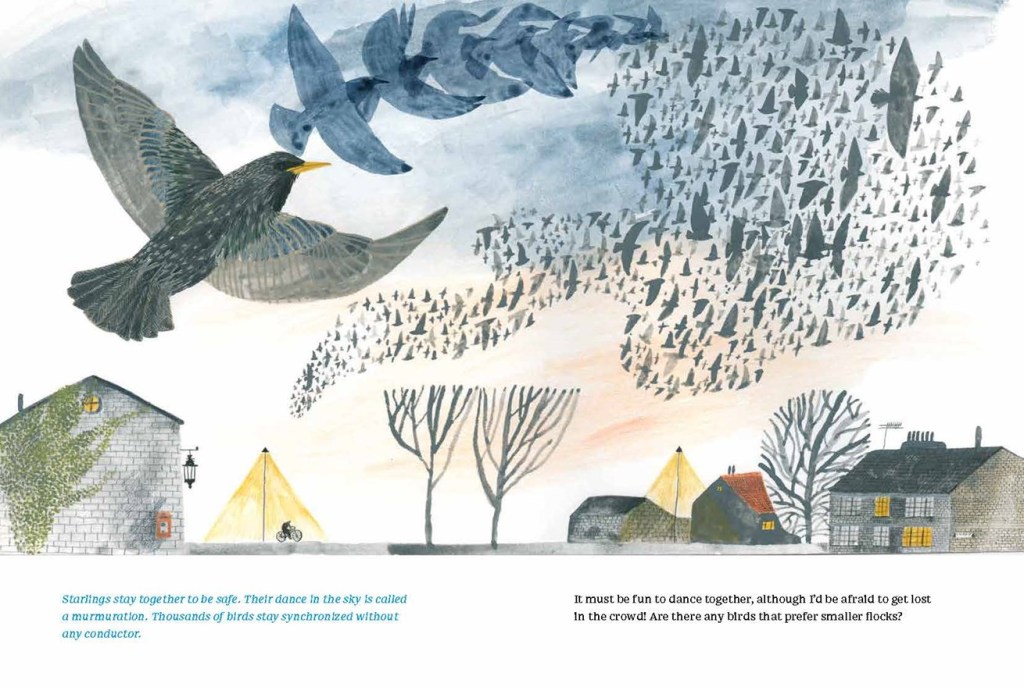
A flock of starlings forms a “murmuration,” as “Thousands of birds stay synchronized without any conductor.” Again, the varying scale of the scene elements are a quiet drama. On the ground, a person riding a bicycle appears very small. Above, the murmuration is a symphony in motion. I was reminded of the fish learning about solidarity in Leo Lionni’s Swimmy.
The book concludes with two pages summarizing the star players, from hummingbirds to black-capped chickadees. Everyone eventually learns to fly, swim, swoop, and find nectar, when the time is right.

 Imaginary Elevators