Who Hid the Stars?: How Light Pollution Changes Our World– written by Valentina Gottardi, Maciej Michno, and Danio Miserocchi, illustrated by Valentina Gottardi, translated from the Italian by Sylvia Notini
Eerdmans Books for Young Readers, 2026
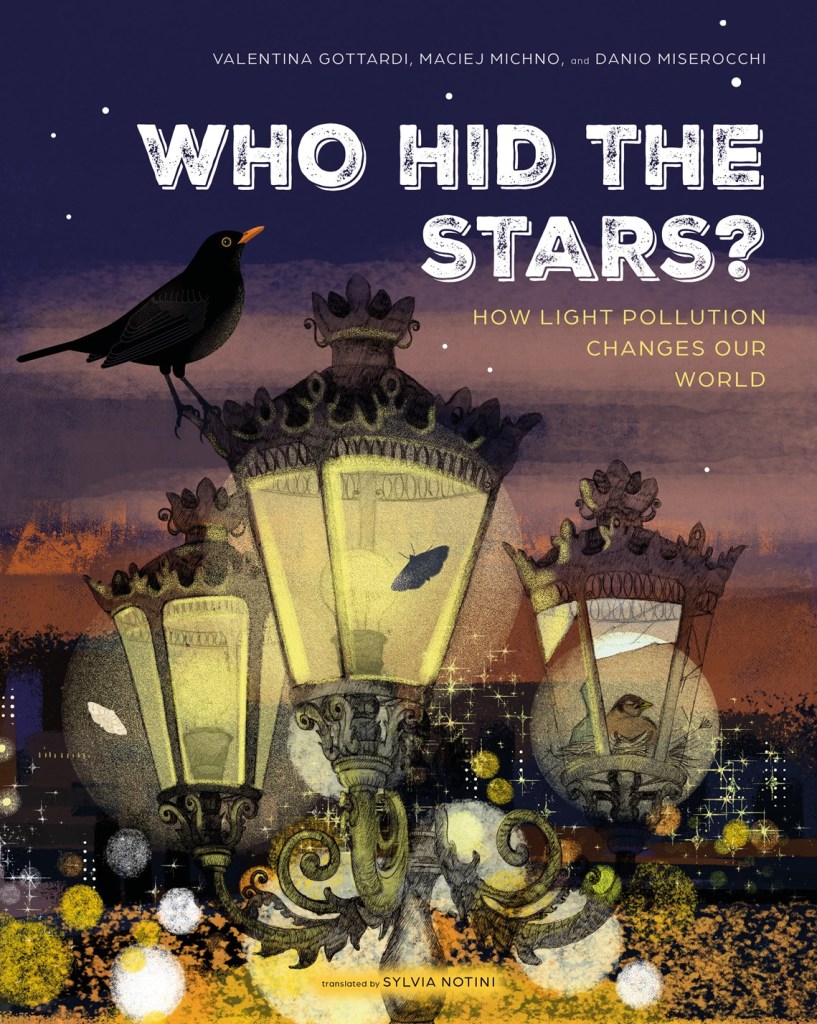
Sometimes books about environmental pollution adopt an all-or-nothing approach. Given the grave dangers posed to our natural world, and the fact that books for children inherently require some simplification, this is not surprising. In Who Hid the Stars? How Light Pollution Changes Our World, the authors’ and illustrator’s approach is more nuanced. The book’s premise is that artificial light is useful, but also involves potential damage to plants, animals, and humans. We are responsible for balancing the costs and benefits of technologies that make modern life possible, and for devising solutions to the negative effects they impose.
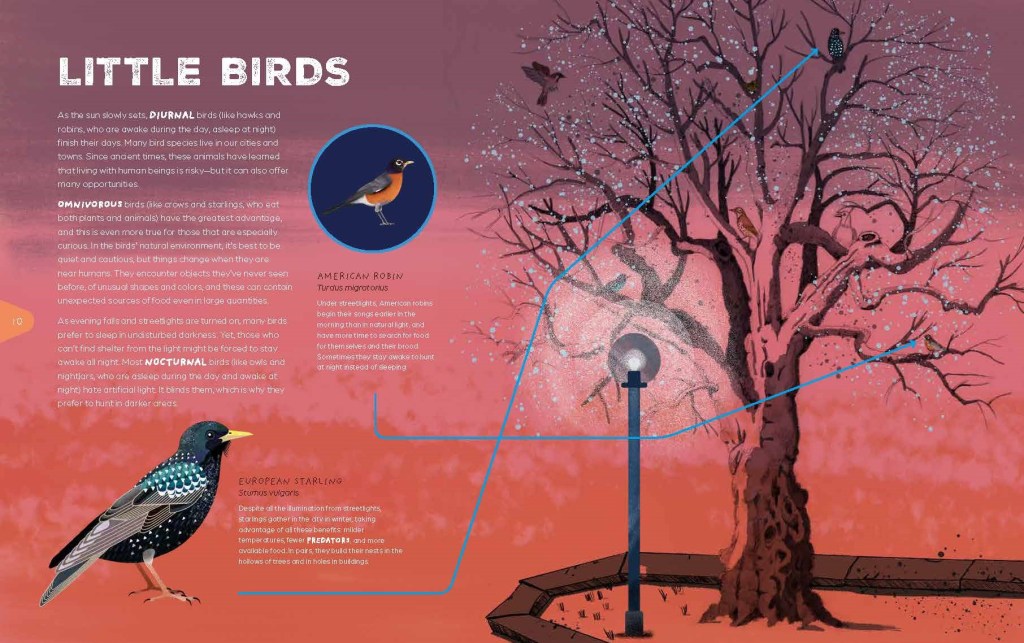
Graphic sophistication defines this work. Individual chapters present different species affected by artificial light. Small birds, such as the American robin, have their daily cycle of song and their search for food altered by the glare of streetlights. The crucial nest-building activities of swallows and sparrows is altered by lights that, in effect, mislead the birds in their selection of sites. “They may even choose streetlights or roof lights: though this protects them from nocturnal predators, they risk not being able to sleep at night if the light is too bright.” While the information is entirely accurate, there is an almost novelistic tone. Without personifying the birds, the authors convey a poignant note of empathy. Imagine choosing a home because of its appealing brightness, only to find that you are losing sleep! Some of the section titles are also poetic, such as “Confident Birds,” “Lost Birds,” and “Fatal Lights.”
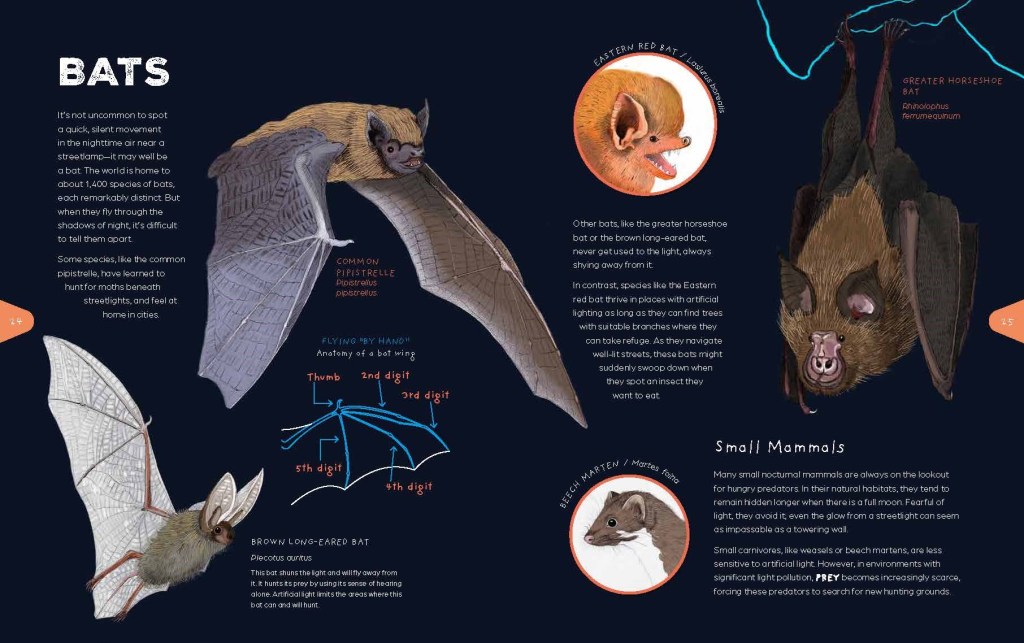
Bats are on most readers’ top-ten nocturnal animals lists. The authors’ language clearly confirms that affection. “It’s not uncommon to spot a quick, silent movement in the nighttime air near a streetlamp – it may well be a bat…Some species, like the common pipistrelle,…feel at home in cities.”
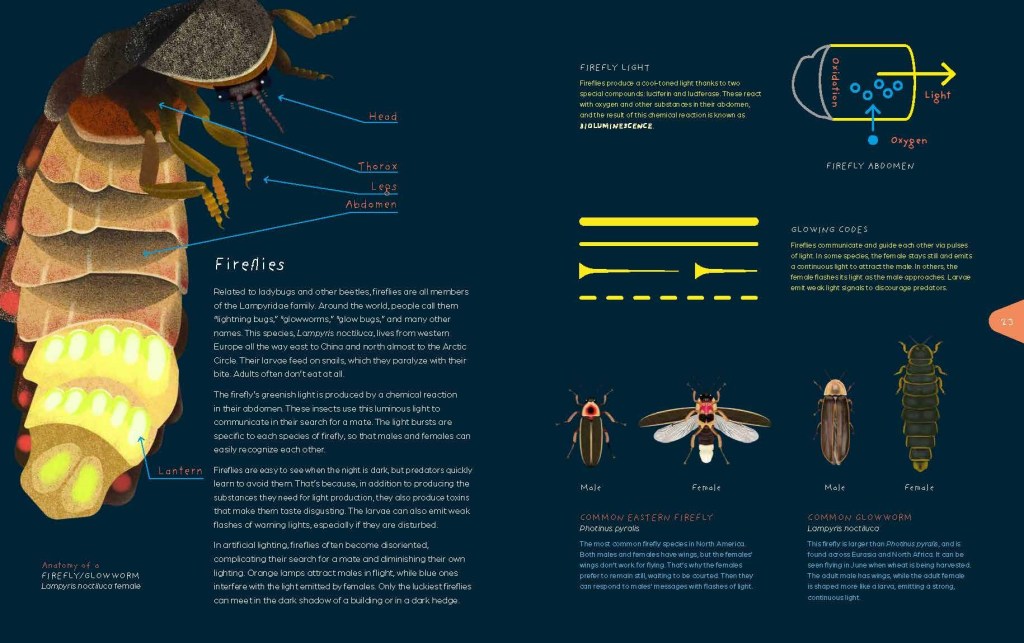
The detailed section on fireflies demystifies their characteristic glow, explaining the chemical reaction that causes it. While people enjoy watching them light up the night, these insects avoid predators as they “produce toxins that make them taste disgusting.” As if you did not already identify with the fireflies’ dilemma, “In artificial lighting, fireflies often become disoriented, complicating their search for a mate and diminishing their own lighting…Only the luckiest fireflies can meet in the dark shadow of a building or in a dark hedge. STEAM books do not have to sacrifice literary polish in order to educate children!
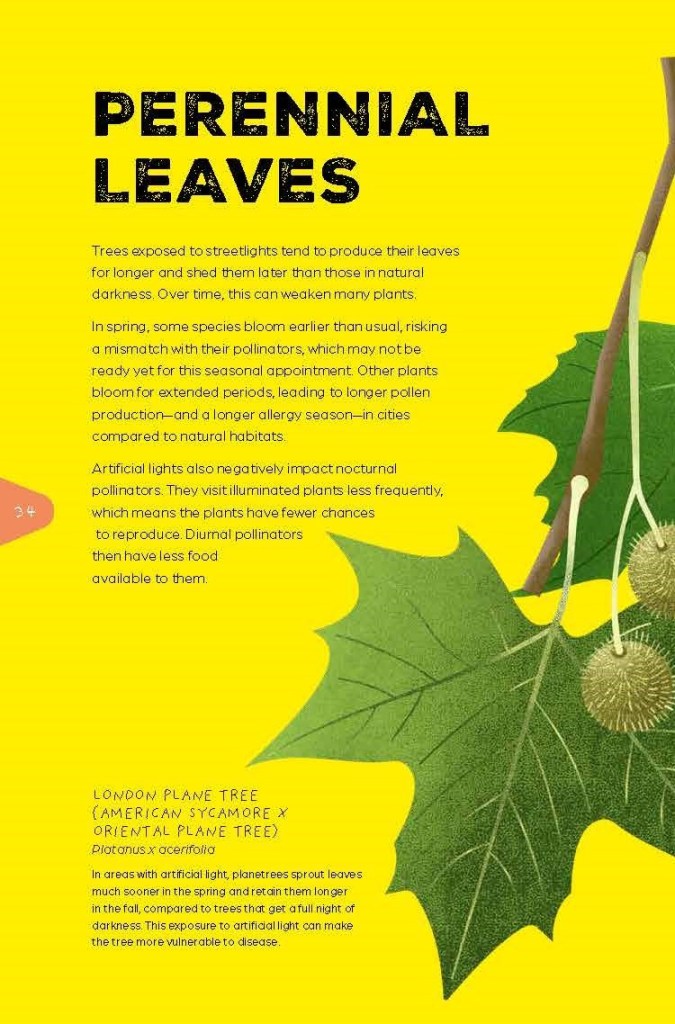
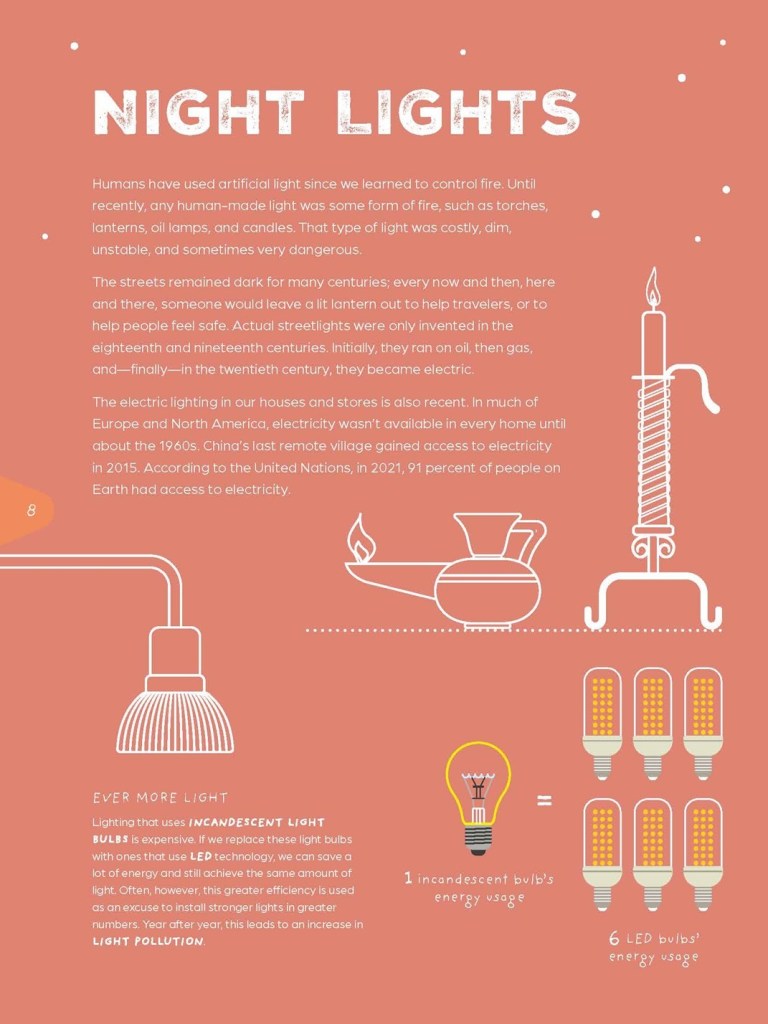
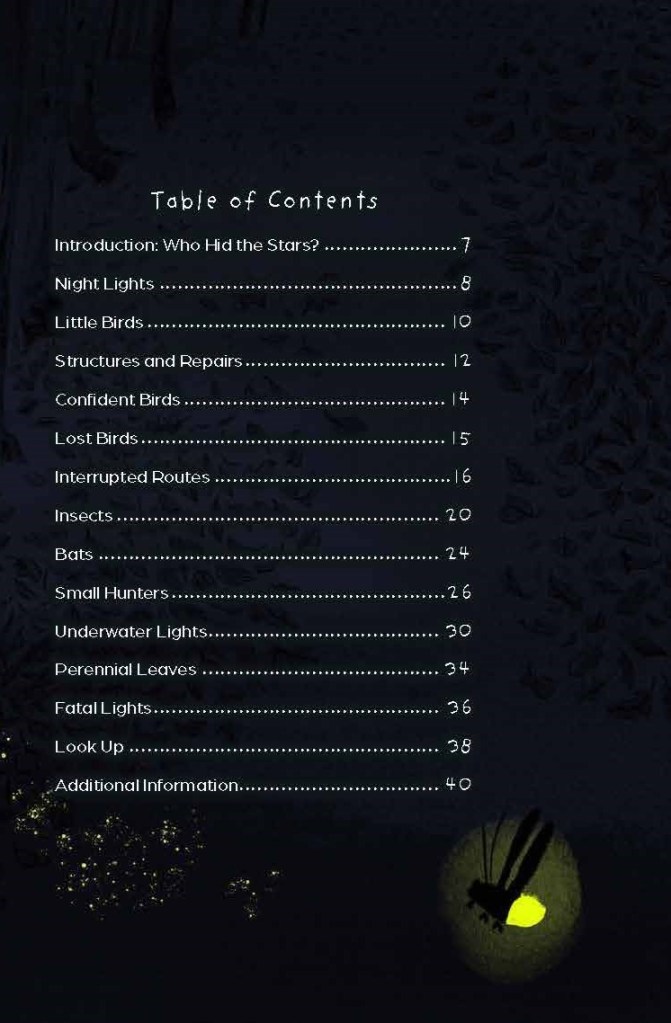
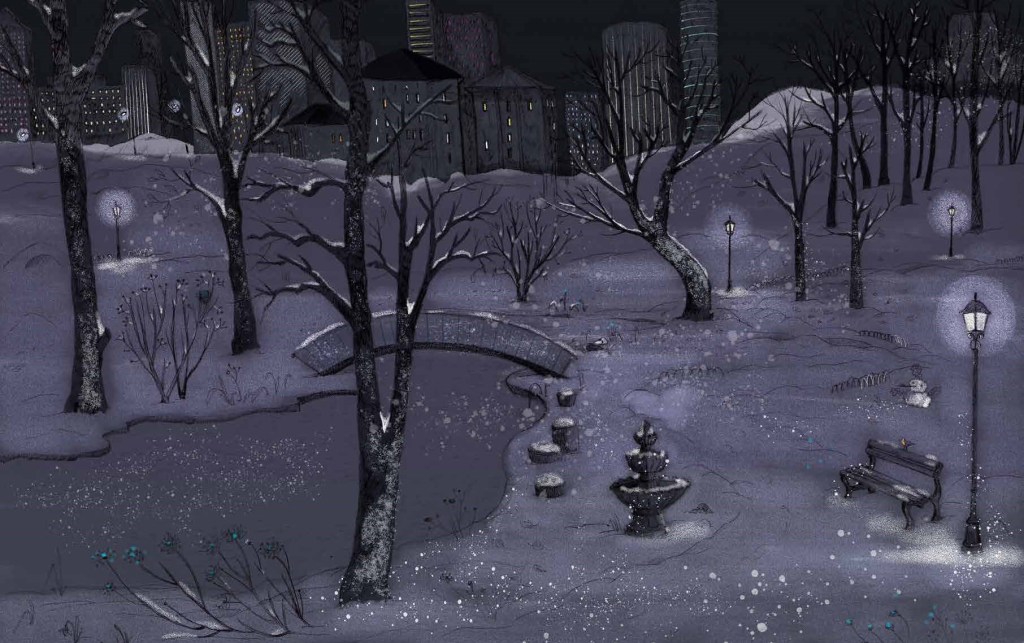
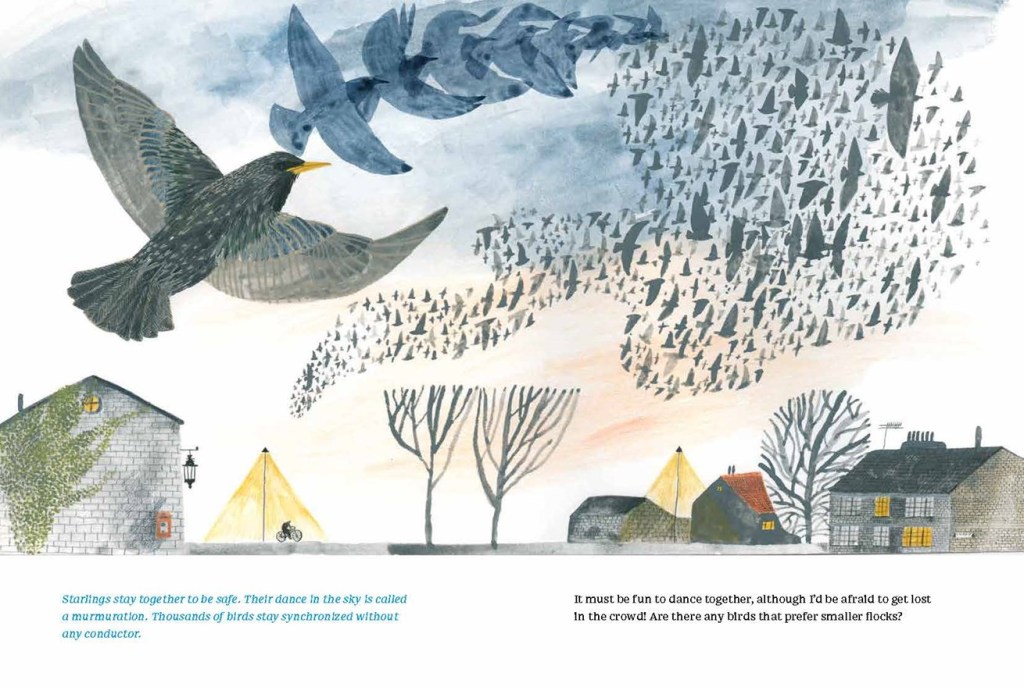
The aesthetic of this lovely work is varied. Much of the text, appropriately, is placed on a dark background, although some chapter, including “Perennial Leaves,” feature predominately green against a bright yellow. There is even a slight steampunk element in some of the pictures, with Victorian curving lines, and the ornate antique lamps of “Night Lights.” Finally, Valentina Gottardi makes a definitive statement about the importance of the “A” in STEAM books with several two-page spreads depicting an illuminated, or semi-illuminated, world. These are untitled. Their meaning is implicit, as they contextualize the science in the book in both the natural and human-constructed world. Look at the owl peering down from the balcony, and the white articles of clothing hanging from a laundry line. A minimal number of yellow and gold lights emerge from streetlamps and the windows of homes. Light is wonderful, but it needs to be employed with respect and care.



 Imaginary Elevators