Brilliant, Lovely, Compassionate

Audrey Hepburn: An Illustrated Biography – written by Eileen Hofer, illustrated by Christopher Longé, translated from the French by Christopher Bradley
Abrams ComicArts, 2025

The subject of Eileen Hofer and Christopher Longé’s meticulously thorough graphic biography is portrayed as embodying the trait know as imposter syndrome. This incredibly gifted actress, stunningly beautiful woman, devoted mother, and tireless humanitarian actress was not convinced that she deserved any of those accolades.  While not an uncommon human problem, in general, it may be less prevalent in those who achieved her phenomenal level of success.  One of the many outstanding feature of this book, which is actually aimed at an adult audience but is completely appropriate for young adult readers (there have been several picture-book biographies of Audrey for younger readers, such as the ones I reviewed here and here and here and here) is its unassuming, but convincing, tone.  Laying out the facts of Hepburn’s life, from her childhood in war-torn Europe to her death (1929-1993.)  Every vignette and conversation included supports a consistent interpretation, while leaving room for the always unanswered questions about any life.

Author and illustrator avoid melodrama in chronicling the painful nature of Hepburn’s early life.  Her British father, Joseph Ruston Hepburn, was something of a manipulative con artist who saw marriage to her Dutch aristocrat mother, Ella van Heemstra, as a route to social and financial success. Worse, he was an ardent supporter of fascism; Hepburn’s mother, for a time, joined him in his alliance with this brutal movement.  Hofer pays careful attention to part of Hepburn’s history, including Dutch collaboration and virulent antisemitism.  Her participation in resistance activities is placed in context, existing alongside her ambition to become a ballet dancer.

After the war, Hepburn continued to study ballet, but the interruption in her training, and her tall height, closed off that field to her. Throughout her life she expressed disappointment about this turn of events, which seem also to have sensitized her to a sense of failure. But ballet’s loss was an unparalleled gain to theater and film. From bit parts in The Lavender Hill Mob and Monte Carlo Baby, she went on to the starring role on the stage in Colette’s Gigi and the movies that have become indelibly identified with her legacy.  Hofer and Longé approach both analytically and lyrically, this timeless series of images of Hepburn’s dramatic transformations, in Sabrina, My Fair Lady, Breakfast at Tiffany’s, How to Steal a Million, Two for the Road, and more.

Longé’s illustrations assume a particular vision of Hepburn and those who shared her life. Rather than photographic realism, they combine different aspects of her character and experience to create a believable image.  Neither Hepburn, her parents, her husbands, nor her directors and co-stars look exactly as readers may remember them. Instead, with minimalist strokes in black ink he captures the essence of who they were and how they behaved.  Ultimately, her father’s calculating oppressiveness, husband Mel Ferrer’s controlling nature, and second husband Andrea Dotti’s duplicity, all unfold in a balanced vision. There is almost a resigned sense of people’s imperfections in the book, making Hepburn’s commitments seem even more worthy of wonder.  Even if you have read other books about Audrey Hepburn, this one deserves careful attention. If the young adult readers in your life are unfamiliar with her life, here is an opportunity to correct that unfortunate gap.

I Want to Be a Reader

Let’s Have a Sleepover: A Kat and Mouse Book, 2 – written and illustrated by Salina Yoon
Bloomsbury Children’s Books, 2026

Kat and Mouse, the very different but certainly not mismatched friends, are back. In Salina Yoon’s second book in the series (and I’ve reviewed other books by her here and here and here), they once again have to negotiate some disagreements, but their underlying affection for one another, and respect for difference, are reassuring. The book is also funny, illustrated with bold colors and text in fonts and sizes that correspond to changing circumstances.

If you remember from their first outing, Kat and Mouse expressed opposite ideas about food. Now they are about to have a sleepover, and Mouse has high expectations. “It will be the sleepover I have always dreamed about!” Yoon’s rendition of a mid-century turntable will certainly make that a reality.  Mouse, on the other hand, wants to read, and also build a fort. But the fort-building project is actually a cozy reading nook. No wonder Kat is a little frustrated. She has other ideas for the structure.

Having already listened to Mouse’s reading aloud of “Three Blind Mice,” Kat envisions something a bit more dramatic, better suited to an extrovert. Their friendship is characterized by compromise more than conflict. Winnie the Pooh and Christopher Robin, Frog and Toad, George and Martha, all have their own perspectives but still manage to get along. 

Mouse suggests a new role. It’s not exactly new, given the “Three Blind Mice” performance, but it has a new name, “narrator.” The sheets used as walls for the reading fort will become stage curtains. Mouse will read aloud the story of Cinderella, while Kat, costumed in a pink cape and hat, delivers a heartfelt performance of the lead role. Indeed, Kat is the “belle of the ball,” and Mouse is happy. They are best friends, they both enjoyed eating chips, even if Mouse found Kat’s loud crunching to be a distraction.  The sleepover more than meets their expectations, as it will for readers of the series.

In the Spotlight

Who Hid the Stars?: How Light Pollution Changes Our World– written by Valentina Gottardi, Maciej Michno, and Danio Miserocchi, illustrated by Valentina Gottardi, translated from the Italian by Sylvia Notini
Eerdmans Books for Young Readers, 2026

Sometimes books about environmental pollution adopt an all-or-nothing approach.  Given the grave dangers posed to our natural world, and the fact that books for children inherently require some simplification, this is not surprising.  In Who Hid the Stars? How Light Pollution Changes Our World, the authors’ and illustrator’s approach is more nuanced. The book’s premise is that artificial light is useful, but also involves potential damage to plants, animals, and humans. We are responsible for balancing the costs and benefits of technologies that make modern life possible, and for devising solutions to the negative effects they impose.

Graphic sophistication defines this work. Individual chapters present different species affected by artificial light. Small birds, such as the American robin, have their daily cycle of song and their search for food altered by the glare of streetlights. The crucial nest-building activities of swallows and sparrows is altered by lights that, in effect, mislead the birds in their selection of sites. “They may even choose streetlights or roof lights: though this protects them from nocturnal predators, they risk not being able to sleep at night if the light is too bright.” While the information is entirely accurate, there is an almost novelistic tone. Without personifying the birds, the authors convey a poignant note of empathy. Imagine choosing a home because of its appealing brightness, only to find that you are losing sleep! Some of the section titles are also poetic, such as “Confident Birds,” “Lost Birds,” and “Fatal Lights.”

Bats are on most readers’ top-ten nocturnal animals lists. The authors’ language clearly confirms that affection. “It’s not uncommon to spot a quick, silent movement in the nighttime air near a streetlamp – it may well be a bat…Some species, like the common pipistrelle,…feel at home in cities.”

The detailed section on fireflies demystifies their characteristic glow, explaining the chemical reaction that causes it.  While people enjoy watching them light up the night, these insects avoid predators as they “produce toxins that make them taste disgusting.”  As if you did not already identify with the fireflies’ dilemma, “In artificial lighting, fireflies often become disoriented, complicating their search for a mate and diminishing their own lighting…Only the luckiest fireflies can meet in the dark shadow of a building or in a dark hedge.  STEAM books do not have to sacrifice literary polish in order to educate children!

The aesthetic of this lovely work is varied. Much of the text, appropriately, is placed on a dark background, although some chapter, including “Perennial Leaves,” feature predominately green against a bright yellow. There is even a slight steampunk element in some of the pictures, with Victorian curving lines, and the ornate antique lamps of “Night Lights.” Finally, Valentina Gottardi makes a definitive statement about the importance of the “A” in STEAM books with several two-page spreads depicting an illuminated, or semi-illuminated, world. These are untitled. Their meaning is implicit, as they contextualize the science in the book in both the natural and human-constructed world. Look at the owl peering down from the balcony, and the white articles of clothing hanging from a laundry line. A minimal number of yellow and gold lights emerge from streetlamps and the windows of homes.  Light is wonderful, but it needs to be employed with respect and care. 

Trial and Errors

Playmakers: The Jewish Entrepreneurs Who Created the Toy Industry in America – Michael Kimmel
W.W. Norton & Company, 2026

Anyone who writes a book may make errors.  Even careful fact-checking and research cannot prevent every mistake. Editors are responsible for helping authors and publishers avoid this problem.  Authors may check carefully if they know they are lacking information, especially if they are dealing with a subject outside of their area of expertise. This blog is about Playmakers, a book for adults about the role of Jews in developing the mid-twentieth century toy industry in America. (Readers of my blog may have noticed my interest in both doll fiction and Jewish themes.) Michael Kimmel has provided a great deal of interesting, sometimes surprising, information about the Jewish foundations of America’s culture of childhood.

The book’s title is somewhat misleading.  In fact, much of Kimmel’s material branches beyond the toy industry, including lengthy discussions of comic books, parenting advice, and children’s literature. Of course, these areas are related to toy production and consumption, and he establishes that connection. But he seems to have been much less informed about children’s literature than one would have expected of an author choosing to address the links between children’s books and playthings. My purpose is not to point out minor errors, but to question how both Kimmel and his editors produced a work, which is receiving favorable reviews, clearly compromised by his lack of familiarity with children’s literature.

In his acknowledgements, Kimmel refers to “my ignorance of the fields I was trampling through that led me to near-daily discoveries,” expressing commendable enthusiasm about broadening his knowledge.  He cites the help of many scholars, but they were apparently more involved in fields other than children’s books.  Here are some of the serious errors which compromised his discussion of “The People of the Children’s Book,” as he cleverly calls them.  The titles of Virginia Lee Burton’s and Gene Zion and Margaret Bloy Graham’s iconic picture books are not Mike and His Steam Shovel, or The Dirty Dog. These works are among the most popular and acclaimed pictures books for children; their titles are indelibly associated with the development of children’s literature in the United States.  He also omits Margaret Bloy Graham entirely, referring only to Zion.

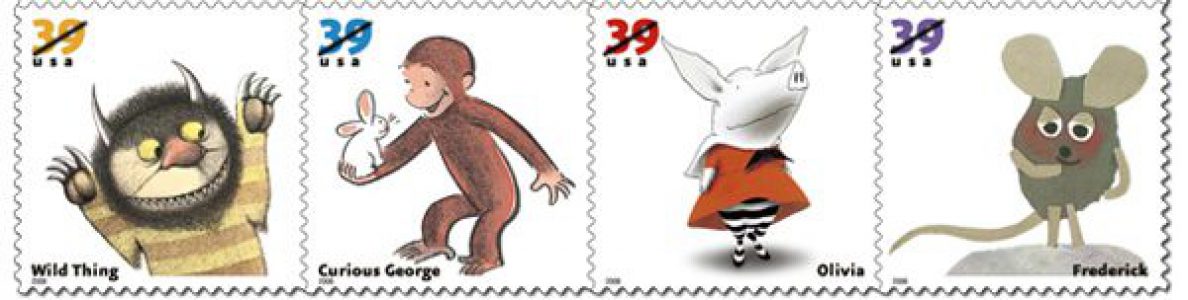
Leo Lionni, the artist, designer, and author of many innovative books for children, including Frederick, Swimmy, Little Blue and Little Yellow, did not emigrate to the United States as a child.  He was, as Kimmel reports, a Sephardic Jew born in 1910. His mother was not Jewish, and, although he had briefly spent some time in the U.S. as a child, his family returned to Europe. He emigrated with his wife and family in 1939, when he was 29 years old, fleeing Hitler. Given Kimmel’s emphasis on antisemitism as a significant factor in his book’s thesis, the timing of Lionni’s arrival is not irrelevant. Lionni’s autobiography, Between Worlds, is an essential book for anyone writing about his life and work. (Peter Spier, another Caldecott-winning illustrator, who created an illustrated U.S. Constitution, was also from the Netherlands, and also Jewish through his father.  Spier was a survivor of Theresienstadt , and emigrated to the U.S. in 1950.)

“I am Eloise. I am six. I am a city child.” Many readers do not realize that the creator of Eloise, Kay Thompson, was also of Jewish heritage. Kimmel includes references to her work and her Jewish identity, but confuses the facts.  Thompson, an actress and vocal coach as well as an author, was known to inhabit the character of Eloise by speaking in her distinctively haughty childlike voice. She never, however, voiced the part of that prodigiously annoying little girl, in spite of Kimmel’s definitive claim that “She heard her voice so vividly that in the animated films, she insisted on always performing the voice part of Eloise.” There was a live Playhouse 90 production of Eloise, two Disney live action movies in 2003, and a 2006 animated series. In none of these did Thompson voice the character of her unforgettable creation.  An accurate and extremely readable source of information about Thompson is Sam Irvin’s Kay Thompson: From Funny Face to Eloise. I recommend watching the Disney adaptations just to see Julie Andrews as Nanny.

Kimmel credits Jane Yolen for her influential role, and refers to the interesting fact that she wrote a children’s novel, Wizard’s Hall, which pre-dates Harry Potter and features similar elements to that blockbuster.  He refers to Yolen in the past tense: “Jane Yolen, born in 1939 to Ukrainian immigrant parents, wrote mostly fantasy fiction for children” (emphasis mine). Please don’t retire Jane Yolen! She has written over 400 books and is still writing (this one was published in 2024). We hope to see more from her! While many of her books involve fantasy, she has created works in other genres and frequently addresses Jewish themes. The Devil’s Arithmetic (1988) is considered to be one of the first works of fiction for children to discuss the Holocaust. It is an odd omission to neglect this crucial book, which in fact, incorporates fantasy into its historical narrative. Given the context of Jewish identity in Playmakers, Yolen’s specifically Jewish-themed works would seem as crucial as her fantasy books (some of which also have Jewish themes, such as The Last Tsar’s Dragons).

Kimmel is correct that children’s books have historically been gendered in their expected audience, but neither Charlotte’s Web nor Mr. Popper’s Penguins could be categorized as an example of a “girl’s adventure tale,” about “a cute and lovable creature that could be domesticated.”  Uri Shulevitz’s brilliant, penultimate, book Chance is not a graphic novel, but an illustrated memoir (and serves a shadow text to his last book). Jean de Brunhoff, listed by Kimmel as a legendary non-Jewish author and artist, actually had Jewish heritage. Admittedly, this fact is not widely known, but Kimmel carefully documents the somewhat hidden Jewish background of many other figures.

I still recommend reading Kimmel’s book. You will learn a great deal about the Jewish origins of Teddy Bears, Barbie, and Lionel trains. There is a fascinating section on the development of Black dolls, and the marketing of toys by gender. Kimmel chose to include children’s literature as a prominent topic within his argument. Having decided to integrate that field into his discussion of toys, he or his editors needed to have looked further into its sources.

Pride and Resistance

Red River Rose – Carole Lindstrom
Bloomsbury Children’s Books, 2026

In Red River Rose, Carole Lindstrom further develops the characters she presented in her picture book with Aly McNight, The Gift of the Great Buffalo. As Lindstrom explains in her author’s note, Rose’s story is rooted in a commitment to telling a story related to Laura Ingalls Wilder’s Little House books, from an indigenous perspective. Lindstrom’s work is not a refutation of Wilder’s, but her own, original, interpretation of the conflicts between settlers of European origin and the original inhabitants of lands in the Americas. Red River Rose is set during the late 19th century, specifically the North-West Resistance in Saskatchewan of 1885. At that time, First Nations and Métis peoples fought the Canadian government’s seizure of their lands.

Lindstrom’s distinctive narrative style is compelling. Her characters are individuals, not archetypes. Rose frequently refers to the moral ambiguities inherent in her choices, including that of armed resistance. Her father is courageous, particularly in comparison to other men in the community, and to Catholic clergy, who caution against resistance and advocate a passive acceptance of the Métis’s seemingly hopeless determination to reclaim their land. Rose’s mother is equally strong, holding her family together through deep love and a command of essential domestic skills.

Rose visualizes the beauty of her land and community, and Lindstrom’s poetic language communicates to readers the roots of the Métis’ intense identification with their home. “Rose wanted to burn the memory of the ferry sitting atop the sparkling water and the hawks soaring off in the distance into her brain forever. If she were a painter, she knew exactly what she would paint.” That identification allows her to counter the contempt of teachers or religious leaders who warn against the Métis’s struggle, warning Rose to “keep that talk at home” when she raises the possibility of fighting against oppression.

Ambroise, a boy Rose’s age, is her companion and equal; the two work together to devise plans that will support those adults who will fight against the government. Eventually, Rose assumes an active role herself, forced by circumstances to blur the boundaries between childhood and adulthood. Rose is highly intelligent; nothing in her character suggests duplicity, but she learns to use every skill necessary to acquire information, communicate it to others, and make her own decisions. Her father’s increasing trust in Rose affirms her choices, as when she remembers having supported her people by helping to locate a herd of buffalo. At that time, her father’s response was a complex mixture of anger at the risks Rose had taken, and gratitude for her bravery.

That conflicted response takes form in Rose’s consciousness. Her father reports the Métis battle against the Canadian Mounted Police, characterizing the fight as “a thing of beauty.” At the same time, Rose experiences grief for everyone’s losses, even for the Police and their families. She also recognizes the potential for change, as when “mean girl” Melanie, who had shown only contempt for the idea of resistance, begins to seem like a different person. The impact of fear and suffering had brought out aspects of her character that Rose had never seen. “Under different circumstances, she could learn to like Melanie.”

Victory has different forms. Although they did not achieve their ultimate goal, Rose, her family, and her community had the integrity to stand up “for themselves, for their homes, and for their way of life.” Red River Rose is not a story of glorious triumph, but of the refusal of individuals working together to protect what they love, and to sustain their vision of justice.

Mycological

Fritz: A Mushroom Story – written and illustrated by Kelsey Garrity-Riley
Tundra Books, 2026

Fritz is a quiet chanterelle mushroom.  He likes hats, which is a good thing, because he always appears to be wearing one, as well as a red cardigan. Fritz is quiet and introverted.  Books for children about people who prefer solitude or quiet activities to raucous socializing are a welcome phenomenon, and not a new one. Nor are books that emphasize that people with different, even opposite personalities, can still be friends (other examples can be found here and here and here). The mycological element in Fritz: A Mushroom Story is appealing, but Kelsey Garrity-Riley is not simply following a trend. Her mushroom child is his own person.

The details that support Fritz’s character are specific and not exaggerated. No, he doesn’t only sit curled up in a blanket reading books, although reading mysteries with his dad is one of his preferred pastimes. So is building boats out of acorns. It looks fun and simple, and messy enough to require a scraps of paper, depicted in a lovely collage style, to absorb the glue. His culinary tastes on sensible. Rose-hip ice cream and cream of chestnut soup are clearly appropriate for different temperatures. He’s not rebellious enough to reverse their seasons, but rather content with his choices.

Socializing is definitely part of Fritz’s life.  Garrity-Riley’s pictures, rendered in gouache, collage, pencil, and ink, feature a subdued palette with moments of brightness, much like Fritz’s day.  In an outing to the playground shades of green predominate, while a bright red slide just off center emphasizes that Fritz can have fun. Other scenes of offer balance, including a smaller circle of friends, and sometimes “only one friend” for cozy indoor play.  Red-roofed dollhouses populated with mushroom dolls stored in a basket seem perfect. Just when it might seem that solitude is not important to Fritz, Garrity-Riley reminds us that “often,” that state is exactly right for him. Reading in bed, his mushroom dolls placed at carefully composed angles, is just right.

Pip is Fritz’s more outgoing friend. The contrast between them is not so dramatic.  Pip enjoys theater and music, with all the character traits that implies. Since he is a fly agaric, otherwise known as amanita muscaria, his body is square and his top a dome.  At one point, the two pals are playing hide-and-seek, and when Pip finds Fritz, the latter declares, “Actually…I don’t think I’m ready to be found yet.” But their time together is harmonious, as they share different flavors of ice cream and “different ways to be wonderful.” There is a fine line between reassurance and preaching, and between resignation to unchangeable traits and celebration of them.  Fritz: A Mushroom Story captures that truth by speaking directly to young readers about difference, accompanied by the colors of a mycological childhood  they will recognize as their own.

Cats Scratch If You Hold Them Too Tight

Arthur’s Cat – written and illustrated by Johan Leynaud, translated from the French by Sarah Ardizzone
Eerdmans Books for Young Readers, 2026

Arthur is a little boy who loves his cat, Zeffo. They are inseparable. The problem is that boy and cat have somewhat different definitions of love. Arthur would like to hold Zeffo tightly and read to him. But he also insists on styling Zeffo’s fur and applying perfume to him. (images). Arthur’s Cat is a book that helps children to think about what it means to love someone, hardly a unique subject. There are many wonderful books that explore the same idea. (such as this and this.). Johan Leynaud’s text and artwork are distinctive. The pictures, rendered in pencil, ink, felt, and pen, and digitally, are simple and luminous, conferring a dual quality which makes them both realistic and strikingly stylized. The book is beautiful, without a trace of preachy sentimentality.

Most of each scene is in black and white, with pastel touches. Zeffo is sky blue, and Arthur has a gold face and limbs. His hair and clothing are white, outlined in black. Leynaud’s use of line is so skillful that each picture seems to emerge fully realized. A pyramid of cluttered objects rises to the left of a page, and Arthur gleefully runs towards his beloved cat. Zeffo objects to being forced into a superhero costume and flies off the facing page. At the same time that the images are reminiscent of animation, there is a stillness to each picture, encouraging the reader to respond to each one individually.

Composition is key to establishing contrast between boy and cat. Arthur jumps into the air, hoping to have fun with Zeffo, who sits on a tree branch, refusing to join in Arthur’s momentum. A game of hide-and-seek is an incentive to escape for the desperate cat. Finally, Zeffo has reached his limit and scratches Arthur, leaving a visible wound. Even the light red on Arthur’s arm seems, in the context of his previous uncomprehending happiness, serious enough. He is in tears.

Eventually, Arthur and Zeffo reconcile. The boy has begun to realize that love doesn’t confer the freedom to subject his pet to constant control. Zeffo also recognizes that he needs Arthur. This idea is visualized in a scene of tentative approach and flight, where Zeffo seems open to playing with Arthur but, once again, turns from him, his body divided as he escapes the page. Leynaud grants Zeffo the freedom to “hang back,” and even “be suspicious.” There is gentle humor in a picture of the boy crawling along as shower curtain rod and the cat turning his head to look at him, although it also seems dangerous! It’s fun to play, but when the game is over, Arthur again resists the confines of the page.

An anxious Arthur sits up in his elaborate bed, in a picture that calls to mind the illustrations for James Thurber’s Many Moons, by either Louis Slobodkin or Marc Simont. The enormously high headboard on the right side of the page seems ironic in light of the minimalist disorder of objects to the left. When Zeffo climbs up onto Arthur’s fluffy quilt, the patience of both boy and cat has been rewarded.

Supremely Adorable and True to Life

Bean Supreme (Tiny Bean’s Big Adventures, Book #2) – written and illustrated by Stephanie Graegin
Tundra Books, 2026

While the relationship between a grandparent and grandchild is certainly a promising subject for a children’s book, not every book is this category achieves both realism and imaginative innovation at the same level.  Bean Supreme is the second volume in Stephanie Graegin’s series about a very small hedgehog and her wise and loving grandmother.  The illustrations emphasize the miniaturized scale of their adventures, but also capture the essence of the characters’ bond.  Graegin narrates the episodic events in Tiny Bean’s life, accompanied by the unobtrusive guidance of Grandma.

The introductory chapter, “Tiny Bean, Tiny Neighbor,” introduces Bean to anyone who is not familiar with the first book.  The essential qualities of her identity are that she is a hedgehog and she is very small. She has a favorite stuffed animal, a pig named Clem.  Arrows point to these important people, and toys, in Bean’s life, including her grandmother, who waves at readers from her position underneath a strawberry hanging from a stem.  On the ground is a basket of “giant strawberries.”  Writing and images about smallness need to avoid exaggerated cuteness, and Graegin accomplishes this with great subtlety.

“Ice Cream Bean” begins with Bean drawing on the walls and wood floor of Grandma’s house. She’s not much mischievous as artistic, and Grandma’s explanation for Bean’s rule breaking is that they both had eaten too much ice cream, leading to wild dancing and exhaustion, as well as the episode of “redecorating.” Grandmother and granddaughter are similar visually, and in their thinking.  Soon they are using a roller and a paintbrush, at two different height levels, to clean up.The array of portraits on Grandma’s walls shows that she empathizes with a creative act, even one that Bean herself concedes was “a bit much.”When Bean and her friend, Gus, fly kites, Grandma helps her learn about the need for practice, but Grandma also experiences the anxiety of watching Bean elevated way too high. In this case, Grandma decides that the kites need to be put away in her attic until Bean is a bit bigger.

The book is not an ode to free-range parenting, but rather to common sense protectiveness.  In “Clean Bean” the little hedgehog learns about helping with chores and the need for a bath, and in “The Tall Tale of Bean Supreme” Graegin combines the wild imagination of a child with the child’s specific need to feel big and important.  Whether giving piggyback rides to creatures much smaller than herself, standing like a colossus next to an apartment building, she builds a sense of power. When Bean returns to reality and recognizes her own smallness, Grandma affirms her reasoning. 

Every story is accompanied by detailed images of domestic and outdoor scenes, gradations of color and shading, and composition that conveys both activity and stillness.  Bean Supreme is a visual and emotional treasure for multigenerational sharing.

Not an Open and Shut Case

A Door Is to Open – written by Kyo Maclear, illustrated by Julie Morstad
Tundra Books, 2026

They are brilliant individually, but each book by Kyo Maclear and Julie Morstad together is an open door. (see my reviews here and here and here).  There are metaphors and there are images. They work together unobtrusively, inviting children to look at the world in ways that are both familiar to them, and a bit different.  A Door Is to Open is dedicated to the innovative author Ruth Krauss, of A Hole Is to Dig, and the prolific artist and writer Remy Charlip. (The meter of the title also reminded me of Maclear and Morstad’s biography of Gyo Fujikawa, It Began with a Page, another homage to the creative process.) Once you enter this book, you will want to return many times.

Door may be inviting or forbidding. The book opens with a girl peering through a partly open door, about to admit a parade of black cats.  Maclear’s simple text is set against white space, and Morstad’s images, rendered in pencil, marker, and watercolors, have clean lines and bright, bold tones. Both author and artist never waste words or lines, giving readers the impression that every element they use is both natural and carefully chosen. The composition of the book can only be called perfect.

Some pictures are earthbound, such as a door opening onto a domestic interior where a table in the background is set with hot food and inviting curls of steam. Others are more flights of imagination, including a girl reading while seated on a planet. A pyramid of color, like an oversized pencil point, reaches up to the sun.  There are some black and white scenes, recalling older picture book art, and some on a smaller scale.

On another page, four separate scenes including doors feature a silhouette of diners, a door designed with floral folk art, a black door with knobs resembling eyes, and an enchanting door emitting musical notes. That last one accessed by a curving staircase. Each door is captioned by a statement or a question, which could be cryptic to adults, or obvious to younger readers.

Then there are fairies.   A full-sized child opens a very small door, witnessing a scene of “tiny friends” with butterfly wings. The child is not intruding, but visiting. An artist, wearing overalls that contrast with the gossamer part of her outfit, is painting flowers, while a child fairy builds with blocks.  Some pictures connect to the inspiration of other artists, such as one of boy drawing a door, in response to the suggestion, “Maybe you’ll choose to make one yourself.” Harold and the Purple Crayon is an invisible presence. A pink horse invites the boy, standing at the top of a staircase of his own creation, to go for a ride, conjuring Eric Carle’s The Artist Who Painted a Blue Horse. Maclear and Morstad gently encourage children to open doors, as the only way to learn about the world. Whether presented in sequence, as concentric boxes, or elements of the natural world, a door is to open and step through, into a complex of endless possibilities.

Not Here to Cause Trouble

Sidekicks: Thick as Thieves – written and illustrated by Dan Santat
Scholastic Graphix, 2026

Sidekicks: Thick as Thieves, is the second volume of Dan Santat’s Sidekicks series.  This graphic novel combines frenetic action with thoughtful dialogue about some serious questions. Among these are the nature of families, the difficulty of making tough decisions, and accepting that no one is skilled at everything he or she tries to do. And for adults, add to that list how difficult it might be to retire, even if you are a superhero.

When the book opens, Captain Amazing, also known as Harry James Blake, is about to, reluctantly, take a vacation. His sister Kelly is accompanying him to Crochet-Con, a convention of hobbyists that includes the display of a gargantuan ball of yarn.  Harry has recently taken up the hobby, and he‘s not good at it. He won’t win any prizes, except for participation. But he’s getting older, and now that his peanut allergy has been revealed by his nemesis, Dr. Havoc, his superhero days have been further compromised.

Meanwhile, back at the Society of Superheroes, there has been a data breach, and also a possible betrayal.  Shifty, Roscoe, Manny, and Fluffy are trying to put the pieces together, and Shifty’s brother, Whipley, makes a surprise appearance. The two siblings are thick as thieves, sort of. Shifty looks up to Whipley as a paternal figure, but in a complex series of revelations, it turns out that Whipley’s morals are rather flexible. Is anything and everything permitted if someone claims that he is only taking questionable actions to care for someone he loves?

Santat’s bad guys are scary, and the damage they inflict shows viscerally on their victims’ faces. Classic superhero action and robotic terror are confronted by gentle animals, confused, but also clever.  When Manny confesses his insecurities to Roscoe, “But I was worthless at the world’s biggest ball of yarn…I made careless mistakes,” Manny’s canine friend reassures him: “I have, too. That’s why we work together. You got my back, and I got yours.”  Santat’s gift for neatly summarizing difficult issues is visible here, as in all his books. Without a trace of condescension, he reminds readers that no one is perfect, but, just maybe, good can still defeat evil.