Grand Theft

The Mona Lisa Vanishes: A Legendary Painter, a Shocking Heist, and the Birth of a Global Celebrity – written by Nicholas Day with art by Brett Helquist
Random House Studio, 2023

This is one of the most intelligent books for middle-grade readers that I have read recently.  (It is equally appropriate for young adults and grownups.) When have you last found even a passing reference to the poet Guillaume Apollinaire (1880-1918) in a children’s book?  He happens to be one of my favorite of the modernists, and he also played an indirect but important role in one of the most important art thefts in history.  In fact, according to the mixed perspective of Cubism, where a painter can present an image from several different angles simultaneously, Apollinaire may have been front-and-center or off on the sidelines. 

It’s far more likely that young readers have encountered Picasso, as well as Leonardo da Vinci, or at least a reproduction or a parody or an animated version of one of their most famous images.  In The Mona Lisa Vanishes, Nicholas Day narrates the true story of an outrageous and puzzling crime.  Da Vinci’s now most famous painting, but much less iconic at the time, was stolen from the Louvre in August of 1911. The crime remained unsolved until 1913, on the eve of the World War that would forever change everything.  In parallel chapters, Day introduces Da Vinci himself, and describes the improbable circumstances under which he agreed to paint a young woman named Lisa Gherardini, the wife of Florentine merchant Francesco del Giocondo.  No one, including the great Renaissance man himself, is romanticized in the book, but nor are they used as sources of easy humor. There is plenty of humor in the story, but it is all rooted in human gifts and foibles and in the sometimes random events that affect people’s lives.
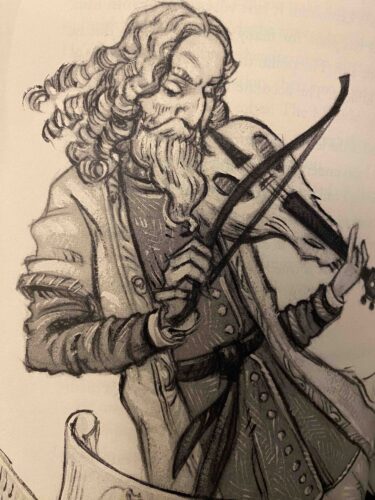
Not only does The Mona Lisa Vanishes tell a detective story, it also delivers a sophisticated yet accessible discussion of how fake news becomes more believable to the public than confusing facts.  Day also illuminates Renaissance and modern art, changes in the nature of museums in over time, the economically marginal existence of artists, and the development of modern forensics.  If the book sounds too ambitious, it is not.  Readers, young and older, will not be able to put it down!  Brett Helquist’s art depicts the main characters with gentle caricature. Chapters open with graphics in repeating patterns, while some sections of the story are preceded by black-and-white signage resembling the titles in silent movies.

It’s wonderful to contemplate how Day developed his idea, as well as the conviction that others would share his enthusiasm.  The book is not a dystopian fantasy, a traditional biography of a well-known figure, or a straightforward investigation of one historical event. All of those subjects are wonderful possibilities for children’s books. This one is different.  The concept may seem as enigmatic as the Mona Lisa’s smile, but the resulting work is a richly rewarding tour.

Looking Outward

On the Edge of the World – written and illustrated by Anna Desnitskaya,
translated from the Russian by Lena Traer
Eerdmans Books for Young Readers, 2023

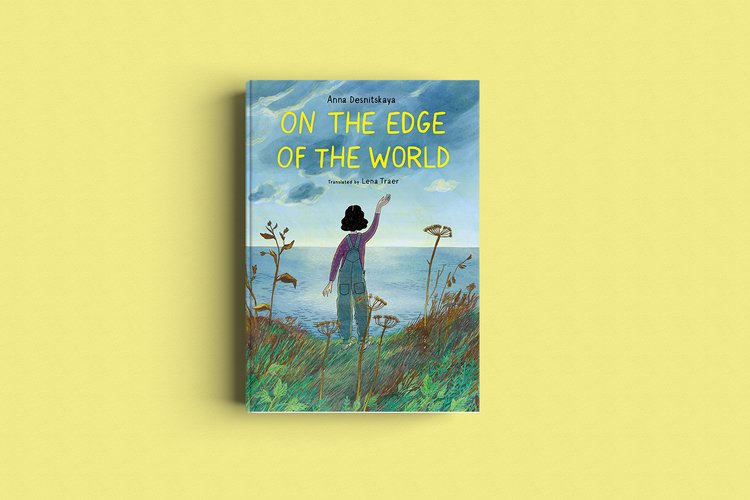
On the Edge of the World is a dual portrait of two lonely young people living on opposite sides of the world.  Vera’s home is on the Kamchatka Peninsula in Russia; Lucas lives on the coast of Chile.  In order to meet them, you will need to turn the book upside down.  Their stories meet at the center.  Each half of the story is a brief but deep insight into a child with a loving family who needs to find a friend.  Their similarities and differences bounce off one another like the signals each one hopes to send out in their search for companionship.  Both a realistic picture of childhood and a poetic exploration of distance—physical and emotional—On the Edge of the World is an exceptional work of picture book art.

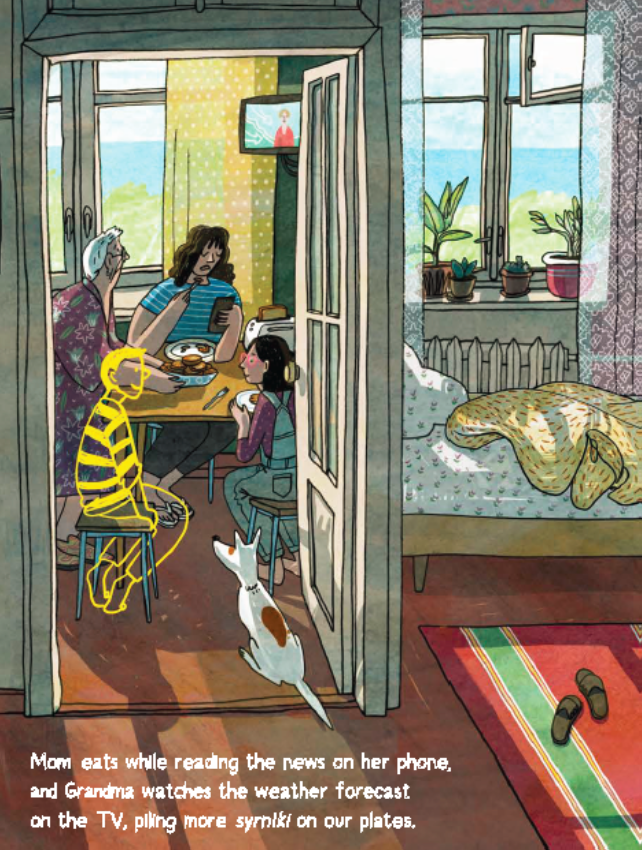
The endpapers open a chart of Morse Code, a language that bridges the divisions of nationality.  There is a map of the Kamchatka Peninsula, and an image of Vera.  Like all the characters in the book, her physical features are keys to a distinct personality.  Oversized glasses perched low on her hose, a self-conscious smile, and a pair of overalls over her purple shirt introduce a particular child in a remote place.  To expand on her portrait, Anna Desnitskaya presents a group of artifacts that form a kind of museum of Vera’s life.  She uses a flashlight on her searches, keeps a collection of feathers, and reads C.S. Lewis.  She is not alone, as evidenced by her grandmother’s delicious cottage cheese pancakes, and the support of a mother who is “smart and funny,” clearly two essential qualities.

Every child needs a friend, and Vera’s community provides few choices of companionship.  Small as her home is, Vera imagines that there would be room for one more inhabitant and this idealized figure appears as a ghostly but cheerful sketch in bright yellow outline.  If her indoor environment is compact, the outside is vast. Desnitskaya convincingly draws both the snug kitchen, where her solidly built grandmother presides over a small stove, and the mountainous outdoors, where Vera plays ball with her imaginary friend. 

Each picture combines stillness and motion, with earth colors both inside and outdoors, and carefully composed series of images against white space.  Vera’s mother’s instructions for producing a sekretik, a whole full of personal treasures, appears next to an image of Vera and her friend in the woods, examining the collection together. She will not give up on her hopes for a companion. 

Suddenly, the book transforms itself with three dramatic two-page spreads of wordless nature scenes, and then arrives in Chile, where Lucas is an uprooted urban child also coping with his abruptly new home. He also treasures valued objects, from ammonite fossils to a delicious hamburger.  He also loves to read, and has a strong grandmother, although her encouragement comes via video call. Lucas conjures a magical outline of a friend, who, remarkably, is the outline of Vera. He also alternates indoor activities in shadowy interiors with climbing trees and visiting the beach with his father.

When both children defy the laws of physics by reaching across the world, their persistent hopes are rewarded. While it is a virtual cliché do describe a book as bridging the gap between young and adult readers, On the Edge of World embodies that quality with visionary power. Everyone was a child once, and Desnitskaya’s book conveys that combination of intense solitude and the conviction that someone is out there who will understand you and embrace you for who you are.

Being President in Tough Times

Nice Work, Franklin – written by Suzanne Tripp Jurmain, illustrated by Larry Day
Dial Books for Young Readers, 2016

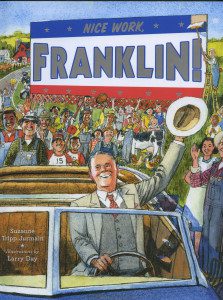
Franklin Delano Roosevelt, as Suzanne Tripp Jurmain points on the first page of this picture book biography, was a lucky man. He was born into wealth, and his personal qualities were a further asset to his inherent privilege.  Jurmain begins Roosevelt’s story by suggesting he was driven by rivalry with is distant cousin, Theodore.  Yet Franklin’s attempts to imitate Teddy’s more colorful characteristics eventually became the least relevant part of Franklin’s drive.  Now, when we so recently had a president who finds humor in mocking immigrants, people with disabilities, and women, FDR’s story of ambition melded with a deep sense of duty is especially inspiring reading for children. Nice Work, Franklin, is informative, engaging, and artistically distinguished.  It also conveys the message that disability is not an obstacle to great accomplishments.

There is quite a bit of text in the book, accompanied by Larry Day‘s kinetic and busy images that reflect immersion in American history, as well as in Franklin’s life.  Readers learn that he is stricken with polio; a series of images depict him learning to move with the aid of crutches.  The two-page spread gives the impression of separate animation cels cohering into movement.  Several scenes focus on a collective America, including a crowded line of unemployed workers seeking help on a bread line. The ironic contrast between a billboard’s heartless admonition, “JOBLESS MEN KEEP GOING WE CAN’T TAKE CARE OF OUR OWN,” and their desperate persistence, links Franklin’s struggle to their own.

The scene of his first inauguration, in the midst of the Great Depression, shows a sea of diverse faces, all confronted with the same problem and in need of leadership.  “Franklin stood up on his paralyzed legs and Americans saw that both sick people and sick nations could get better.” Of course, Roosevelt did not actually stand. He supported himself on the podium with his hands, offering an illusion at a time when disability carried an implacable stigma. Although the book simplifies many facts, it still expresses an essential truth about FDR’s presidency and the vast improvements his New Deal brought to the nation he served.

Wonderful period details encourage discussion with children.  Roosevelt speaks into a bank of old-fashioned microphones belonging to each radio network, while families listen to him speak over the air waves in their living room.  The sense that America was a vast sea of people and that each citizen was an individual comes across through nuanced facial expressions and gestures.

Finally, a map of the United States concludes the book.  Instead of state borders or geographic features, it represents typical activities, including a Black family filling their car with gas, working people punching a clock and collecting pay checks, and an extended family enjoying a meal. A few of the images overflow the edge of the map, as if to remind us that the energetic complexity of our country cannot be contained within one frame.  Nice work, indeed.

Singing of Family

The Song That Called Them Home – written by David A. Robertson, illustrated by Maya McKibbin
Tundra Books, 2023

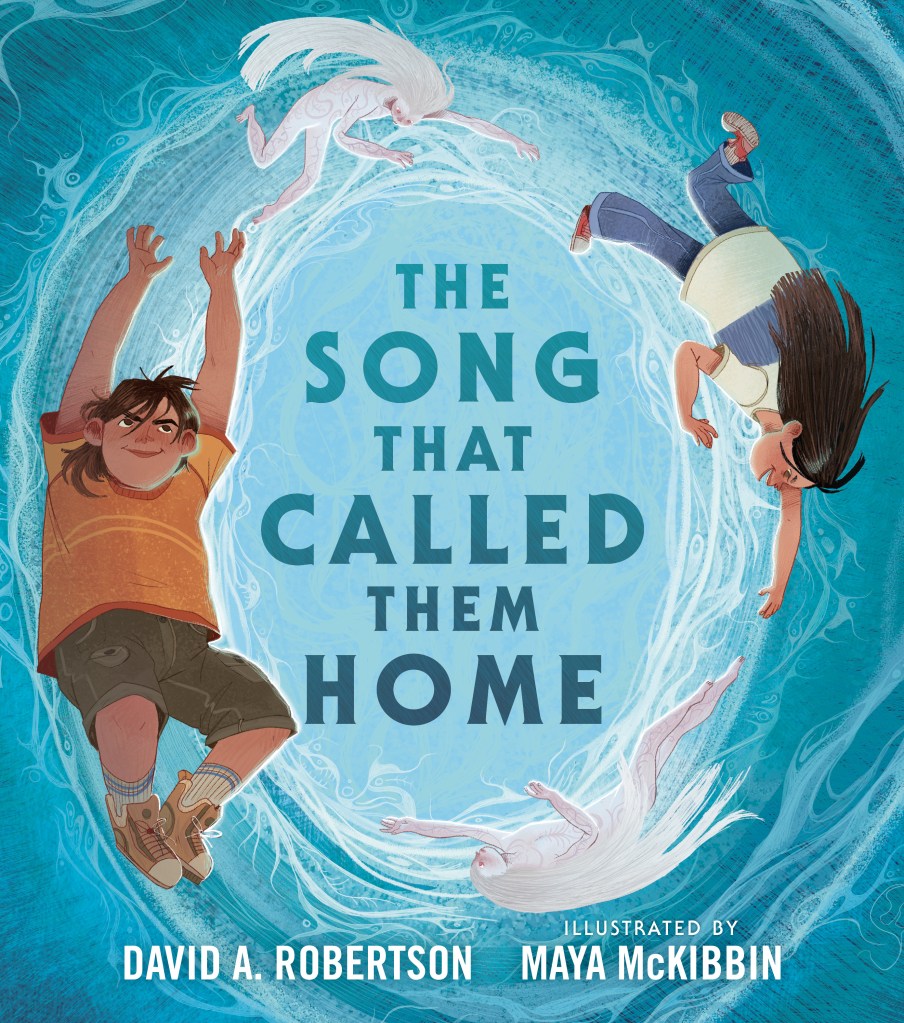
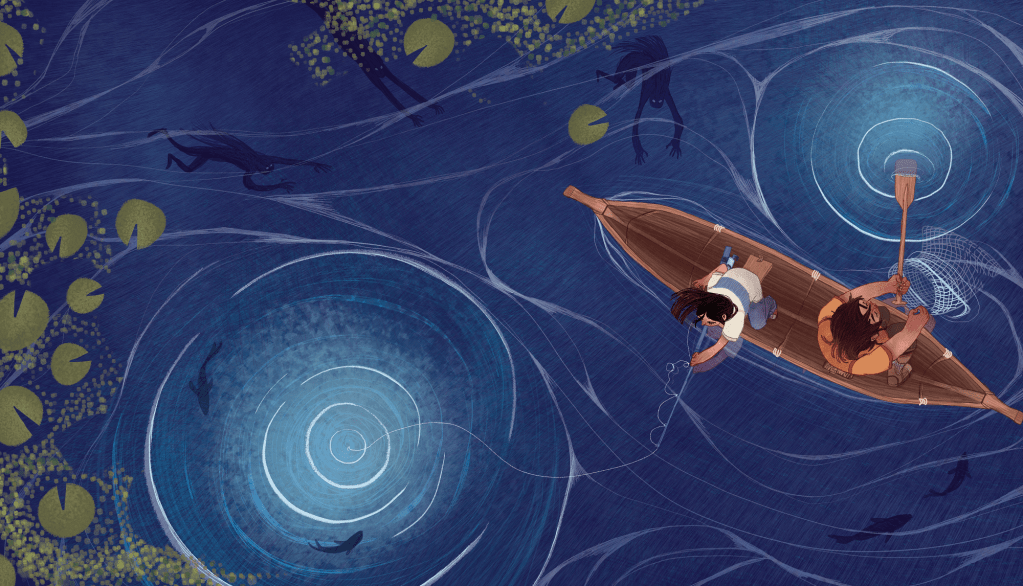
Lauren and James, a sister and brother, take a trip with their moshom (grandfather) to an unspecified destination. They are Indigenous young people and travel by canoe.  Tired from the journey, Moshom falls asleep and, as so many children in both life and folklore do, the siblings set out on their own adventure.  Soon, they are immersed in dangerous waters and Lauren is terrified to see James captured by the Memekwesewak, humanoid creatures who transport him to a portal where his fate will be unknown. Lauren finds the strength to save her brother from “A place she could not see. A place that made her whole body tremble.”

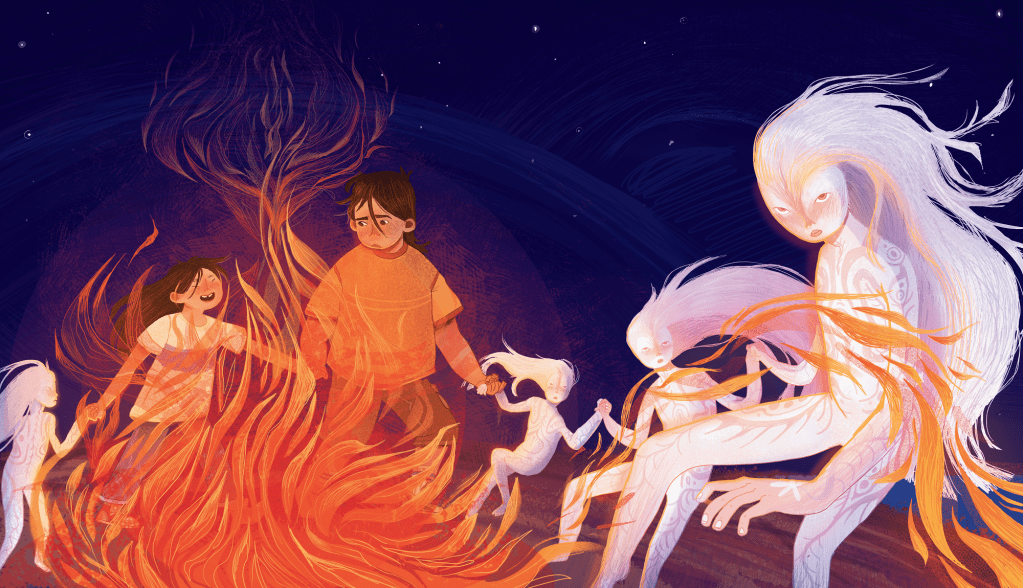
David A. Robertson (I’ve reviewed other books by him here, here, and here) creates tension through subtlety.  Are the Memekwesewak evil? They are pale and ghostly, but Maya McKibbin’s image of their dance surrounded by flames is ambiguous.  Robertson states only that James is “dancing his best,” an understated phrase that conveys Lauren’s confusion.  She enters the ring of dancing, her face showing excitement or fear.

The Memekwesewak are consumed with the conviction of their own superiority.  Robertson describes their frenetic motions, along with their chant about why their captive will never want to leave.  Perhaps their assurance is merited; Lauren begins to forget that her mission was to rescue James, not to abandon the familial love that had sent them on their trip with Moshom. 

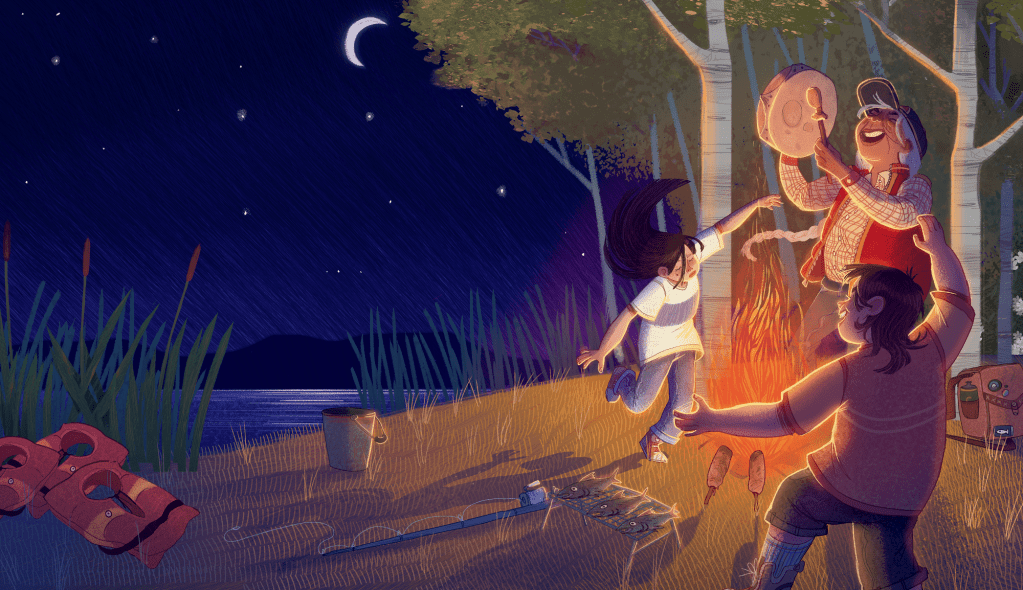
To borrow an allusion from a different culture, Lauren and James, like Dorothy in the Land of Oz, remember that home is where they belong.  When they stop dancing and listen, they regain their autonomy in a simultaneous sound and feeling: “The children could feel the drum in their chests, just like the beat of their hearts.” At that point, their return is assured, and only needs to be completed in an immersive series of words and pictures.  The balletic scenes of sister and brother diving, dancing, and then emerging through the portal, reunite them with Moshom. Every element in the book is quiet but resonant. There are no direct references to the power of family, but there is a reassuring tone. Even when the children are under threat, the beating drum of their grandfather’s song leads them to safety.  Robertson’s author’s note explains the traditions that inspired him, but readers from any background will identify with his story of exile and return.

Ingathering

Barefoot in the Sand – written by Hava Deevon, illustrated by Rotem Teplow, translated from the Hebrew by Gilah Kahn-Hoffmann
Green Bean Books, 2023

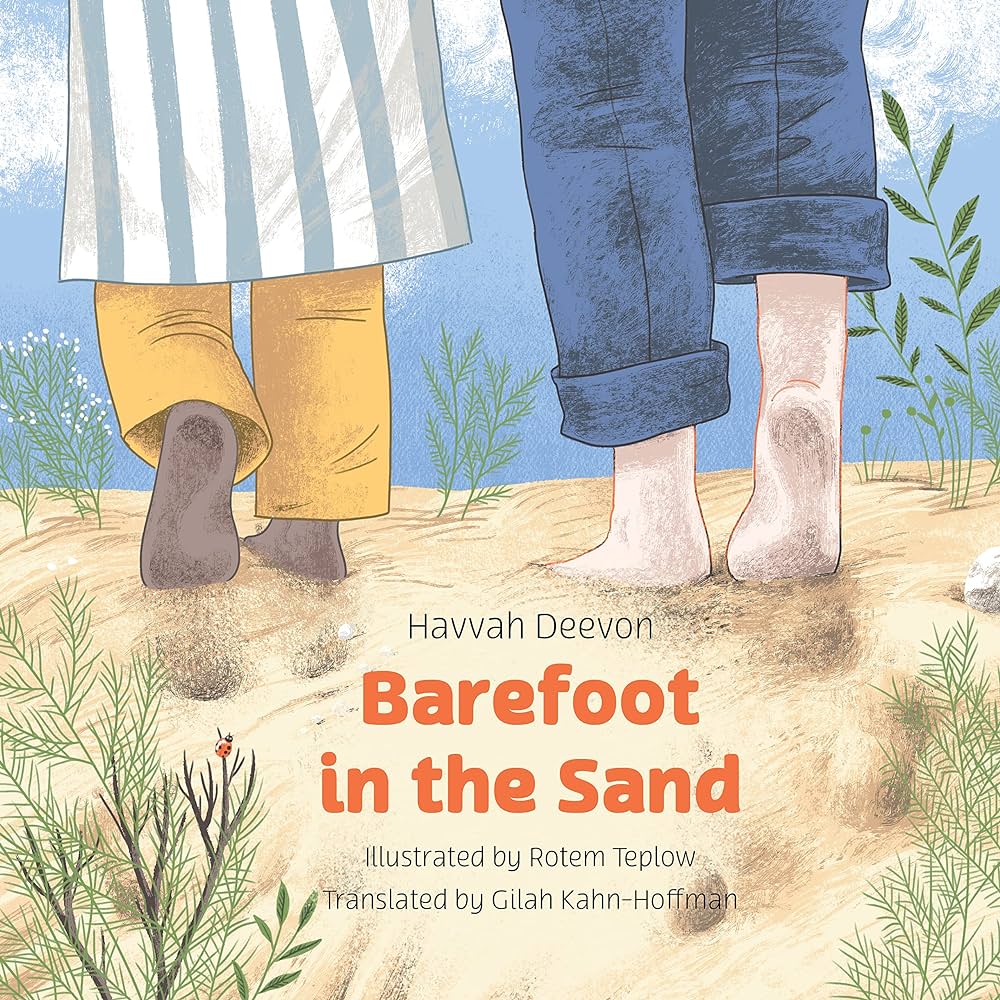
There is sand in this picture book about early immigration to the State of Israel, but there is no line drawn in the sand. Instead, two Jews, one from Romania and the other from Yemen, meet in the land they had dreamed and prayed about.  Maybe the reality they encountered differed somewhat from their long-held image, but they are both deeply grateful to their new home. 

Growing up in Romania, Saul could only wonder what it would be like to “walk barefoot on warm, golden sand.”  Rotem Teplow’s pictures gradually introduce a range of people and objects set carefully against white space (I’ve reviewed other books by her here and here). She depicts Saul in leather shoes and a belted coat, walking through snowy fields and pine trees.  On the facing page, he is still wearing his coat, but his shoes are gone and the pine trees have been replaced by the sea and an unfamiliar skyline.  Years of planning, visualized as a hand-drawn map, a pen and inkwell, and the money for his passage, finally become a reality. He boards a ship to Tel Aviv.  Hava Deevon chooses to omit details about Saul’s background or to the historical events that influenced the timing of his voyage.  The purpose of the book is not to narrate the complex history of Israel, but rather to encapsulate one person’s experience as his dream transitions to fulfillment.

When Saul encounters another refugee, he has a moment of almost cognitive dissonance.  The stranger, Solomon, is from Yemen, and appears almost a biblical figure from Saul’s perspective.  His skin color and clothing are completely different from Saul, who at first lacks a frame of reference for this encounter.  Then both men recite the Hallel prayer of thanksgiving; its solemnity is balanced by their laughter at the melding of contrasting accents intoning the same ancient words.  Israel is strange and yet fundamentally familiar to both of them. Barefoot in the Sand combines the tone of a fable with specific elements of the history that unites Saul and Solomon.  Children will understand its accessible message about persistence and hope, while adults may also read it with foreboding, against an unfolding scroll of recent events.  Both responses are equally meaningful ways to interpret Saul and Solomon’s barefoot trek across the sand.

Bilingual and Delicious

Pizza in Pienza – written and illustrated by Susan Fillion
David R. Godine, 2013

Pizza in Pienza is a distinguished work of picture book art.  It is not only about pizza, nor only about food, not that those would not be legitimate subjects in and of themselves.  Concise and poetic text in both English and Italian relates both the history and meaning of pizza.  Careful design, with richly colored images framed by white space, is as visually delightful as the meals represented. A rich cast of characters includes modern gardeners and shoppers, a queen of Italy, and the Mona Lisa delicately holding a slice of the food consumed by “…Egyptians and Babylonians…Armenians and Israelites,..for centuries.” The abundant back matter includes a pronunciation guide, historical background, and a recipe, of course, for pizza.  In her note from the author/illustrator, Susan Fillion explains why the topic of pizza has both specific and universal value.

The book begins with non-ironic humor, as Fillion juxtaposes a portrait of Queen Margherita in 1889, and one of herself seated on the steps of her home between some lush plants.  Both the pictures themselves and the sometimes unanticipated connections between them remind me of Maira Kalman, and also of cubism, fauvism, and medieval art in their use of perspective and color.  Food is everywhere, sometimes as one element of a scene (“My favorite place to go is Giovanni’s, and my favorite food is pizza.”) and sometimes as the subject of a still life (“Here in Italy, we eat our main meal at midday.”) In addition to pizza there is: l’insalata, il risotto, I biscotti, il formaggio, l’acqua gassata, plus equally beautiful utensils for consuming them.

Fillion leads up to history in a natural transition, as she pictures herself researching history in the library, and the presents the ancient world: “Incredibile! Scopro che la storia della pizza è antica. Davvero moto antica.”  Modern pizza originated in Naples, and readers learn that the mozzarella used in the recipe came from water buffalos, and that the first pizzeria in the United States dates from 1905. If you already knew those facts, you have probably never seen them visualized this way.  A picture of two male and one female soldier enjoying the food after World War II is also poignant, optimistic, and quietly humorous.

Picture books with food themes have become something of a trend, perhaps because adult and young readers both relate to them.  There is nothing trendy in this book, just a carefully composed and insightful look back into the past of a food, and its ongoing relevance to “tutto il mondo!”

Searching for Treasure

Penguin and Ollie – written and illustrated by Salina Yoon
Bloomsbury Children’s Books, 2023

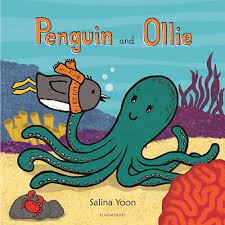
Salina Yoon’s Penguin is back looking for companionship. Last time, he befriended an elephant, but in Penguin and Ollie he stays beneath the sea, where he naturally expects to find buried treasure.  He finds a friend, an octopus who is much more fearful of the enemies that he can usually hold off through camouflage.  They may have different goals at first, but Penguin and Ollie swim through pages of blue sea, brightly colored fish, and assorted life forms in orange, purple, and gold. As in her other books, Yoon’s characters have the simplicity that appeals to young children, and allow a bit of fantasy to enter the natural world.

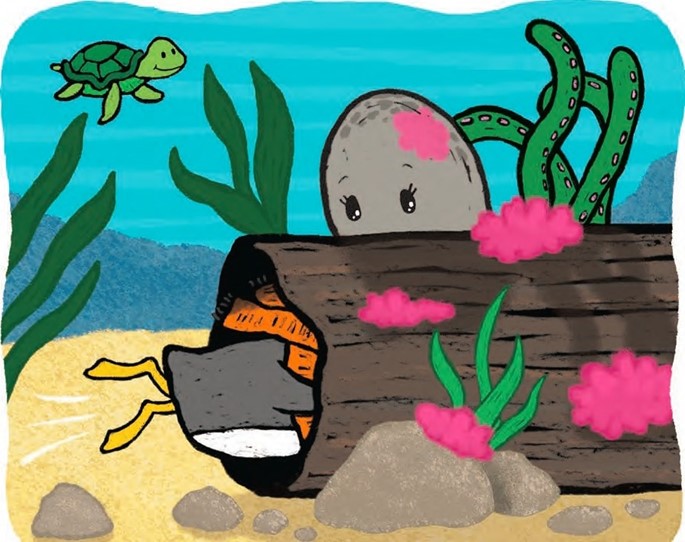
Images of Penguin on his quest to find the treasure chest show him entering a hollow log and floating through branches of kelp.  He notices many other items of interest along the way, including a bright red crab and an equally red lobster. Meanwhile, Ollie is the total opposite, except when his fear causes him to produce ink. Then, as he explains to Penguin, he becomes all too visible to potential predators, and even to harmless neighbors in the sea.  Penguin explains that he only wanted to locate treasure, and encourages him to look at the world differently. Penguin explains his own perspective concisely: “But you don’t have to hide from me. I like to SEE my friends.”

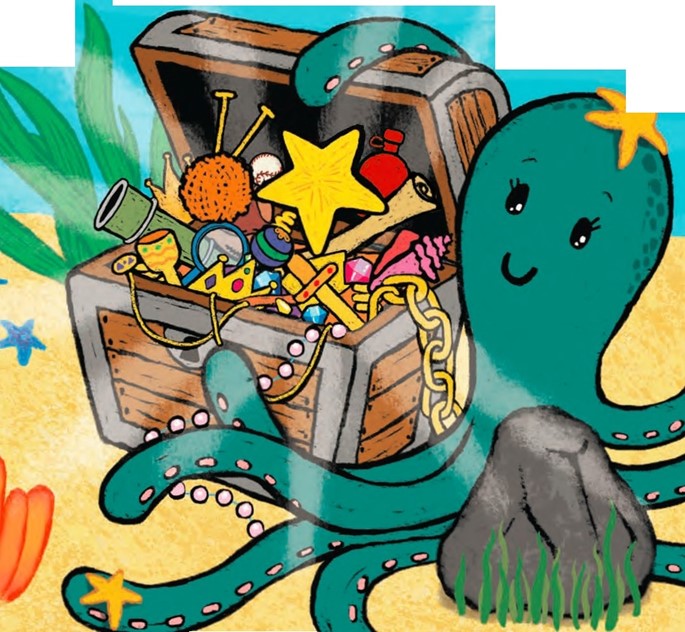
Real animals protect themselves, but Penguin inhabits a universe of kindness and empathy.  Even the shark grins in a non-threatening way when the treasure chest finally appears.  Since it contains, among other valuables, knitting needles and yarn, an animal with eight arms is content, and ready to craft for his new friend.  The book concludes with a scavenger hunt for attentive readers.  In Yoon’s world of warm connections made plausible through engaging words and bold colors, a penguin can wear his scarf anywhere, even underwater.

It’s a Small World

The Hidden World of Gnomes – written and illustrated by Lauren Soloy
Tundra Books, 2023

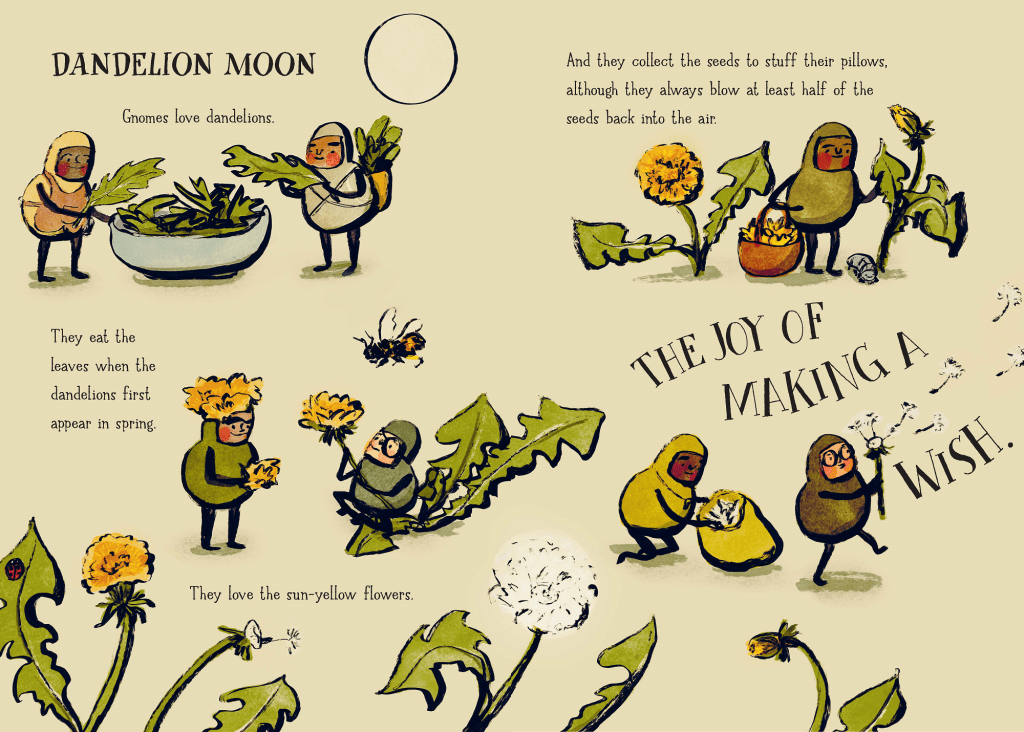
To children, convinced that there are parallel universes of humans, animals, or supernatural creatures, their worlds may not be hidden at all. If they are hidden, they are accessible to anyone committed to looking for them.   Lauren Soloy  (I’ve reviewed her other books here and here) is consciously working in the tradition of Beatrix Potter, as well as Mary Norton’s The Borrowers, The Giant Golden Book of Elves and Fairies by Jane Werner and Garth Williams, and Gyo Fujikawa’s Come Follow Me to the Secret World of Elves and Fairies and Gnomes and Trolls, as well as many other classics. Yet her visual style is unmistakably hers alone, and her approach is much more than an homage.  The Hidden World of Gnomes is truly distinctive: a catalogue, a meditation, a work of gentle humor and an ode to humanity, big or small.

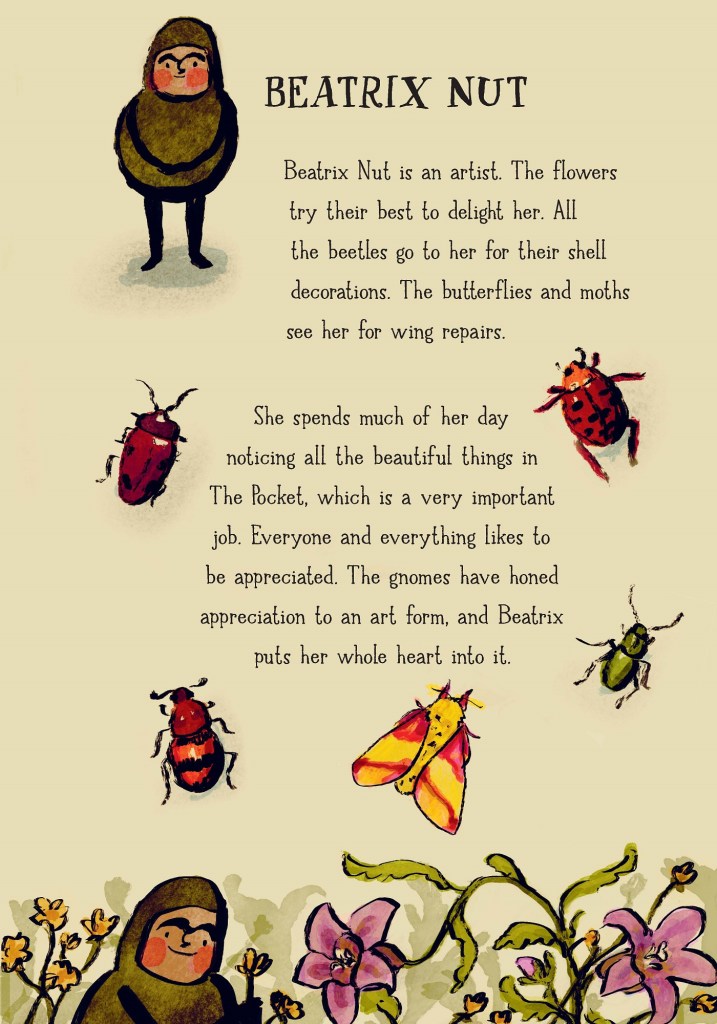
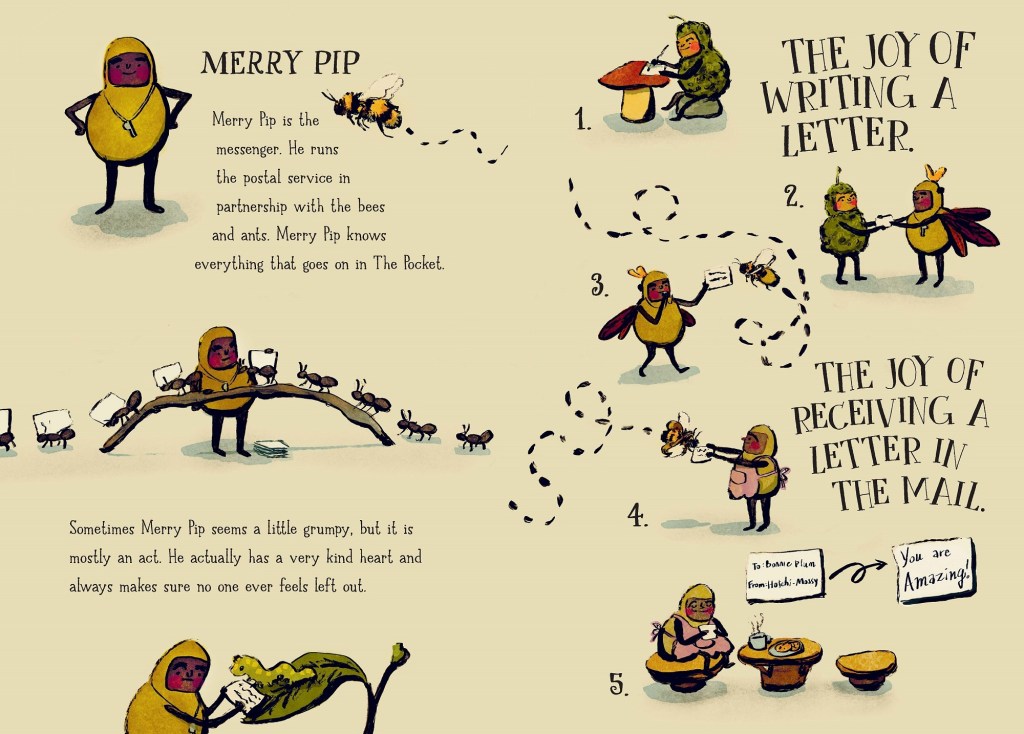
This book as 96 pages. You can read it all at once, or by individual sections.  It is not a sequential narrative, but an introduction to a fantasy world people by hidden folk, with names such as Puckle Swift, Cob Tiggy, Hotchi-Mossy, and, of course, Beatrix Nut. As Soloy helpfully points out in her greeting, “Their hearts may seem small, but actually they are big enough to hold the entire world and al the plants, animals and fungi that live there.” Note the specificity of her definition.  Each gnome is a unique individual but they inhabit a community, just like the rest of us.  They employ a lunar calendar (like some of us), dance and sing spontaneously, and use a variety of tiny implements made from both the natural and artistic worlds.

Their existence is full of many different kinds of joy:  making a wish on a dandelion, writing a letter, listening to birds and laughing with friends. The types of joy that characterize their lives are either timeless (bird listening) or defiantly old-fashioned (letter writing.).


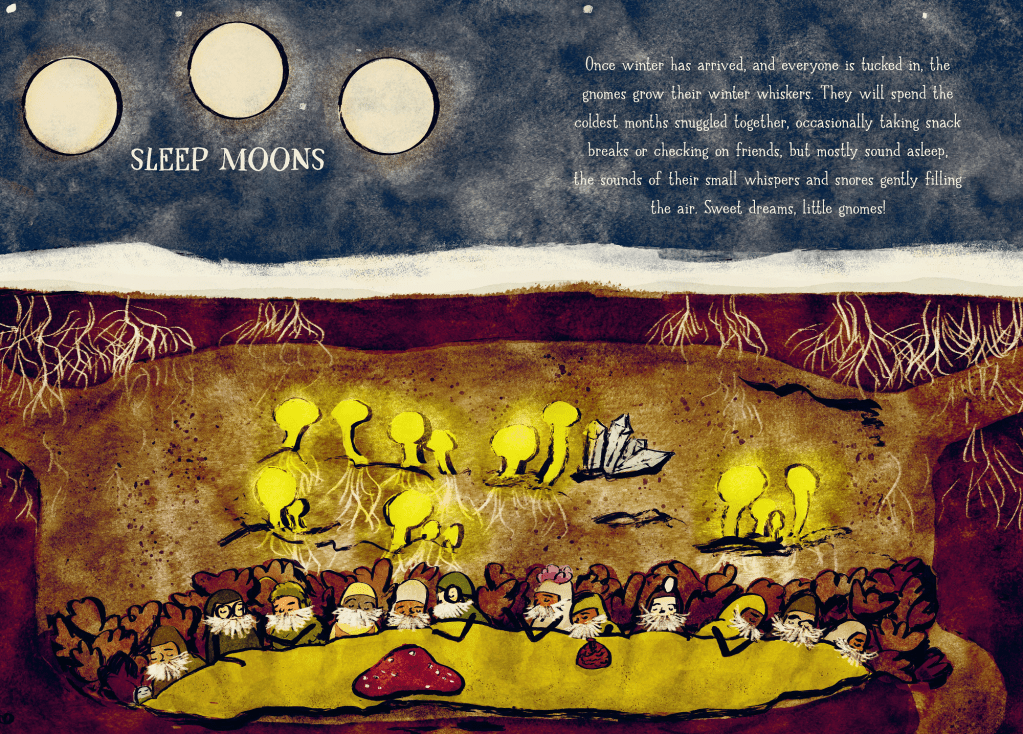
Soloy’s inimitable style combines simplicity and detail.  The gnomes have simple body forms and stick-figure limbs. Their eyes and smiles adopt a range of expressions within a deceptively limited range, by slight adjustments of size or angle. Earth colors fill their habitat.  The gnomes’ winter rest scene shows them asleep in a communal bed, having grown white beards as a symbol of sagacity.

They are both childlike and old; part of the beauty of being a gnome is agelessness! At the end of the day, or the month, or the season, their message is one of persistent joy. Like Charlotte and her web,  they even spell it out for you. Soloy wears her literacy and artistic sophistication lightly, while communicating to children that she knows what it’s like to live in two worlds. 

Butterflies, Inside and Out

May’s Brave Day – written and illustrated by Lucy Morris
Bloomsbury Children’s Books, 2023

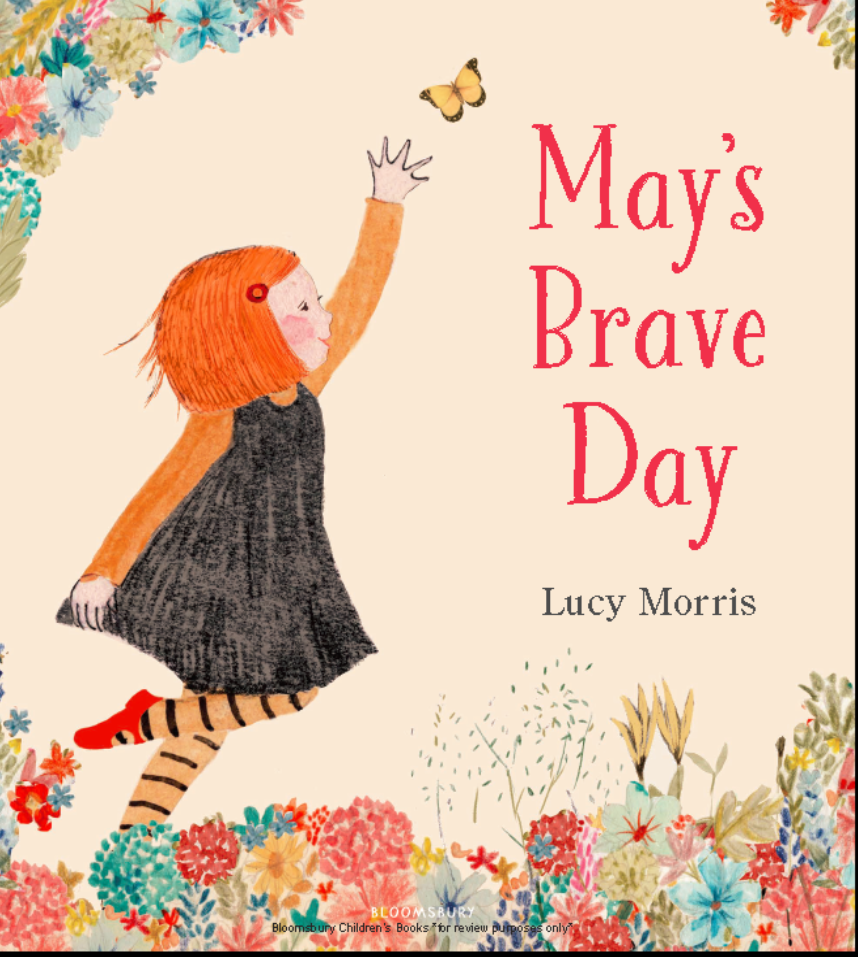
Books for children about starting a new school should be realistic but gentle.  Lucy Morris’s May’s Brave Day fulfills both those requirements, and uses a novel conceit about butterflies.  May has the proverbial butterflies in her stomach at the thought of beginning a new experience, but she is also drawn to the calmness and freedom of the outdoors. The book centers on her unrealistic hope of avoiding her fears by jumping, skipping, or outrunning the creatures in her stomach.  When she inevitably has to confront the source of her anxiety, a gradual and believable resolution is comforting to readers. 

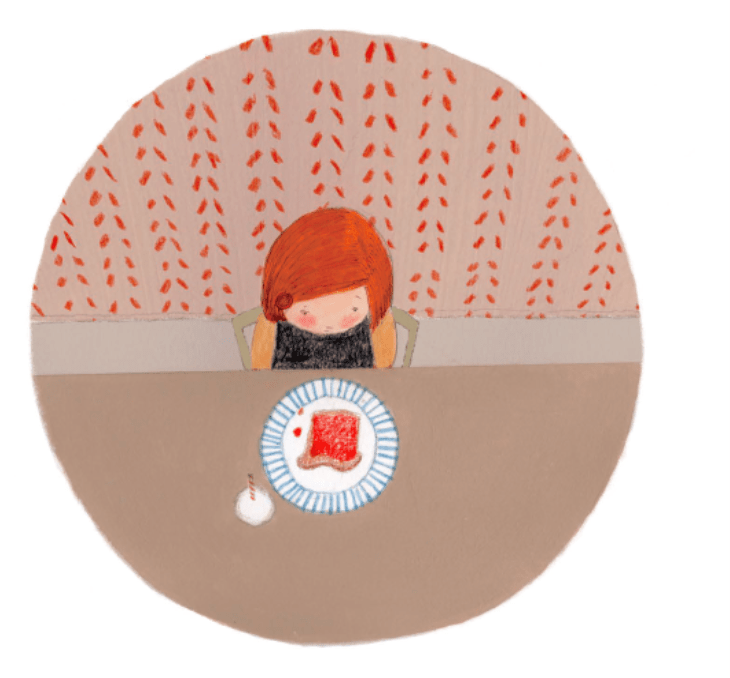
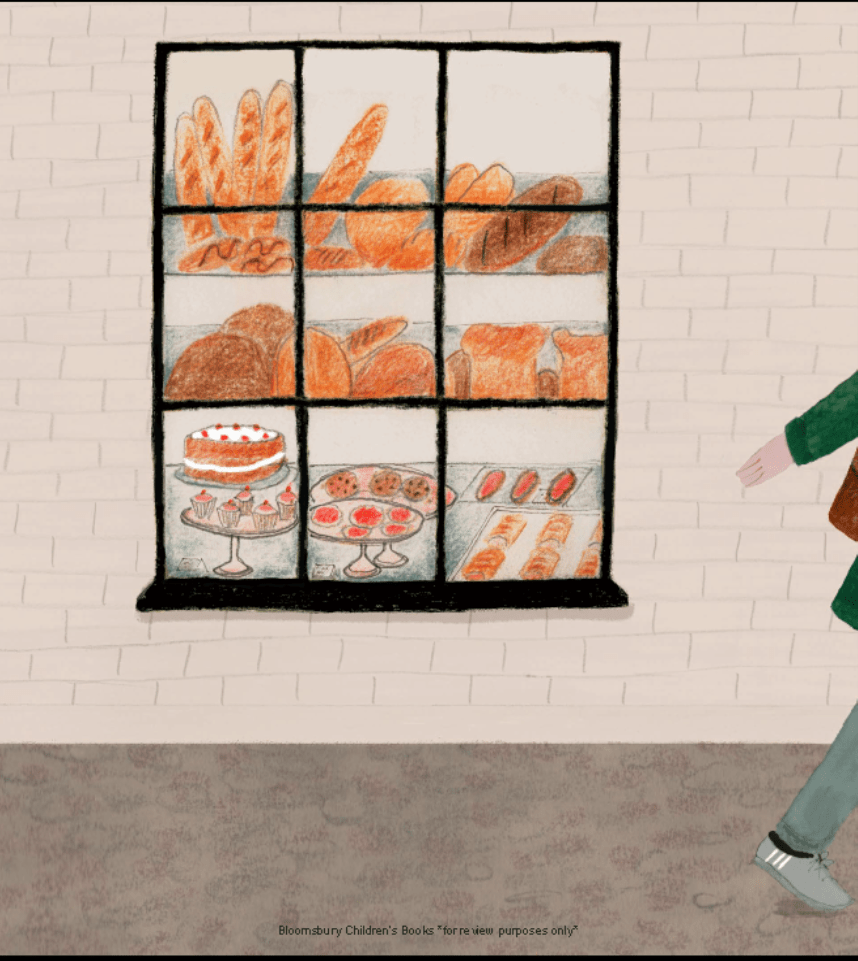
Both the text and illustrations are understated.  Morris portrays May in a series of scenes: looking down at an uneaten slice of toast, retrospectively exhibiting courage while learning to ride a bicycle and swim, peering into a pond of goldfish.  The following sequence of pictures brings in May’s mother, who reminds her that her worries are to be expected, and gives examples of birds, frogs, and ducklings or need to acquire skills.  Then there is a visual transition from the natural word to the interior of a bakery, as May walks along the street, wearing a backpack that is the first clue about the source of her mood. She is so distracted that even the bread and cakes depicted in each frame of the window are invisible to her.  In an unusual strategy for books about beginning school, May’s feelings initially take precedence over their cause. 

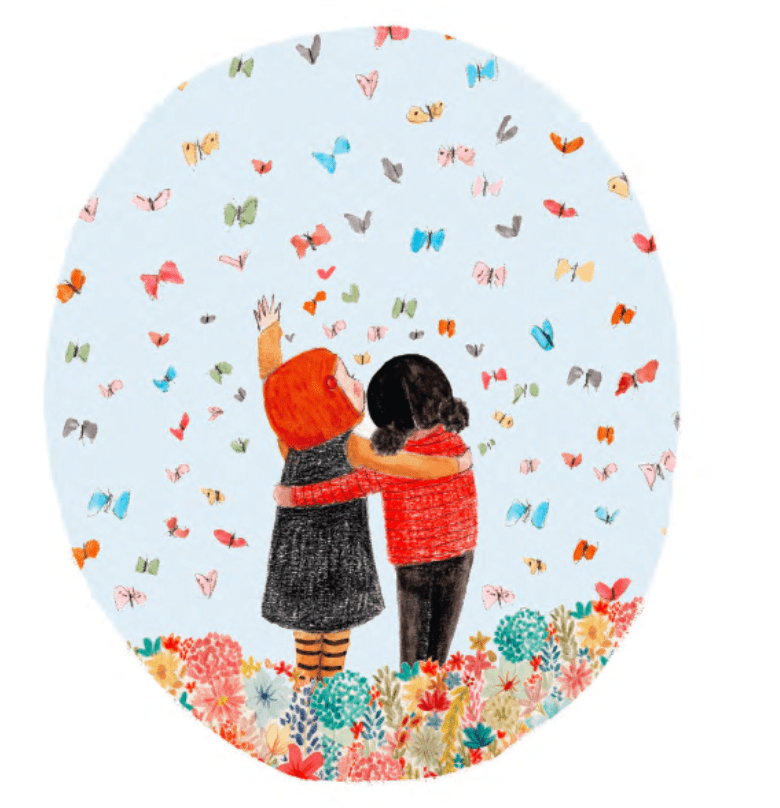
The schoolyard is full of other equally unsure children, some clinging to parents. This scene of isolation soon becomes one of community, at first represented by coat hooks labeled with names, and then by purposeful activities and friendship.  Children are engaged in different projects and interact with one another, but there is space between them, expressing a sense of respect for their individuality.  May’s fears abate, and the loneliness that had been implicit in earlier pages disappears.  She embraces her new friend against a background of multicolored butterflies and a lush carpet of flowers.  Instead of an ending reinforcing that the previously resistant child is excited at the prospect of returning to school the next day, May is simply able to eat that slice of toast.  The butterflies are not gone, but they are outside where they belong. A sense of patience imbues this carefully paced story about a universal but outsized event in a child’s life.

Don’t Connect the Dots

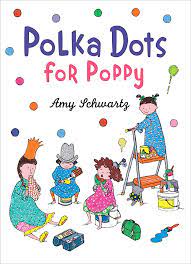
Polka Dots for Poppy – written and illustrated by Amy Schwartz
Holiday House, 2016

Sometimes a child develops an attachment to a particular color or pattern.  Plaid, pink, houndstooth, unicorns, can all become elements of style and of her personal identity (some examples are here and here and here and here). The much missed Amy Schwartz, as gifted an author as an illustrator, has many books that capture how children feel about themselves and the world and people around them. In Polka Dots for Poppy there are four sisters and a mother who understands each one’s need to be different. (Schwartz, who grew up in a family of four daughters, dedicated the book to the memory of her mother, Eva Schwartz.). She combines realism about family life and the fairy tale archetype of multiple children and a parent, only happier and healthier. 

The four girls are not the sisters in Little Women, but readers can’t be blamed for thinking about them, either. Instead of Meg, Jo, Beth, and Amy, these sisters are Ava, Isabelle, Charlie Ann, and Poppy. They all. need new school clothes, requiring an outing with their patient but determined mom.  These four are not obsessed with external standards of fashion.  They first appear in simple nightgowns and pajamas (Charlie Ann), and their mother is wearing flowered pajama pants and a purple robe. Her outside clothes, leggings and a jumper, resemble these in simplicity. 

Ava favors princess dresses, Isabelle demands purple, Charlie Ann is eager for cowboy clothes, and Poppy craves polka dots so much that she doesn’t even ask for it in a complete sentence: “Polka Dots!”  The other sisters have specific visions of their desired outfits, which are made complete by crowns, pockets, and even apples for the cowboy’s horse.  Poppy is singularly focused. Polka dots are enough all by themselves.  Schwartz creates characters through a minimum of carefully selected words, and active, bright pictures. There are scenes are daily activities, including trying on cowboy boots in the shoe store and riding the escalator up to the “girl gear” department.  There is also a two-page spread of the sisters’ ideal designer pieces floating against a black background punctuated by stars.

A basket of art supplies appears on the floor of the girls’ bedroom, and later plays an important role in establishing Poppy’s creativity and persistence, as well as her sisters’ supportive natures. (A sketchpad and paints also accompany the book’s dedication.) Dressing up and acting out are paired together, as the girls enjoy toast and chocolate milk, decked out in their dream apparel.  Concrete tools from their project lie randomly on the floor, the ball of yarn, scissors, and stray markers left as evidence of their cooperation and imaginative solution to a problem.  Poppy is triumphant, with even the soles of her shoes configured to be unique. As Amy Schwartz demonstrates with humor and empathy, sometimes children need to display who they are.