Ingathering

Barefoot in the Sand – written by Hava Deevon, illustrated by Rotem Teplow, translated from the Hebrew by Gilah Kahn-Hoffmann
Green Bean Books, 2023
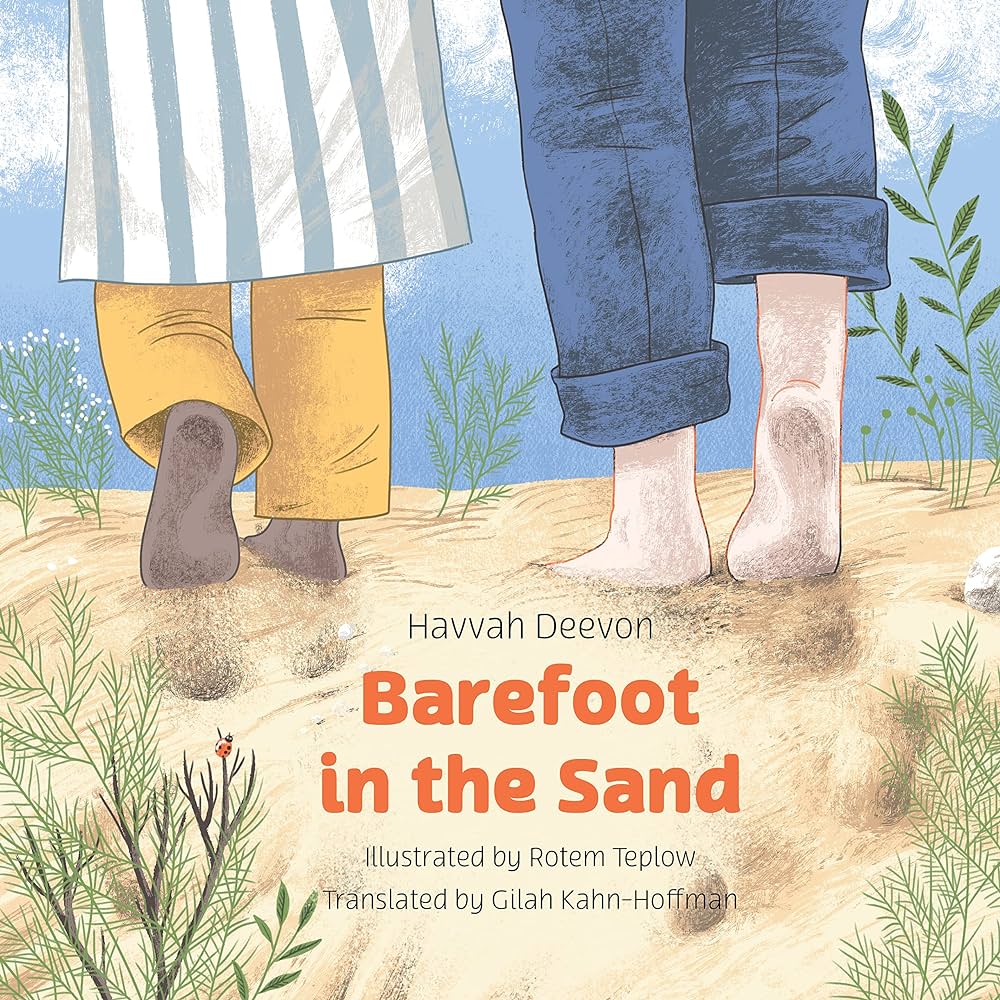
There is sand in this picture book about early immigration to the State of Israel, but there is no line drawn in the sand. Instead, two Jews, one from Romania and the other from Yemen, meet in the land they had dreamed and prayed about.  Maybe the reality they encountered differed somewhat from their long-held image, but they are both deeply grateful to their new home. 

Growing up in Romania, Saul could only wonder what it would be like to “walk barefoot on warm, golden sand.”  Rotem Teplow’s pictures gradually introduce a range of people and objects set carefully against white space (I’ve reviewed other books by her here and here). She depicts Saul in leather shoes and a belted coat, walking through snowy fields and pine trees.  On the facing page, he is still wearing his coat, but his shoes are gone and the pine trees have been replaced by the sea and an unfamiliar skyline.  Years of planning, visualized as a hand-drawn map, a pen and inkwell, and the money for his passage, finally become a reality. He boards a ship to Tel Aviv.  Hava Deevon chooses to omit details about Saul’s background or to the historical events that influenced the timing of his voyage.  The purpose of the book is not to narrate the complex history of Israel, but rather to encapsulate one person’s experience as his dream transitions to fulfillment.

When Saul encounters another refugee, he has a moment of almost cognitive dissonance.  The stranger, Solomon, is from Yemen, and appears almost a biblical figure from Saul’s perspective.  His skin color and clothing are completely different from Saul, who at first lacks a frame of reference for this encounter.  Then both men recite the Hallel prayer of thanksgiving; its solemnity is balanced by their laughter at the melding of contrasting accents intoning the same ancient words.  Israel is strange and yet fundamentally familiar to both of them. Barefoot in the Sand combines the tone of a fable with specific elements of the history that unites Saul and Solomon.  Children will understand its accessible message about persistence and hope, while adults may also read it with foreboding, against an unfolding scroll of recent events.  Both responses are equally meaningful ways to interpret Saul and Solomon’s barefoot trek across the sand.

Bilingual and Delicious

Pizza in Pienza – written and illustrated by Susan Fillion
David R. Godine, 2013

Pizza in Pienza is a distinguished work of picture book art.  It is not only about pizza, nor only about food, not that those would not be legitimate subjects in and of themselves.  Concise and poetic text in both English and Italian relates both the history and meaning of pizza.  Careful design, with richly colored images framed by white space, is as visually delightful as the meals represented. A rich cast of characters includes modern gardeners and shoppers, a queen of Italy, and the Mona Lisa delicately holding a slice of the food consumed by “…Egyptians and Babylonians…Armenians and Israelites,..for centuries.” The abundant back matter includes a pronunciation guide, historical background, and a recipe, of course, for pizza.  In her note from the author/illustrator, Susan Fillion explains why the topic of pizza has both specific and universal value.

The book begins with non-ironic humor, as Fillion juxtaposes a portrait of Queen Margherita in 1889, and one of herself seated on the steps of her home between some lush plants.  Both the pictures themselves and the sometimes unanticipated connections between them remind me of Maira Kalman, and also of cubism, fauvism, and medieval art in their use of perspective and color.  Food is everywhere, sometimes as one element of a scene (“My favorite place to go is Giovanni’s, and my favorite food is pizza.”) and sometimes as the subject of a still life (“Here in Italy, we eat our main meal at midday.”) In addition to pizza there is: l’insalata, il risotto, I biscotti, il formaggio, l’acqua gassata, plus equally beautiful utensils for consuming them.

Fillion leads up to history in a natural transition, as she pictures herself researching history in the library, and the presents the ancient world: “Incredibile! Scopro che la storia della pizza è antica. Davvero moto antica.”  Modern pizza originated in Naples, and readers learn that the mozzarella used in the recipe came from water buffalos, and that the first pizzeria in the United States dates from 1905. If you already knew those facts, you have probably never seen them visualized this way.  A picture of two male and one female soldier enjoying the food after World War II is also poignant, optimistic, and quietly humorous.

Picture books with food themes have become something of a trend, perhaps because adult and young readers both relate to them.  There is nothing trendy in this book, just a carefully composed and insightful look back into the past of a food, and its ongoing relevance to “tutto il mondo!”

Searching for Treasure

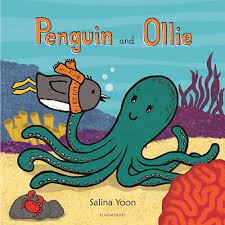
Penguin and Ollie – written and illustrated by Salina Yoon
Bloomsbury Children’s Books, 2023

Salina Yoon’s Penguin is back looking for companionship. Last time, he befriended an elephant, but in Penguin and Ollie he stays beneath the sea, where he naturally expects to find buried treasure.  He finds a friend, an octopus who is much more fearful of the enemies that he can usually hold off through camouflage.  They may have different goals at first, but Penguin and Ollie swim through pages of blue sea, brightly colored fish, and assorted life forms in orange, purple, and gold. As in her other books, Yoon’s characters have the simplicity that appeals to young children, and allow a bit of fantasy to enter the natural world.

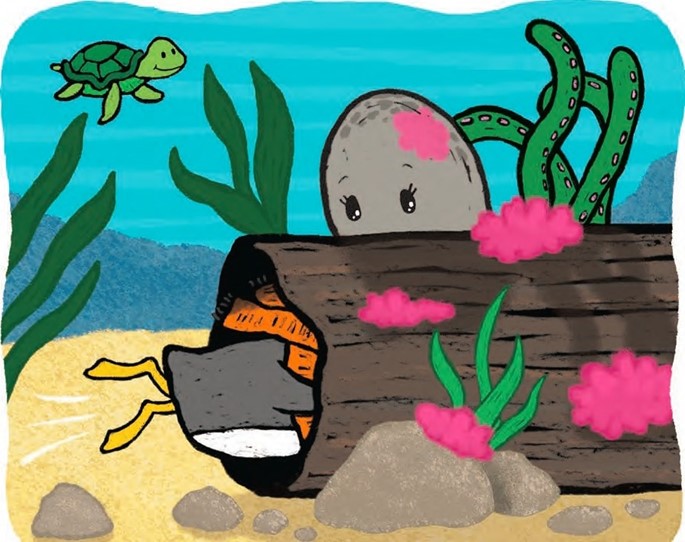
Images of Penguin on his quest to find the treasure chest show him entering a hollow log and floating through branches of kelp.  He notices many other items of interest along the way, including a bright red crab and an equally red lobster. Meanwhile, Ollie is the total opposite, except when his fear causes him to produce ink. Then, as he explains to Penguin, he becomes all too visible to potential predators, and even to harmless neighbors in the sea.  Penguin explains that he only wanted to locate treasure, and encourages him to look at the world differently. Penguin explains his own perspective concisely: “But you don’t have to hide from me. I like to SEE my friends.”

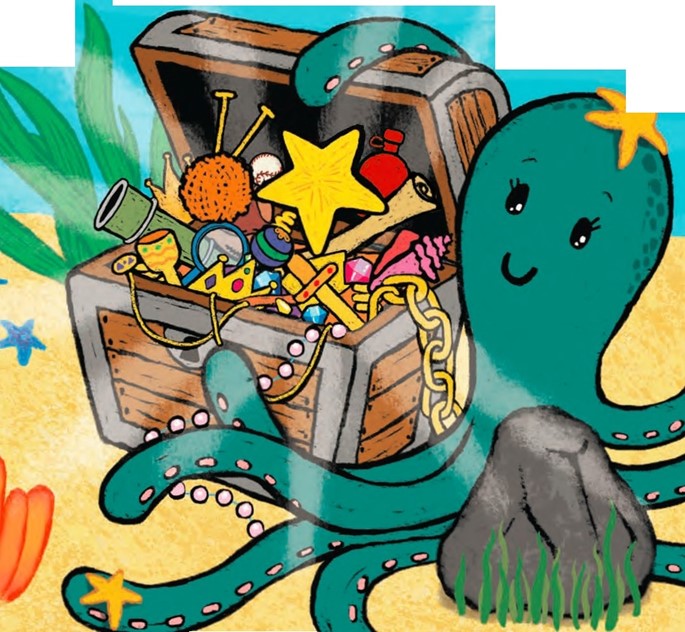
Real animals protect themselves, but Penguin inhabits a universe of kindness and empathy.  Even the shark grins in a non-threatening way when the treasure chest finally appears.  Since it contains, among other valuables, knitting needles and yarn, an animal with eight arms is content, and ready to craft for his new friend.  The book concludes with a scavenger hunt for attentive readers.  In Yoon’s world of warm connections made plausible through engaging words and bold colors, a penguin can wear his scarf anywhere, even underwater.

It’s a Small World

The Hidden World of Gnomes – written and illustrated by Lauren Soloy
Tundra Books, 2023

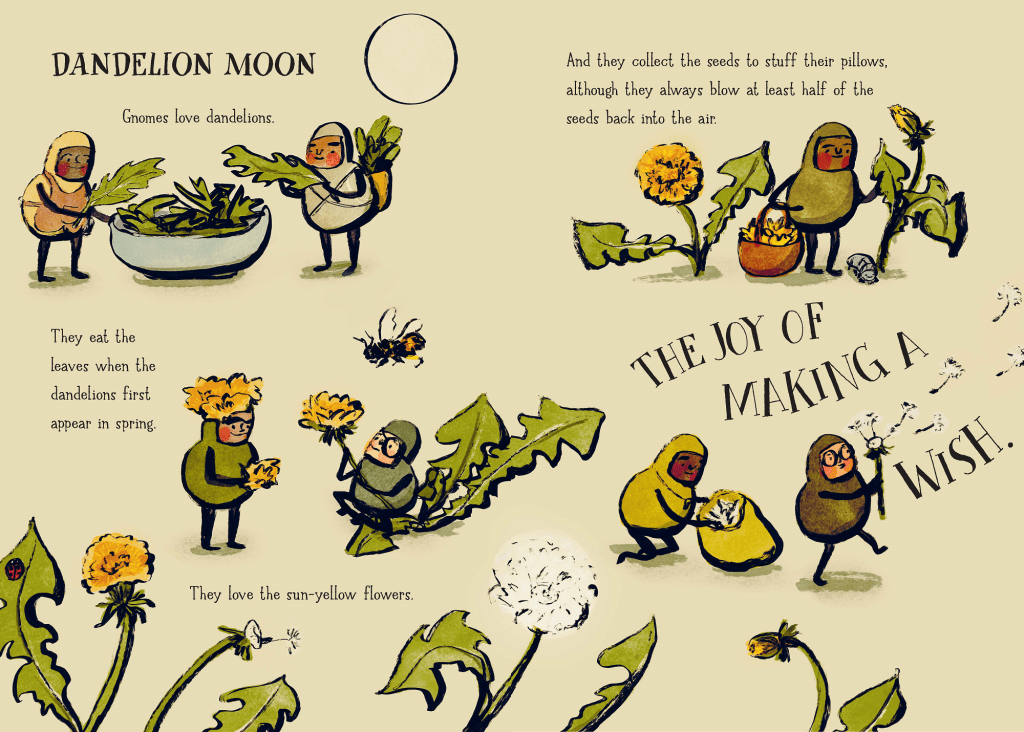
To children, convinced that there are parallel universes of humans, animals, or supernatural creatures, their worlds may not be hidden at all. If they are hidden, they are accessible to anyone committed to looking for them.   Lauren Soloy  (I’ve reviewed her other books here and here) is consciously working in the tradition of Beatrix Potter, as well as Mary Norton’s The Borrowers, The Giant Golden Book of Elves and Fairies by Jane Werner and Garth Williams, and Gyo Fujikawa’s Come Follow Me to the Secret World of Elves and Fairies and Gnomes and Trolls, as well as many other classics. Yet her visual style is unmistakably hers alone, and her approach is much more than an homage.  The Hidden World of Gnomes is truly distinctive: a catalogue, a meditation, a work of gentle humor and an ode to humanity, big or small.

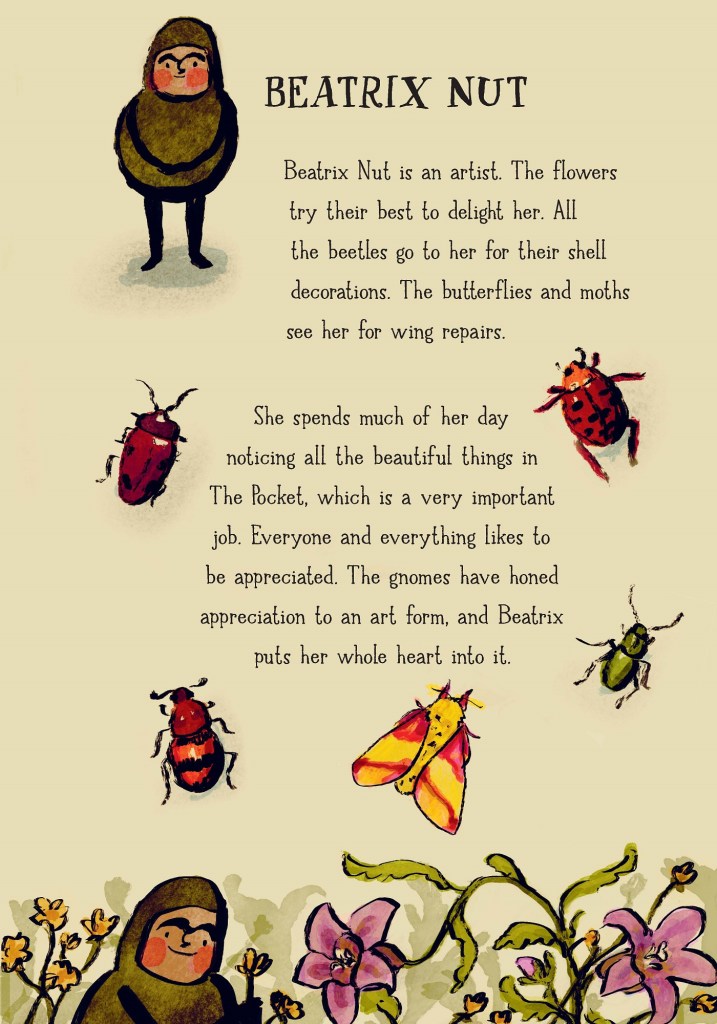
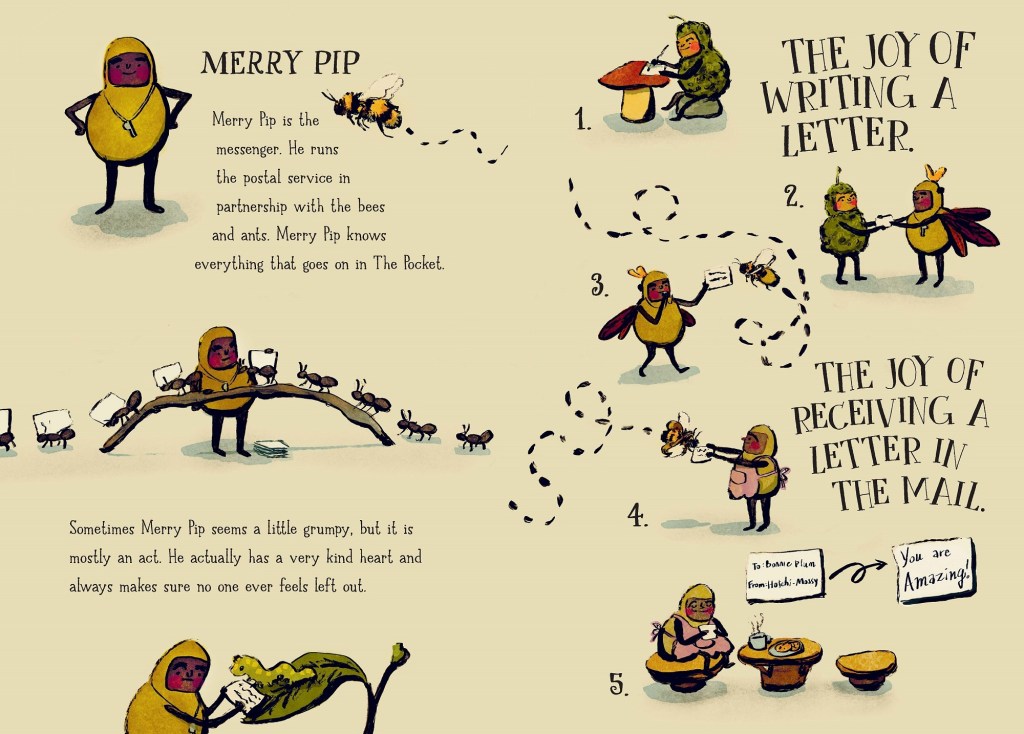
This book as 96 pages. You can read it all at once, or by individual sections.  It is not a sequential narrative, but an introduction to a fantasy world people by hidden folk, with names such as Puckle Swift, Cob Tiggy, Hotchi-Mossy, and, of course, Beatrix Nut. As Soloy helpfully points out in her greeting, “Their hearts may seem small, but actually they are big enough to hold the entire world and al the plants, animals and fungi that live there.” Note the specificity of her definition.  Each gnome is a unique individual but they inhabit a community, just like the rest of us.  They employ a lunar calendar (like some of us), dance and sing spontaneously, and use a variety of tiny implements made from both the natural and artistic worlds.

Their existence is full of many different kinds of joy:  making a wish on a dandelion, writing a letter, listening to birds and laughing with friends. The types of joy that characterize their lives are either timeless (bird listening) or defiantly old-fashioned (letter writing.).


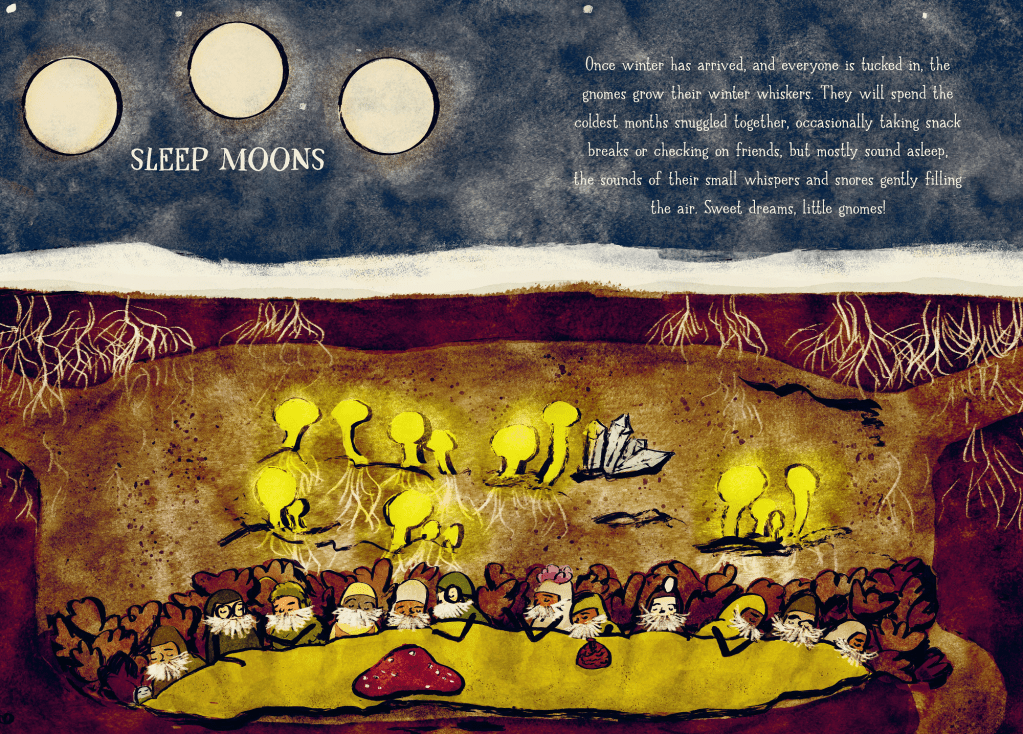
Soloy’s inimitable style combines simplicity and detail.  The gnomes have simple body forms and stick-figure limbs. Their eyes and smiles adopt a range of expressions within a deceptively limited range, by slight adjustments of size or angle. Earth colors fill their habitat.  The gnomes’ winter rest scene shows them asleep in a communal bed, having grown white beards as a symbol of sagacity.

They are both childlike and old; part of the beauty of being a gnome is agelessness! At the end of the day, or the month, or the season, their message is one of persistent joy. Like Charlotte and her web,  they even spell it out for you. Soloy wears her literacy and artistic sophistication lightly, while communicating to children that she knows what it’s like to live in two worlds. 

Butterflies, Inside and Out

May’s Brave Day – written and illustrated by Lucy Morris
Bloomsbury Children’s Books, 2023

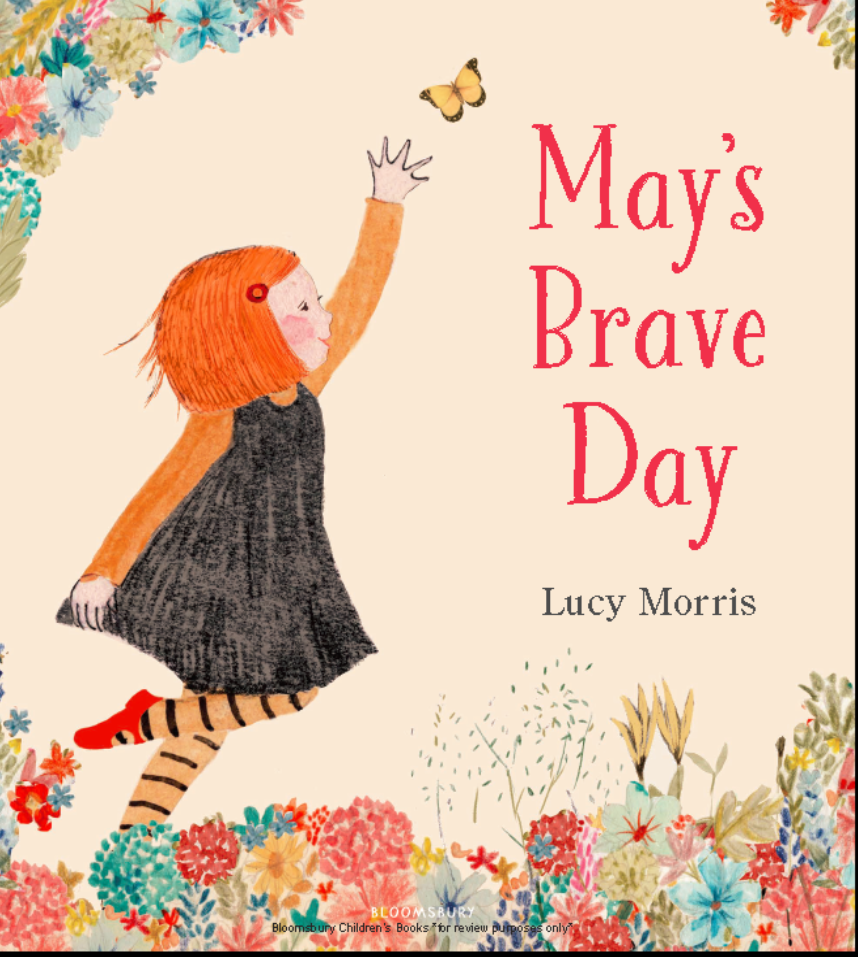
Books for children about starting a new school should be realistic but gentle.  Lucy Morris’s May’s Brave Day fulfills both those requirements, and uses a novel conceit about butterflies.  May has the proverbial butterflies in her stomach at the thought of beginning a new experience, but she is also drawn to the calmness and freedom of the outdoors. The book centers on her unrealistic hope of avoiding her fears by jumping, skipping, or outrunning the creatures in her stomach.  When she inevitably has to confront the source of her anxiety, a gradual and believable resolution is comforting to readers. 

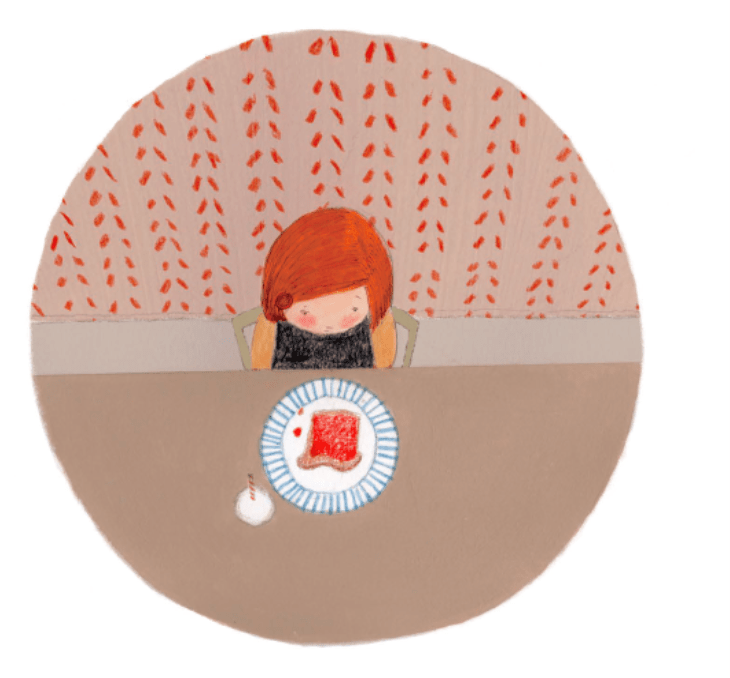
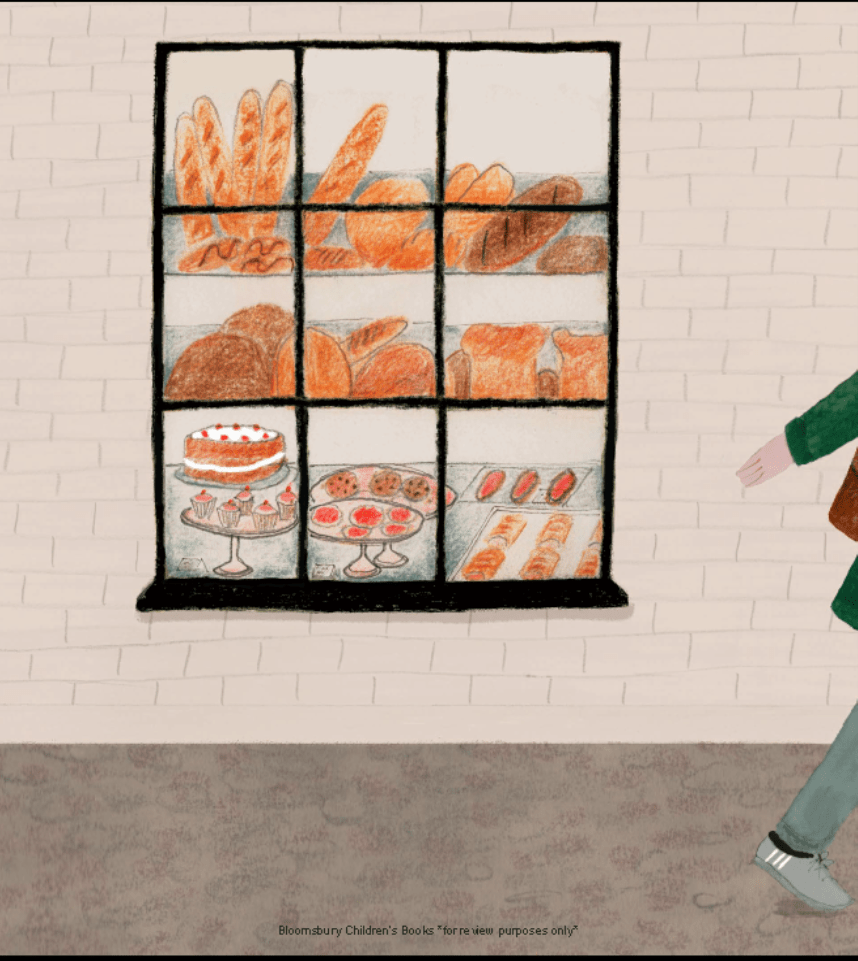
Both the text and illustrations are understated.  Morris portrays May in a series of scenes: looking down at an uneaten slice of toast, retrospectively exhibiting courage while learning to ride a bicycle and swim, peering into a pond of goldfish.  The following sequence of pictures brings in May’s mother, who reminds her that her worries are to be expected, and gives examples of birds, frogs, and ducklings or need to acquire skills.  Then there is a visual transition from the natural word to the interior of a bakery, as May walks along the street, wearing a backpack that is the first clue about the source of her mood. She is so distracted that even the bread and cakes depicted in each frame of the window are invisible to her.  In an unusual strategy for books about beginning school, May’s feelings initially take precedence over their cause. 

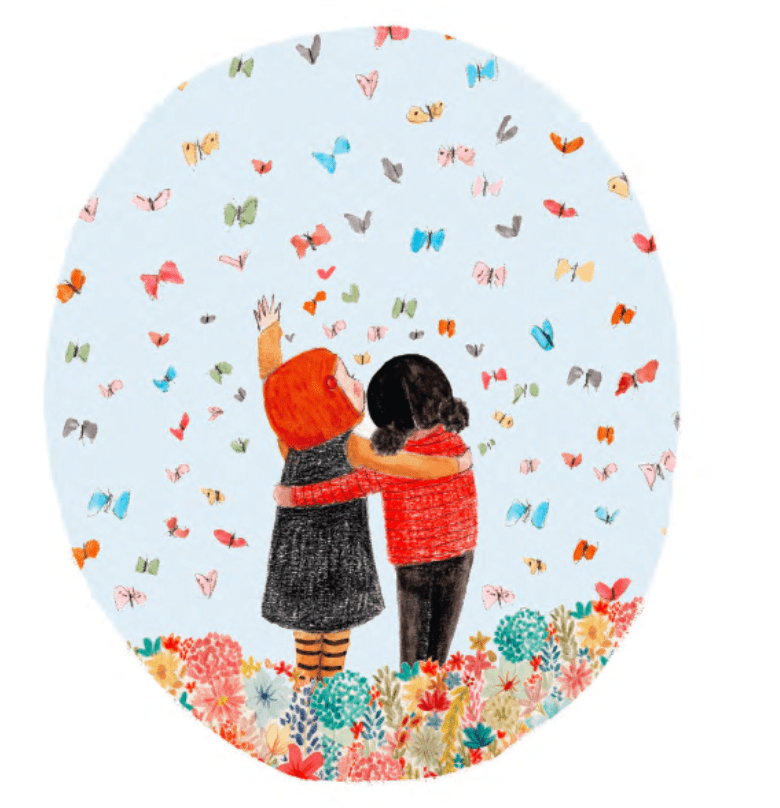
The schoolyard is full of other equally unsure children, some clinging to parents. This scene of isolation soon becomes one of community, at first represented by coat hooks labeled with names, and then by purposeful activities and friendship.  Children are engaged in different projects and interact with one another, but there is space between them, expressing a sense of respect for their individuality.  May’s fears abate, and the loneliness that had been implicit in earlier pages disappears.  She embraces her new friend against a background of multicolored butterflies and a lush carpet of flowers.  Instead of an ending reinforcing that the previously resistant child is excited at the prospect of returning to school the next day, May is simply able to eat that slice of toast.  The butterflies are not gone, but they are outside where they belong. A sense of patience imbues this carefully paced story about a universal but outsized event in a child’s life.

Don’t Connect the Dots

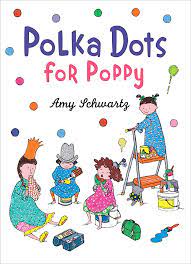
Polka Dots for Poppy – written and illustrated by Amy Schwartz
Holiday House, 2016

Sometimes a child develops an attachment to a particular color or pattern.  Plaid, pink, houndstooth, unicorns, can all become elements of style and of her personal identity (some examples are here and here and here and here). The much missed Amy Schwartz, as gifted an author as an illustrator, has many books that capture how children feel about themselves and the world and people around them. In Polka Dots for Poppy there are four sisters and a mother who understands each one’s need to be different. (Schwartz, who grew up in a family of four daughters, dedicated the book to the memory of her mother, Eva Schwartz.). She combines realism about family life and the fairy tale archetype of multiple children and a parent, only happier and healthier. 

The four girls are not the sisters in Little Women, but readers can’t be blamed for thinking about them, either. Instead of Meg, Jo, Beth, and Amy, these sisters are Ava, Isabelle, Charlie Ann, and Poppy. They all. need new school clothes, requiring an outing with their patient but determined mom.  These four are not obsessed with external standards of fashion.  They first appear in simple nightgowns and pajamas (Charlie Ann), and their mother is wearing flowered pajama pants and a purple robe. Her outside clothes, leggings and a jumper, resemble these in simplicity. 

Ava favors princess dresses, Isabelle demands purple, Charlie Ann is eager for cowboy clothes, and Poppy craves polka dots so much that she doesn’t even ask for it in a complete sentence: “Polka Dots!”  The other sisters have specific visions of their desired outfits, which are made complete by crowns, pockets, and even apples for the cowboy’s horse.  Poppy is singularly focused. Polka dots are enough all by themselves.  Schwartz creates characters through a minimum of carefully selected words, and active, bright pictures. There are scenes are daily activities, including trying on cowboy boots in the shoe store and riding the escalator up to the “girl gear” department.  There is also a two-page spread of the sisters’ ideal designer pieces floating against a black background punctuated by stars.

A basket of art supplies appears on the floor of the girls’ bedroom, and later plays an important role in establishing Poppy’s creativity and persistence, as well as her sisters’ supportive natures. (A sketchpad and paints also accompany the book’s dedication.) Dressing up and acting out are paired together, as the girls enjoy toast and chocolate milk, decked out in their dream apparel.  Concrete tools from their project lie randomly on the floor, the ball of yarn, scissors, and stray markers left as evidence of their cooperation and imaginative solution to a problem.  Poppy is triumphant, with even the soles of her shoes configured to be unique. As Amy Schwartz demonstrates with humor and empathy, sometimes children need to display who they are.

The Monster at the End, the Beginning & the Middle of the Book

Wolfboy is Scared – written and illustrated by Andy Harkness
Bloomsbury Children’s Books, 2023

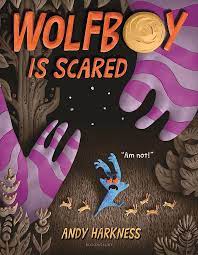
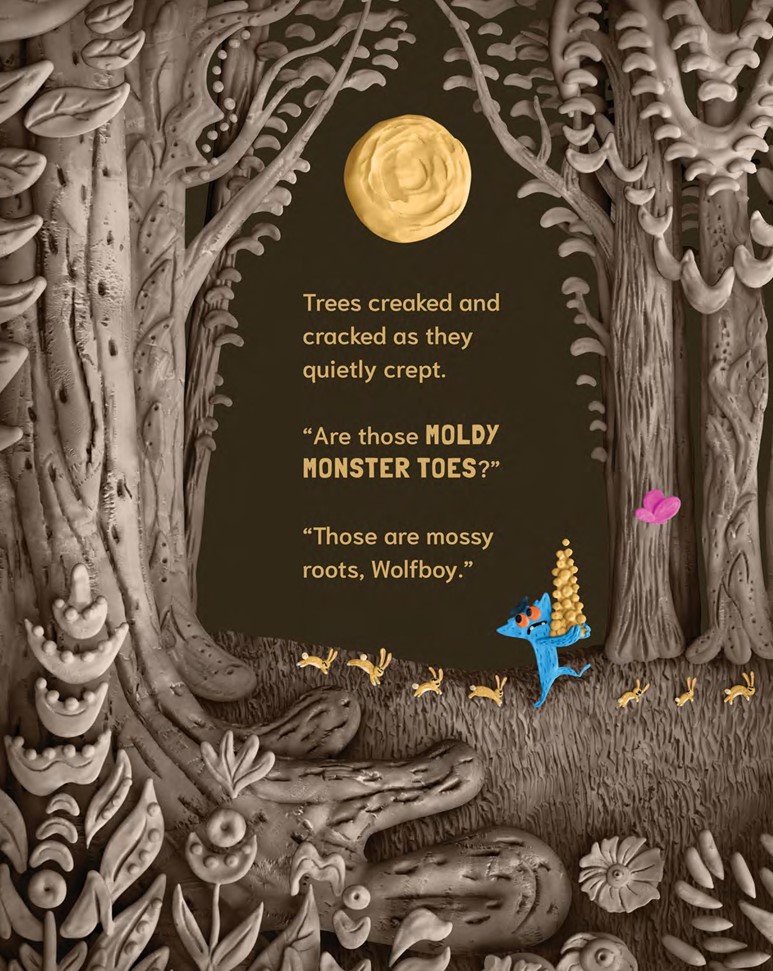
Wolfboy, the molded clay monster who befriends rabbits rather than eating them, has returned.  The woods are still full of moonberries and the moon itself looms in the sky, its surface covered by swirls of thick yellow instead of craters.  In the first book, Wolfboy was transformed from hangry to happy. Now he has reliable friends, but he is subject to fears. Who wouldn’t be, walking through a forest of ghostly trees, whose roots could well be the toes of a dangerous and aggressive monster?  The tension builds, but never to an overwhelming point, and finally resolves in a calm bedtime.

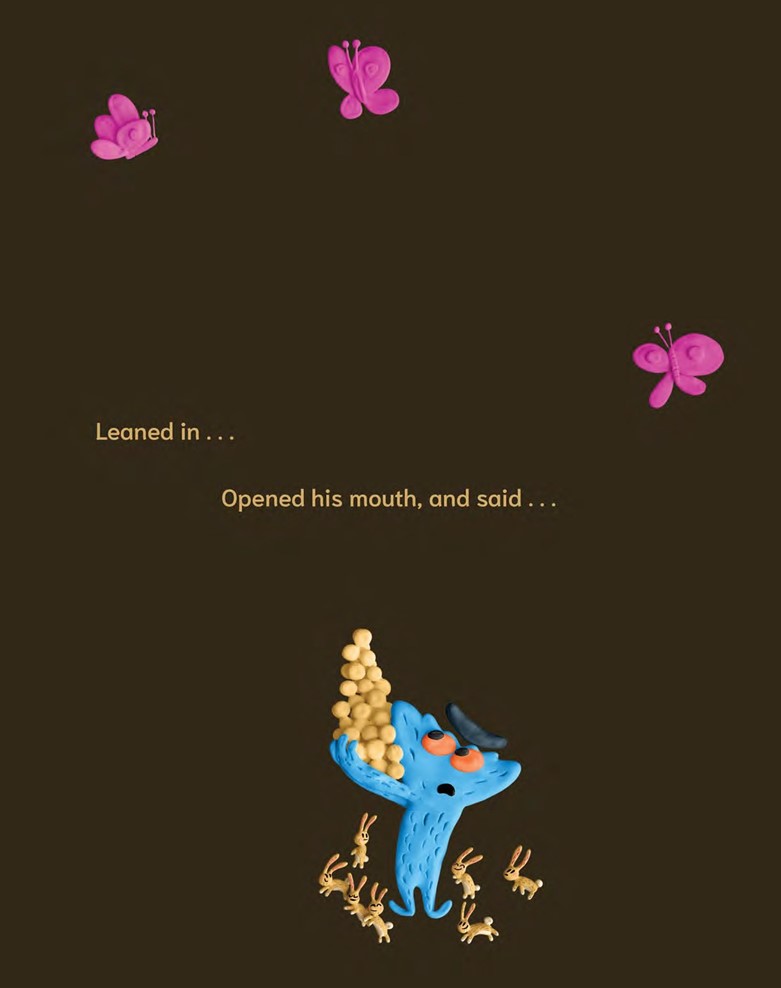
Andy Harkness includes a brief explanation of his artwork preceding the story. His creative process involves virtual reality, photographed clay, and the careful use of lighting, but the result is difficult to reduce to that information.  Wolfboy looks both real and fantastic and the same time, and so does his adversary, Grumble Monster.  Harkness’s use of color is key, from Wolfboy’s bright blue fur to his orange and black eyes moving at expressive angles. Magenta butterflies are guiding lights in the gray and taupe woods, while bunnies look like carefully shaped cookie dough. The pictures’ tactile quality is immersive, and appealing to young readers.

The visual element predominates in bringing Wolfboy to life, but his words complement the unfolding of his personality.  Children love repetition, and they also like to ask questions.  Wolfboy’s repeated requests for reassurance from the bunnies come in this form.  “Are these creepy monster claws?” and “Are those glowing monster eyes” are not meant to elicit information, but to hear the answer, “no,” followed by an alternative.  When he offers food to assuage his possible enemy, there is deliberate ambiguity.  Is he cleverly manipulating Grumble Monster by identifying with his feelings? (“I know how you feel”) Maybe he is just following his instincts, holding up a pyramid of moonberries that would make any monster content, at least for the moment.

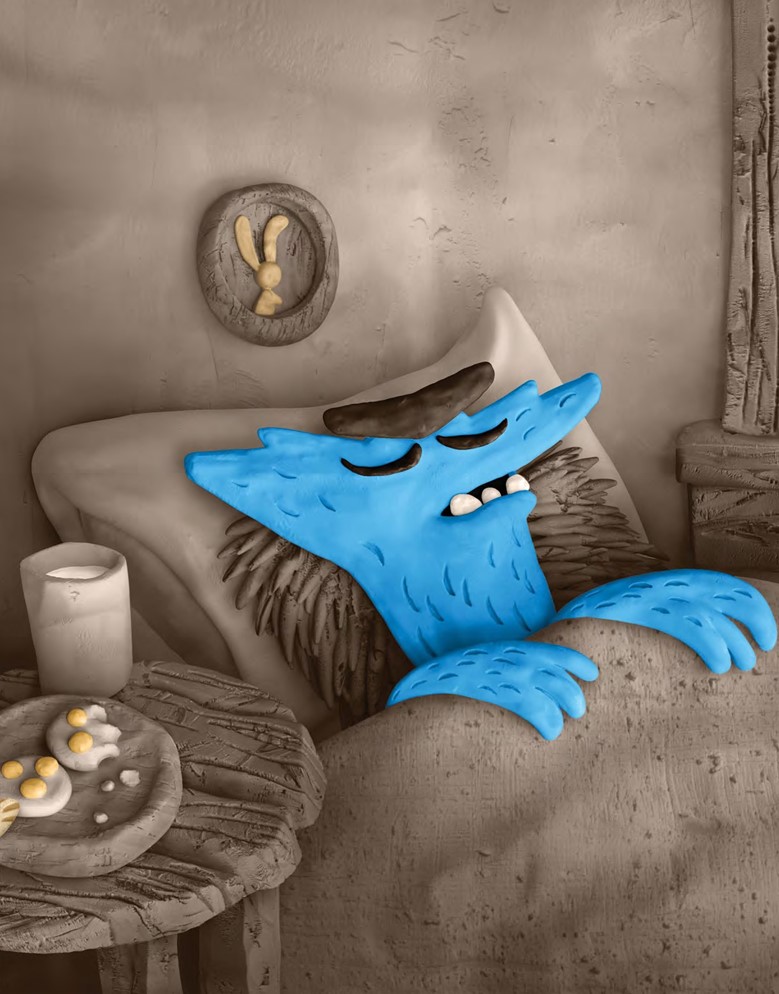
In the last picture, Wolfboy is asleep, next to a plate of cookies and a glass of milk. A static calm replaces the ominous atmosphere.  Outside the window, a single butterfly appears against a light blue sky, with no evidence of fear-inducing creatures in sight.  Even Wolfboy needs a rest.

Remembering Snow

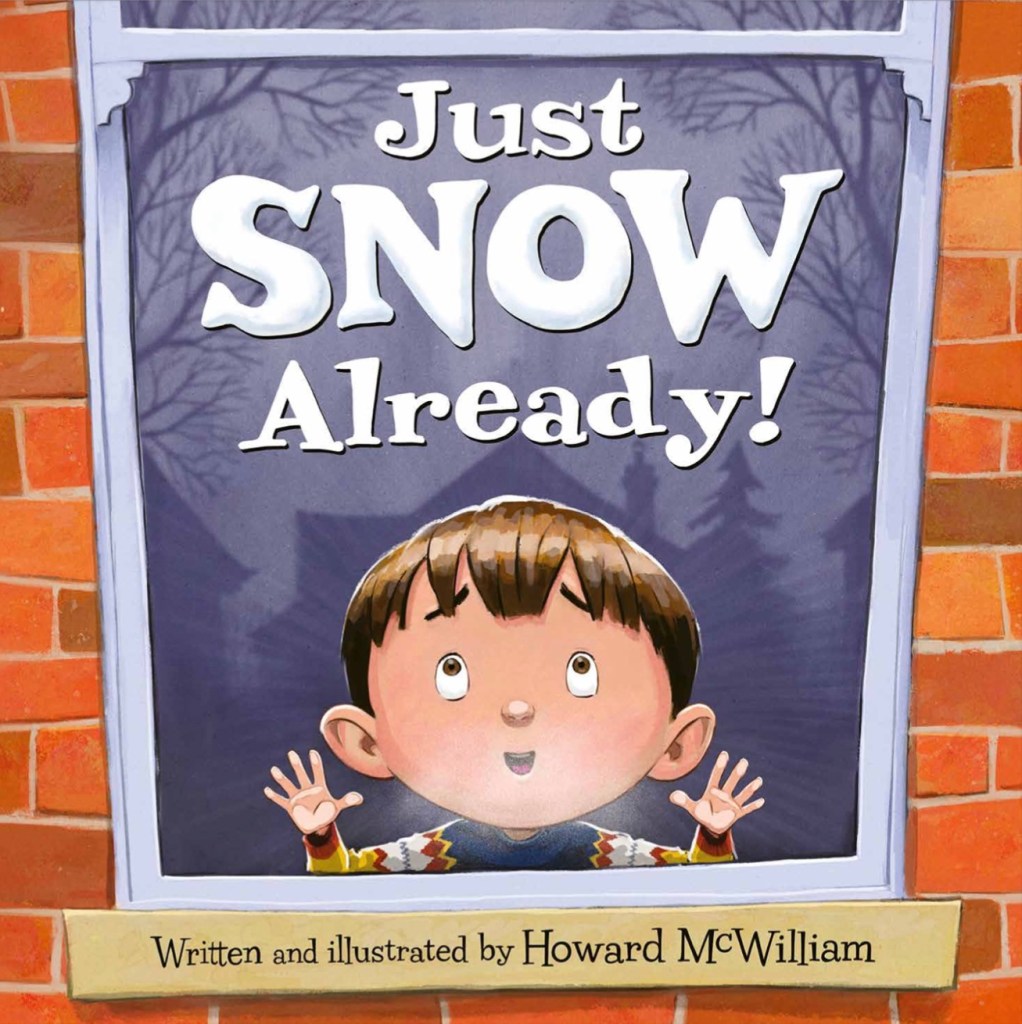
Just Snow Already! – written and illustrated by Howard McWilliam
Flashlight Press, 2023

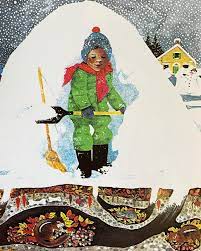
Since we are gripped in the terrifying effects of climate change, a picture book based on a child’s frustration at the lack of snow may seem ironic. It’s not.  There are many classics based on this age-old premise, and more are published every year. Ezra Jack Keats’s The Snowy Day, Uri Shulevitz’s Snow, and Alvin Tresselt’s White Snow, Bright Snow, all date from the era when snow seemed like a strong possibility.  Other more recent books include Waiting for Snow by Marsha Diane Arnold and Renata Liwska, James Gladstone and Gary Clement’s My Winter City, Blizzard by John Rocco, and Snow Falls by Kate Gardner and Brandon James Scott. In Just Snow Already!, Howard McWilliam conveys the impatience of a child eager for the best part of winter, and oblivious to everything else.

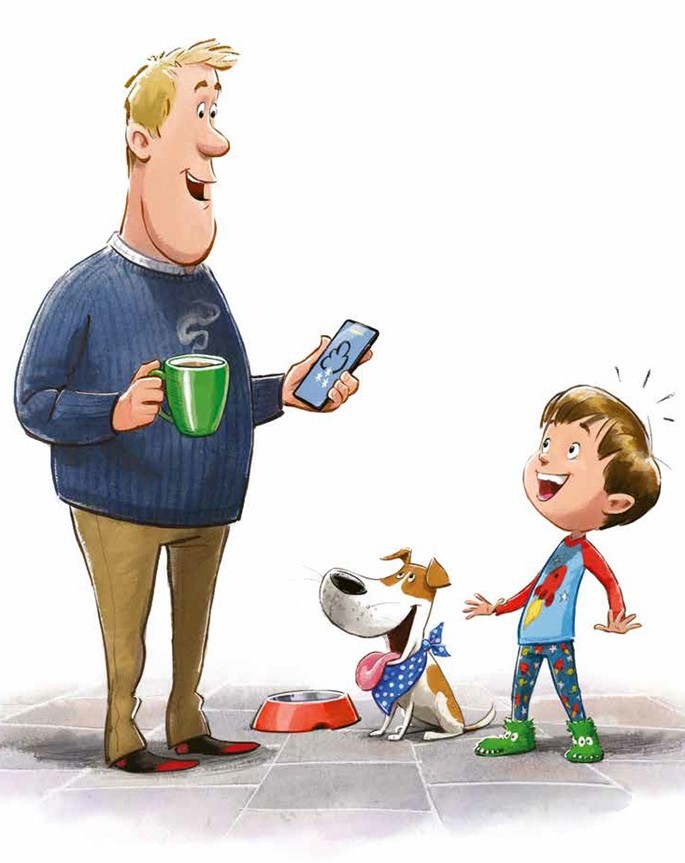
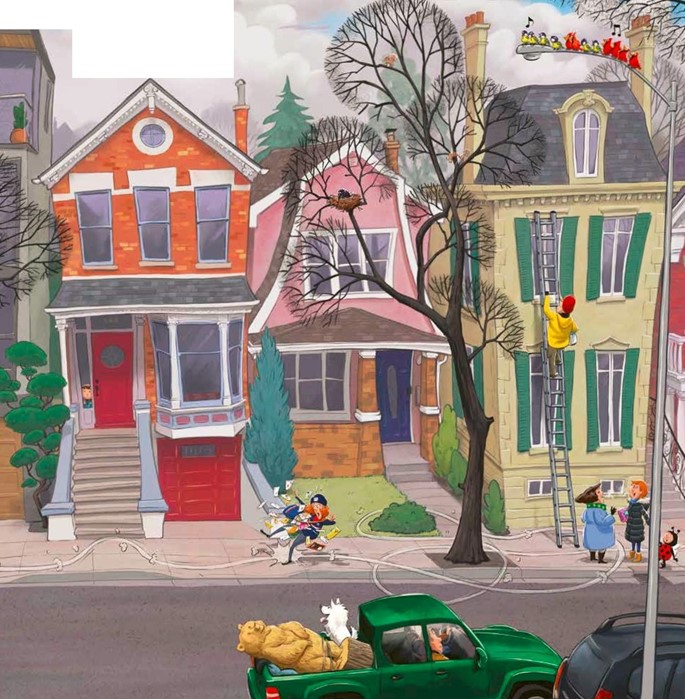
My favorite sentence in the book is “Make it snow, Mom.”  This plea is preceded by his coffee-drinking dad checking the weather app on his phone, and remarking that the event could be imminent.  Next, McWilliam’s two-page spread familiarizes us with the boy’s neighborhood, populated by a diverse range of people living in lovely Victorian houses. His illustrations combine bright colors and broadly-drawn figures with an animation element, but also realistic interiors that could be updated Dutch domestic scenes.  The breakfast table features open cereal boxes, a bright green mug, Mom’s croissant and a bowl of fruit. It looks like the family is off to a good start of their day, if only it would snow. 

Gradually, the street becomes more filled with action.  Bicycle races, a postal worker who, unfortunately, trips on a hose and scatters her mail, a fire engine, and a truck full of exotic animals.  But this potential excitement is meaningless without snow.  The little boy is wiry and hyperkinetic, getting dressed as quickly as possible and leaping to the couch to look out the window.  He daydreams of all the activities that, in the absence of snow, will be denied to him. Although the book is sweetly humorous, readers will identify with his terror at the thought that it may never snow again.  Making leaf angels, or building mud men, are all too plausible as alternatives.

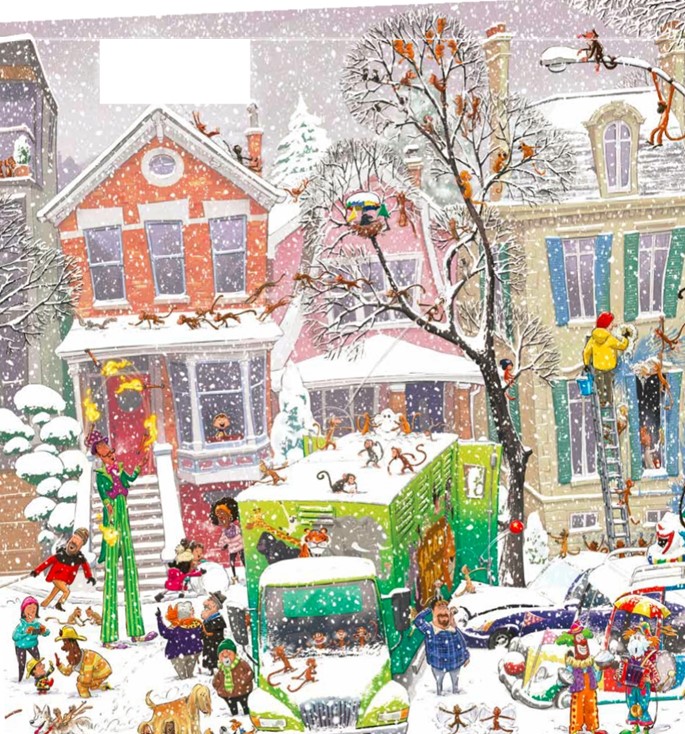
When the snow finally materializes, every figure and object in the final scene is dusted with joy.  Although this is not a look-and-find book, the final picture calls to mind the work of Richard Scarry, Brita Teckentrup, Marianne Dubuc, and Suzanne Rotraut Berner, working in the European tradition of the wimmelbuch.  Even without searching for specific items, readers will spend a long time noticing them.  Two monkeys play with a traffic cone. A mom takes a picture of a firefighter high fiving a child. Clowns entertain with balloon animals. By this point in the story, it’s evident that the boy’s priorities are not misplaced.  Snow is still the context for winter, even if it only arrives on the pages of a book.

Conflict Resolution

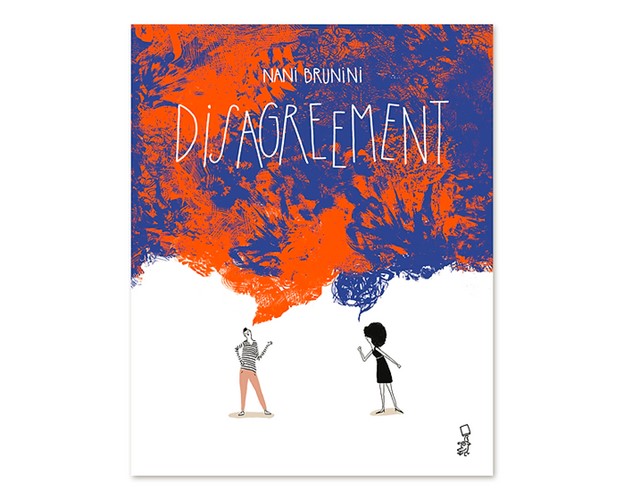
Disagreement – Nani Brunini
Tapioca Stories, 2023

Disagreement was first published in Portugal in 2021, but there is no translator, because this is a wordless picture book.  If you are skeptical, there is a long tradition of such books for children, although this one will also be relevant for adults.  Just as there are people who view works of modern art and claim that a child could have created them, there may be readers who wonder why the author chose not to include words in his or her book.  But they haven’t seen Disagreement, which visually conveys frustration, anger, and the motivation to transcend the human condition. People will always disagree.

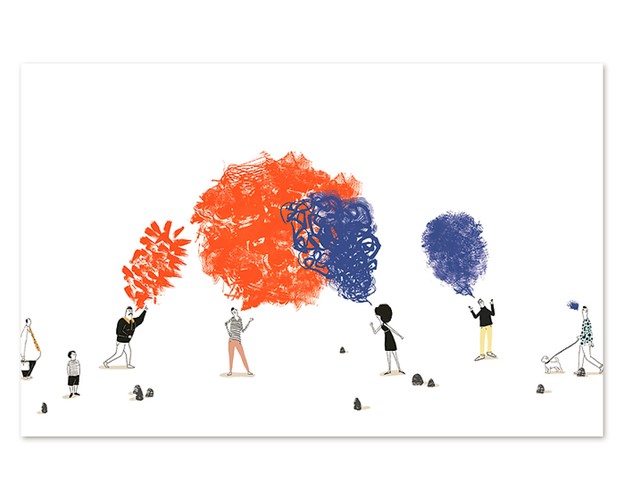
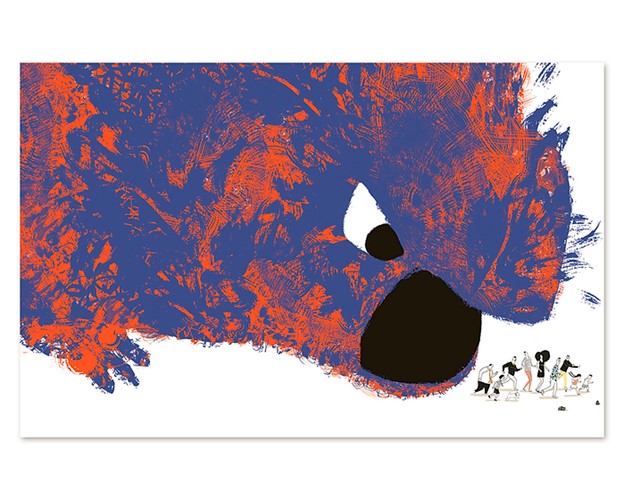
A man and a woman disagree.  Instead of words, uneven swirls of color emerge from their minds and mouths. Others join in, contributing their own incomplete perspectives and a range of emotions, which seem to correspond to hostility, confusion, puzzlement, and other less easily identifiable feelings. Even children participate in this frightening Tower of Babel. The cumulative range of frightening discord is personified as a monster which dwarfs a miniature mass of fleeing humans unable to resolve their differences.

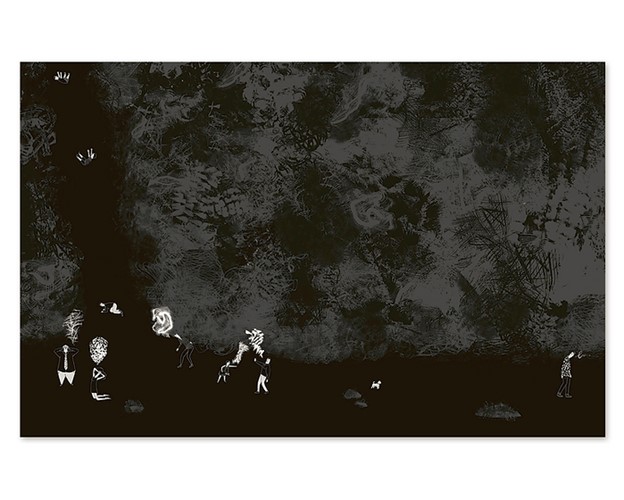
Some pages reflect chaos with black and white drawings. But black and white also provides a background for images of creativity, when one person uses his imagination to twist white ribbons into a prancing horse, a peaceful bird, and more abstract objects.  Nani Brunini implies that negative and positive emotions are not necessarily opposites.  Elsewhere, color is used sparingly and deliberately, culminating in a red and blue-violet hot air balloon which serves as a kind of Noah’s ark, spiriting the conflicted crowd to the safety of compromise.

Obviously, this is not a plot summary.  Disagreement is a meditation of the failure to communicate and resolve differences, but Brunini avoids any simplistic ideas about agreeing to disagree or finding happiness in what we all have in common.  I think that children will relate to the idea that even adults can’t always work out differences, and that sometimes just drawing a horse, embarking on a journey, or even walking away from a fight are steps towards acceptance, but not resolution, of problems.  Sometimes emotions evade language, but there’s still a way to talk about them, as Brunini demonstrates in this wildly imaginative look at human imperfection.

Mary Ann Hoberman (1930-2023)

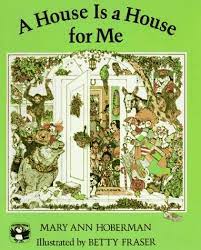
A House Is a House for Me – written by Mary Ann Hoberman, illustrated by Betty Fraser
Viking Press, 1978

Poet and author Mary Ann Hoberman has left a distinctive legacy, particularly of intelligent and entertaining books in verse for children. There are so many to celebrate; one of the most memorable is A House Is a House for Me, a meditation of what it means to be a house to something or someone else.  With its hypnotic rhythm and philosophical bent, the book encourages kids to look at the world in a new way.

If you look at it long enough, almost every object or being is a container:

          Cartons are houses for crackers.

          Castles are houses for kings.

          The more that I think about houses,

          The more things are houses for things.

Each section of the extended poem is different, but they share certain qualities. There is repetition, rhyme, and emphatic punctuation. Note the period at the end of lines that represent complete thoughts.  In the verse above, Hoberman includes a reference to the process of thinking that frames the entire book. 

Hoberman worked with many illustrators, including Betty Fraser, whose pictures here are witty embodiments of Hoberman’s idea.  A boy lounging in a hammock dreams of seemingly disparate proofs of the house idea: a pincushion, a bowl of salad, a kangaroo and its joey, a hand covered in band-aids:


And if you get started in thinking,

          I think you will find it is true

          That the more that you think about houses for things,

          The more things are houses to you. 

A little time for quiet contemplation can lead to a new understanding.

Towards the end of the book, Hoberman raises a self-critical question; has she taken her idea too far?  Then she assures the reader, and herself, that thinking is a good thing. Don’t overthink that truth!

          Perhaps I have started farfetching…

          Perhaps I am stretching things some…

          A mirror’s a house for reflections…

          A throat is a house for a hum…

          But once you get started in thinking,

          You think and you think and you thinking

          How pockets are houses for pennies

          And pens can be houses for ink.

There are many mediocre books for children that directly impart messages.  Mary Ann Hoberman encouraged them to think, imagine, and question their own trains of thought.  That quality is only one of many that makes her work enduring.