Camp Monster – written by Kate Messner, illustrated by Falynn Koch
Bloomsbury Children’s Books, 2026

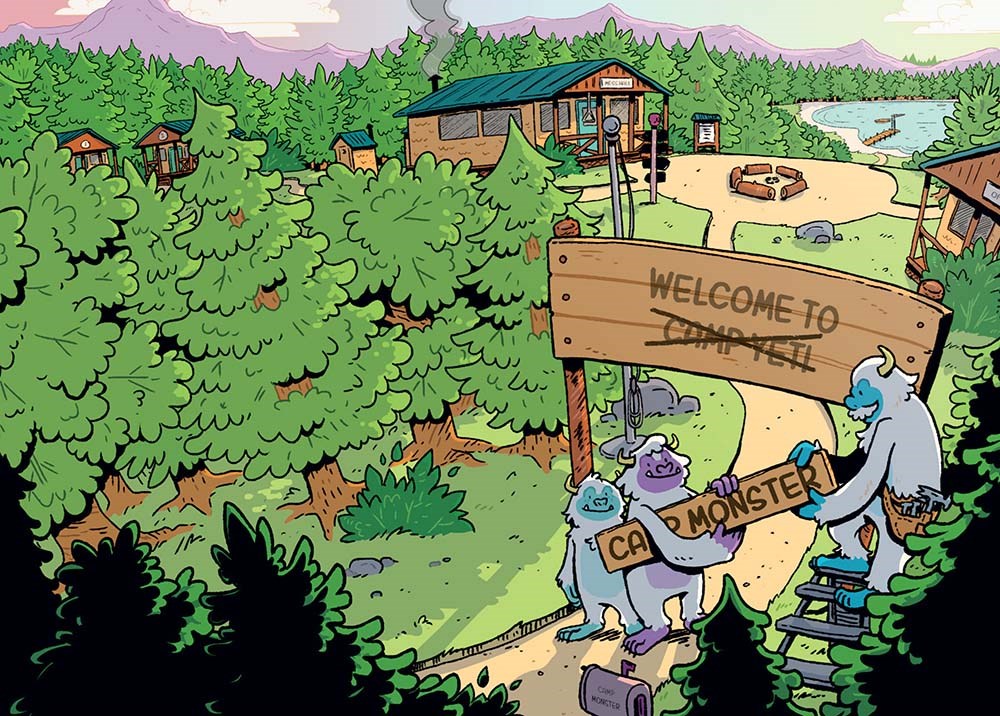
Too many people, not enough yetis. At least that seems to be the problem when Tasha’s parents decide to re-launch the summer camp that had served their species. Only by welcoming a more diverse group of monsters will they have a chance of success. Tasha describes this dilemma in a letter to her Gramp Abominable. She is consumed with excitement about sharing the experience of his own youth, even with her mother’s ominous warning about humans lurking in the woods, ready to spoil their fun. Kate Messner and Falynn Koch’s graphic novel about a camp populated by yetis, goblins, vampires, and griffins describes everyone enjoying a harmonious time together. Not really.
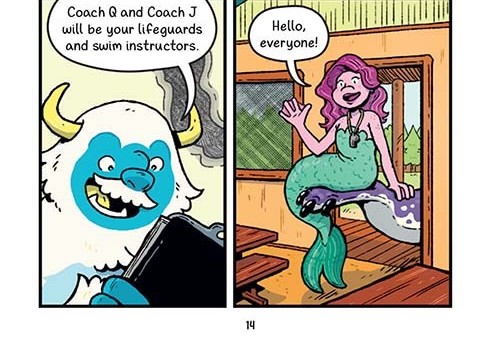
The prominently displayed Code of Conduct for arriving campers lists some familiar dos and don’ts, along with other prohibitions, such as “No turning your fellow campers into frogs or anything,” and the seemingly aspirational, “We treat one another with respect at Camp Monster.” The swim instructor is a mermaid, which certainly sounds more promising than Ms. Sphinx, the cafeteria manager. Imagine having to answer a riddle, with dangerous consequences, before you can eat.
Interspersed with comic strip and word bubble pages are profiles of campers and letters home. The expectation that everyone would get along turns out to be unrealistic, what with goblins creating a robotic monster out of spare parts, and Lupo undergoing weird metamorphoses. Isabelle, an ogre with an artistic soul, has a countercultural preference for the feminine term, “ogress,” which “sounds much more elegant.” She hates sleeping in a rustic cabin, but is convinced that the lead role in the camp musical will be awarded to her.
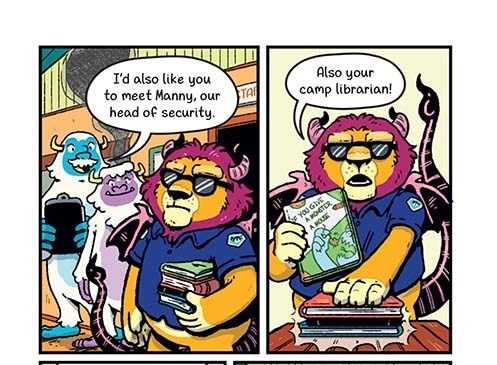
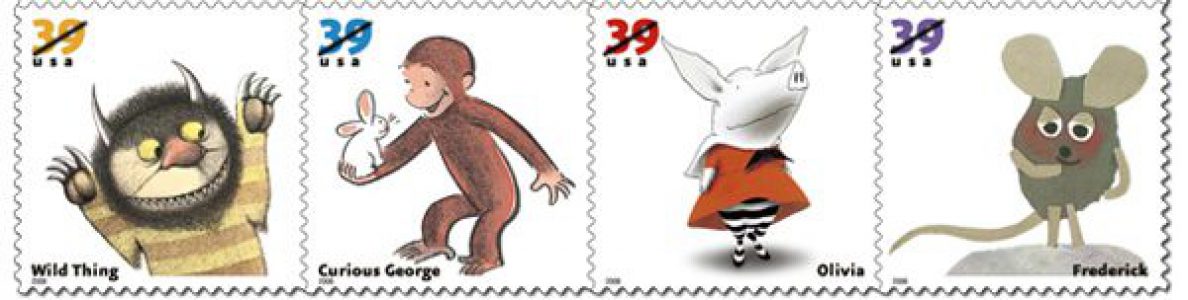
There are some restrictions on projects in Maker Space: no magic allowed. But the camp librarian, Manny, has a well-stocked literary treasure house of classics such as If You Give a Monster a Cookie, One Ogre, Two Ogre, Red Ogre, Blue Ogre, and The Very Hungry Cyclops, with remarkably familiar cover art. When swimming lessons seem unfairly biased against the more aquatically challenged monsters, the instructor decides to accommodate everyone, defining success according to effort.
There is a point at the center of all the fun. Humans, or least evidence that suggests their presence in the woods, become a frightening possibility. No one is sure, but where there are horse’s hoof prints and candy wrappers, can humans be far behind? When the terrified campers decide to build a wall, and force the alleged humans to pay for its construction, Tasha the warm-hearted yeti points out that walls are “ineffective.” Some monsters have more common sense than others. There are some surprises in the plot, and humor for both young readers and adults. Summer camp can be a time for relaxation and growth, as well as fear mongering and terror. At the end of the first session, there are some loose ends, but also campers who are eager to return.
 Imaginary Elevators