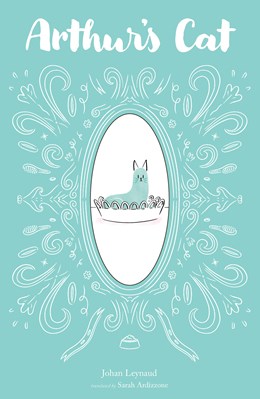
Arthur’s Cat – written and illustrated by Johan Leynaud, translated from the French by Sarah Ardizzone
Eerdmans Books for Young Readers, 2026
Arthur is a little boy who loves his cat, Zeffo. They are inseparable. The problem is that boy and cat have somewhat different definitions of love. Arthur would like to hold Zeffo tightly and read to him. But he also insists on styling Zeffo’s fur and applying perfume to him. (images). Arthur’s Cat is a book that helps children to think about what it means to love someone, hardly a unique subject. There are many wonderful books that explore the same idea. (such as this and this.). Johan Leynaud’s text and artwork are distinctive. The pictures, rendered in pencil, ink, felt, and pen, and digitally, are simple and luminous, conferring a dual quality which makes them both realistic and strikingly stylized. The book is beautiful, without a trace of preachy sentimentality.
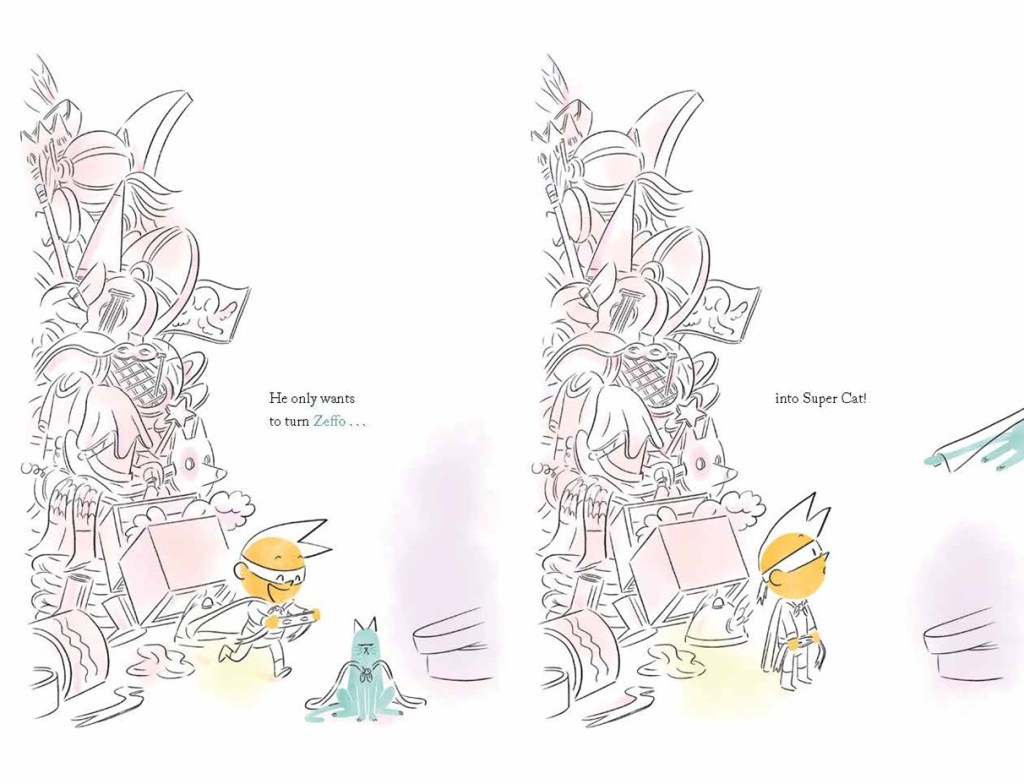
Most of each scene is in black and white, with pastel touches. Zeffo is sky blue, and Arthur has a gold face and limbs. His hair and clothing are white, outlined in black. Leynaud’s use of line is so skillful that each picture seems to emerge fully realized. A pyramid of cluttered objects rises to the left of a page, and Arthur gleefully runs towards his beloved cat. Zeffo objects to being forced into a superhero costume and flies off the facing page. At the same time that the images are reminiscent of animation, there is a stillness to each picture, encouraging the reader to respond to each one individually.
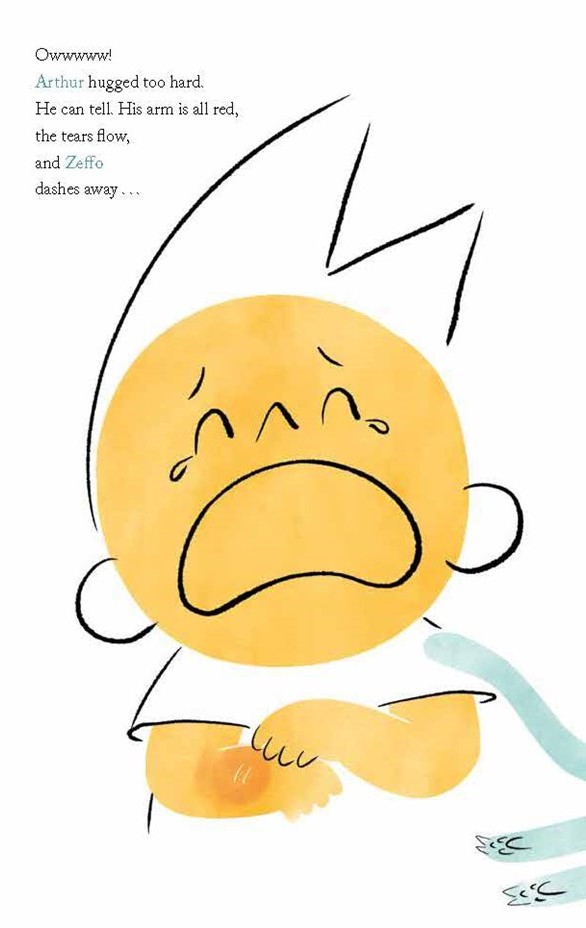
Composition is key to establishing contrast between boy and cat. Arthur jumps into the air, hoping to have fun with Zeffo, who sits on a tree branch, refusing to join in Arthur’s momentum. A game of hide-and-seek is an incentive to escape for the desperate cat. Finally, Zeffo has reached his limit and scratches Arthur, leaving a visible wound. Even the light red on Arthur’s arm seems, in the context of his previous uncomprehending happiness, serious enough. He is in tears.
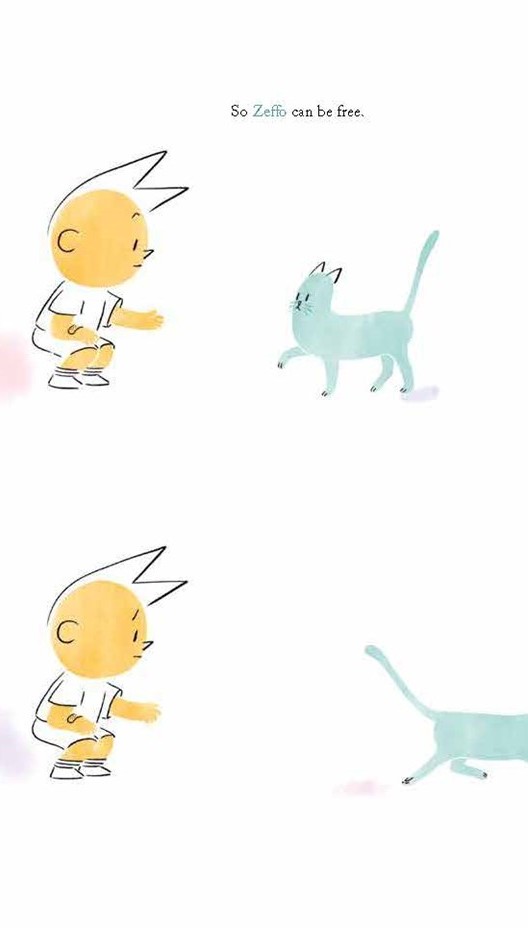
Eventually, Arthur and Zeffo reconcile. The boy has begun to realize that love doesn’t confer the freedom to subject his pet to constant control. Zeffo also recognizes that he needs Arthur. This idea is visualized in a scene of tentative approach and flight, where Zeffo seems open to playing with Arthur but, once again, turns from him, his body divided as he escapes the page. Leynaud grants Zeffo the freedom to “hang back,” and even “be suspicious.” There is gentle humor in a picture of the boy crawling along as shower curtain rod and the cat turning his head to look at him, although it also seems dangerous! It’s fun to play, but when the game is over, Arthur again resists the confines of the page.
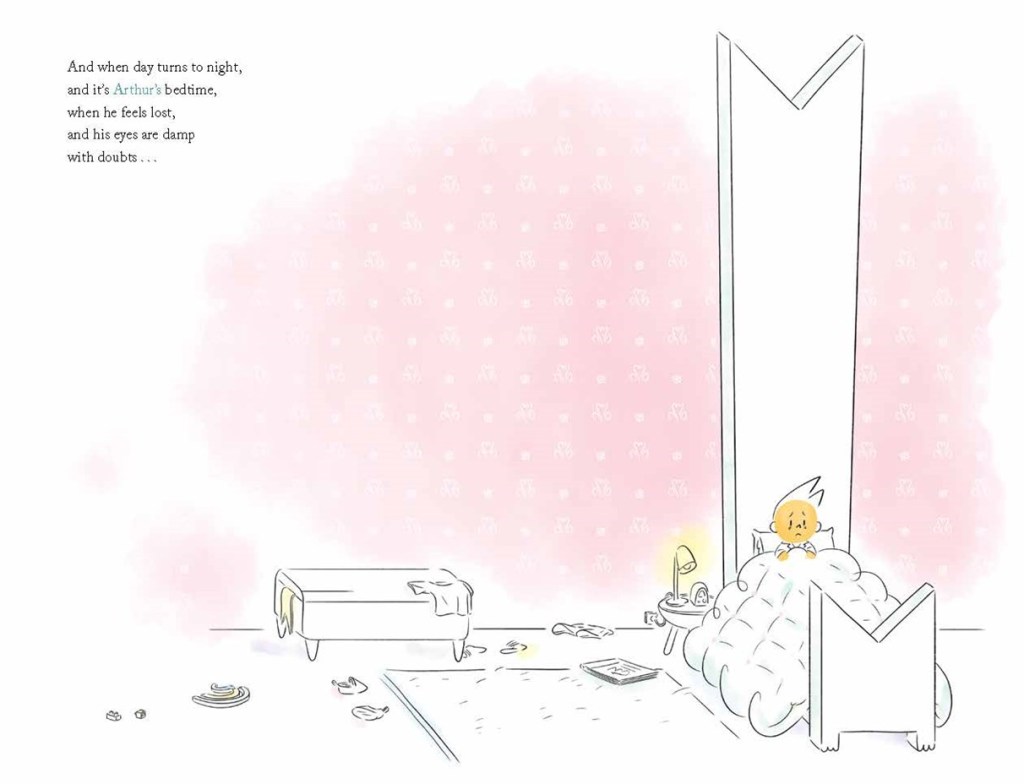
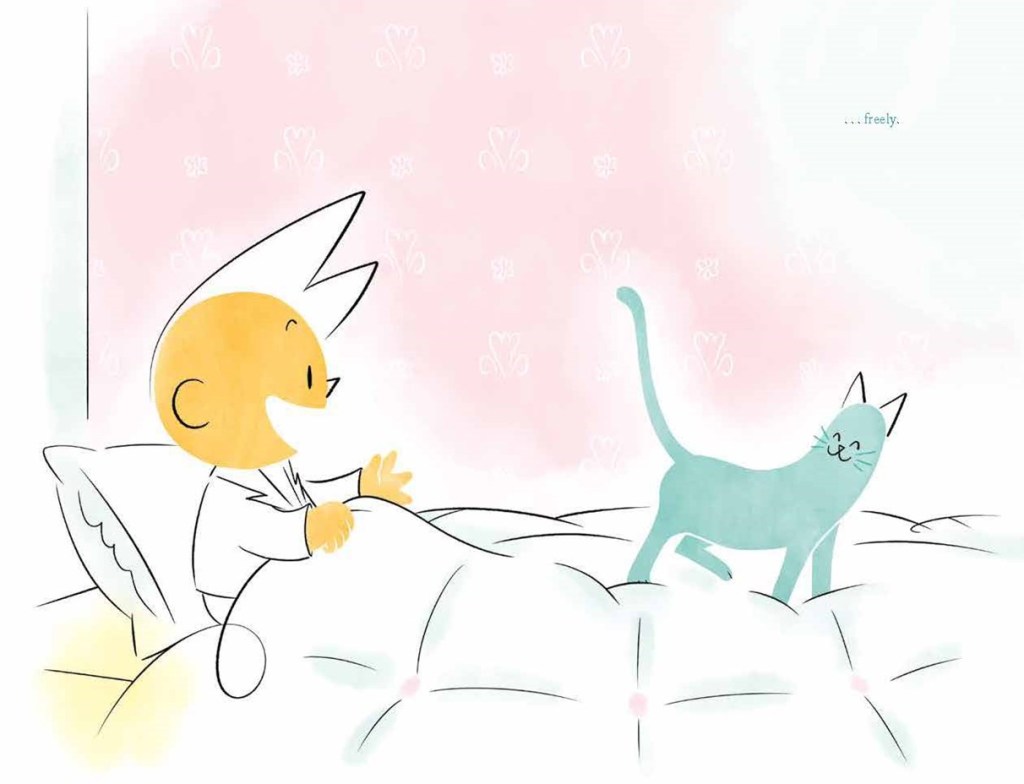
An anxious Arthur sits up in his elaborate bed, in a picture that calls to mind the illustrations for James Thurber’s Many Moons, by either Louis Slobodkin or Marc Simont. The enormously high headboard on the right side of the page seems ironic in light of the minimalist disorder of objects to the left. When Zeffo climbs up onto Arthur’s fluffy quilt, the patience of both boy and cat has been rewarded.
 Imaginary Elevators