May’s Brave Day – written and illustrated by Lucy Morris
Bloomsbury Children’s Books, 2023
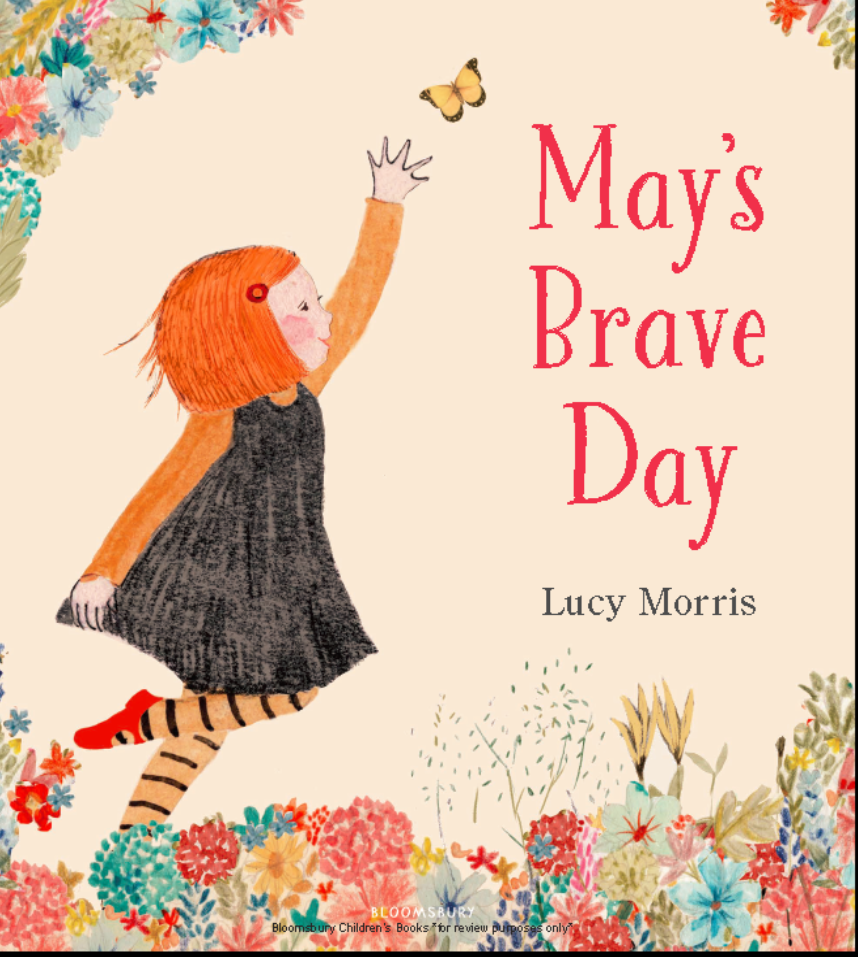
Books for children about starting a new school should be realistic but gentle. Lucy Morris’s May’s Brave Day fulfills both those requirements, and uses a novel conceit about butterflies. May has the proverbial butterflies in her stomach at the thought of beginning a new experience, but she is also drawn to the calmness and freedom of the outdoors. The book centers on her unrealistic hope of avoiding her fears by jumping, skipping, or outrunning the creatures in her stomach. When she inevitably has to confront the source of her anxiety, a gradual and believable resolution is comforting to readers.
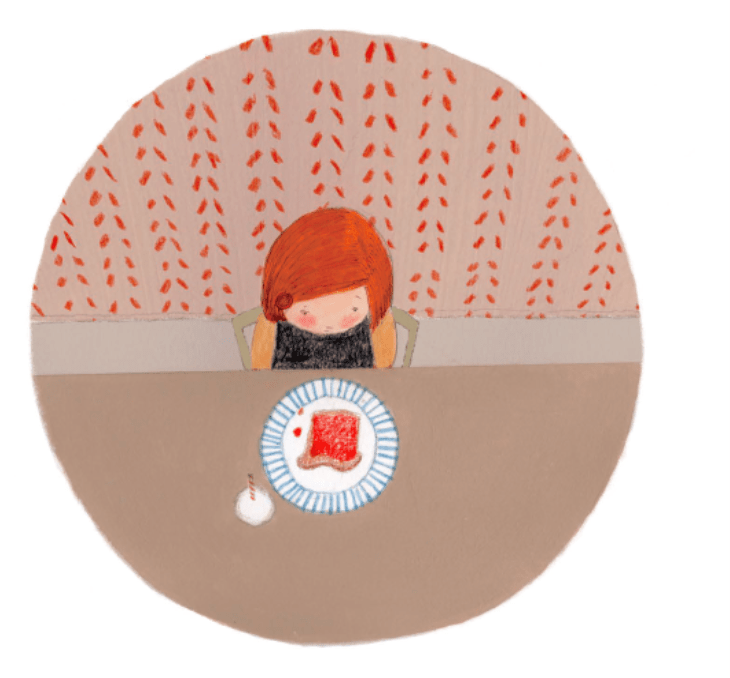
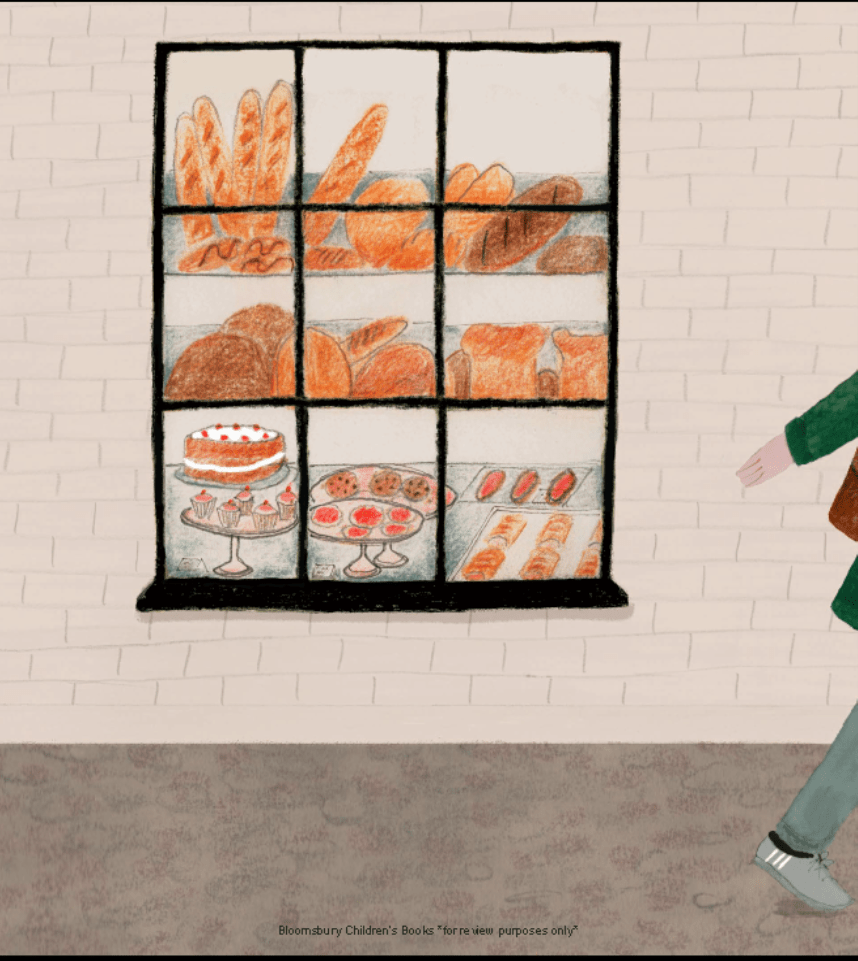
Both the text and illustrations are understated. Morris portrays May in a series of scenes: looking down at an uneaten slice of toast, retrospectively exhibiting courage while learning to ride a bicycle and swim, peering into a pond of goldfish. The following sequence of pictures brings in May’s mother, who reminds her that her worries are to be expected, and gives examples of birds, frogs, and ducklings or need to acquire skills. Then there is a visual transition from the natural word to the interior of a bakery, as May walks along the street, wearing a backpack that is the first clue about the source of her mood. She is so distracted that even the bread and cakes depicted in each frame of the window are invisible to her. In an unusual strategy for books about beginning school, May’s feelings initially take precedence over their cause.
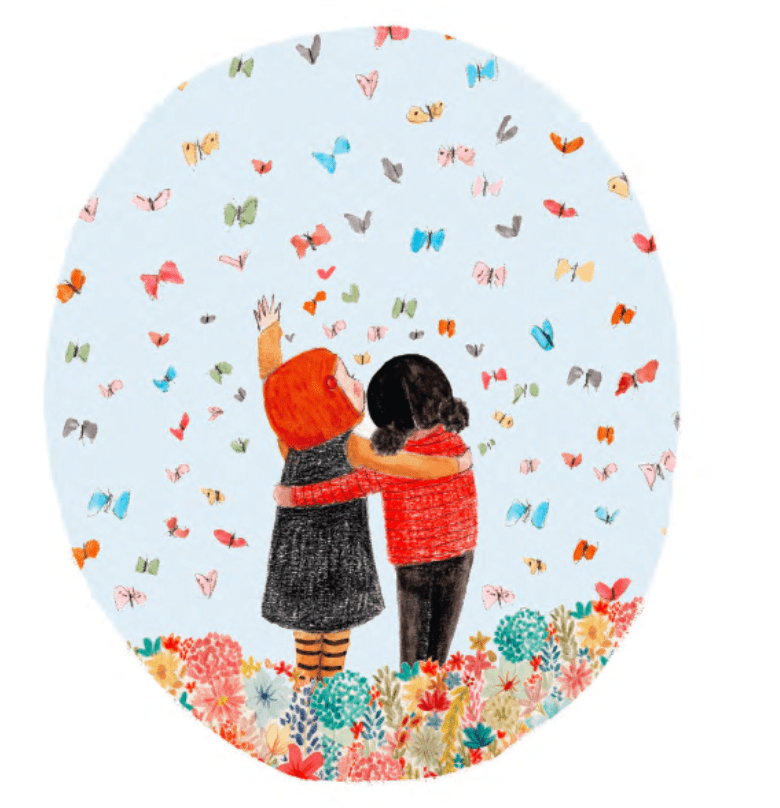
The schoolyard is full of other equally unsure children, some clinging to parents. This scene of isolation soon becomes one of community, at first represented by coat hooks labeled with names, and then by purposeful activities and friendship. Children are engaged in different projects and interact with one another, but there is space between them, expressing a sense of respect for their individuality. May’s fears abate, and the loneliness that had been implicit in earlier pages disappears. She embraces her new friend against a background of multicolored butterflies and a lush carpet of flowers. Instead of an ending reinforcing that the previously resistant child is excited at the prospect of returning to school the next day, May is simply able to eat that slice of toast. The butterflies are not gone, but they are outside where they belong. A sense of patience imbues this carefully paced story about a universal but outsized event in a child’s life.









 Imaginary Elevators