Let It Snow

The Snow Theater – written and illustrated by Ryoji Arai, translated from the Japanese by David Boyd
Enchanted Lion Books, 2025

The art of Ryoji Arai’s The Snow Theater demands strong adjectives: intense, stunning, original, but also: unpretentious, dream-like, and accessible. The reason for this contrast, aside from the artist’s incredible gifts, is the imagery’s blend of naiveté and sophistication, with splashes of color as well as carefully delineated figures. Arai’s pictures capture what it feels like to be a child, and specifically to be captivated by the experience of snow. Snow as theater is not at all artificial, from a child’s point of view. It is a gift, perhaps unanticipated, that then takes on different qualities, including joy. It is familiar, but can also be strange.

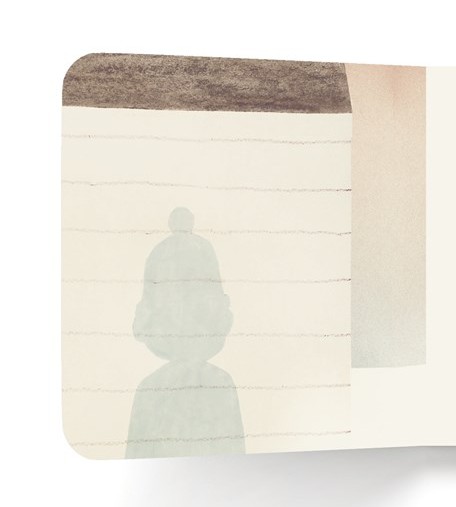
There are innumerable children’s picture books about snow, and many are excellent, beginning with the Ezra Jack Keats classic The Snowy Day (see some other examples here and here and here and here and here and here and here). The Snow Theater is not unique, but both its design and philosophy and language are distinctive enough to merit acclaim (it is translated by David Boyd, who has translated some of the Chirri and Chirra books, also published in English by Enchanted Lion). It opens indoors, where two boys are “keeping warm” and “looking at a book.” The first picture has the reader looking towards them from outside, where they are framed in the window, almost like residents of a dollhouse. Then, a two-page spread is divided into several more specific descriptions of their activity, and one larger scene of it result. At first they are sharing a picture book about butterflies in a cooperative spirit. Then, the friend of the boy who lives in the house “badly wants to borrow the book,” and the idyll is ruined. That adjective, “badly,” prepares you for the act of, perhaps accidental, aggression that results when the book is damaged.

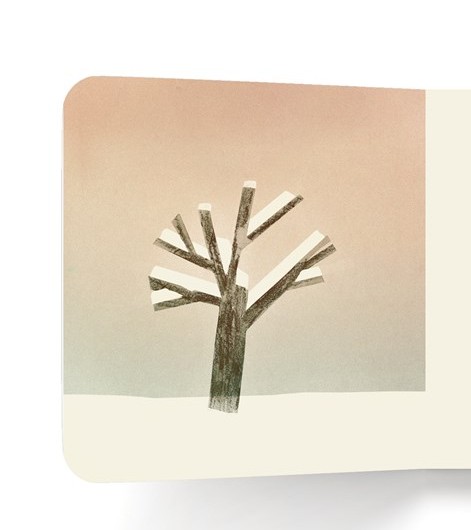
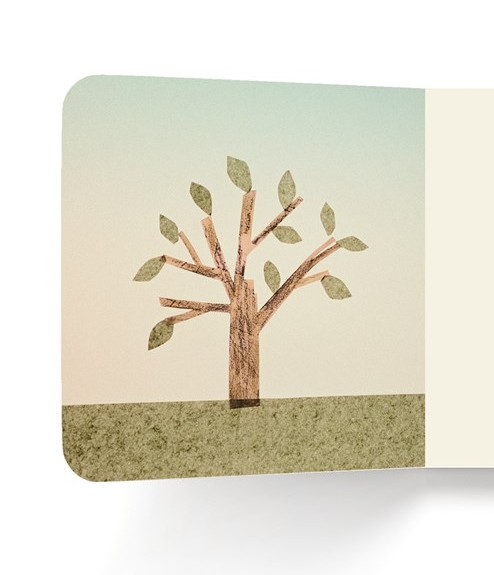
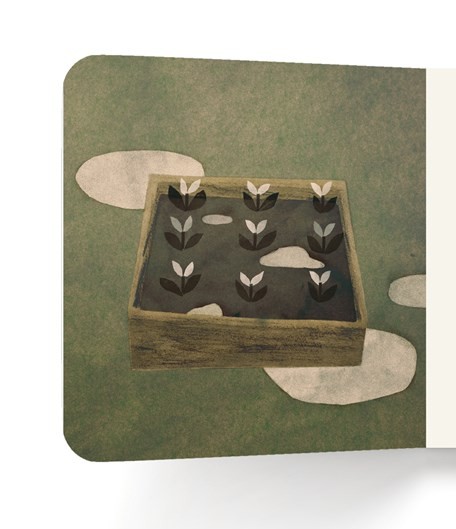
Now the boy is devastated. Worse, the book is actually one of his father’s favorites, adding a dimension of anxiety to an already tense situation. Arai traces the arc of the boy’s feelings. They boy had wanted to share the book with his friend, not only because they both liked butterflies, but in order to communicate its special status in his family. Worried, he leaves the house and begins to ski through the snow. Suddenly, he finds himself looking into a miniature theatrical production. There are “snow people,” including ballerinas. They surround him physically, occupying his senses. Then the scale seems to change, as he sees “a large theater in front of him.” Yet the performers, who include singers, still appear to be tiny. “Everybody floated quietly to their places, like freshly fallen snow.” There are echoes of Tchaikovsky’s Nutcracker, with impressionistic colors. Snow people reflect the color of rainbows. Icicles are suspended from their limbs and odd pieces of scenery, like an Easter Island head, occupy the elaborate background.

Then the show ends. As in The Nutcracker, viewers wonder if the performance was a dream, or if the protagonist had really undertaken a mysterious journey. The kinetic, and ephemeral, experience of a snowstorm seems to have been the boy’s escape from emotional difficulty. He reaches across the snow to find his friend against a field of butterflies, only some of which are enclosed within a book. The boy’s father appears with the awaited resolution: “Let’s get you home.” A cup of hot cocoa by a warm stove brings back domestic security, but the song of the snow people is reprised in the boy’s memory.

Freedom from Hunger

Maddi’s Fridge – written by Lois Brandt, illustrated by Vin Vogel
Flashlight Press, 2014 (paperback edition, 2022. Reading app available:
https://apps.apple.com/us/app/maddis-fridge/id6748969593)

Thanksgiving is associated with families sharing a plentiful amount of food, but not all Americans have access to this custom.  Freedom from hunger is a human right. Historically, it has been an American right, even if this ideal has not always been realized.  Norman Rockwell’s iconic paintings depict the Four Freedoms that President Roosevelt had a promoted during World War II as a reminder of the war’s purpose.  Maddi’s Fridge is a non-ideological picture book for children.

It does not discuss the social and economic programs needed to combat income inequality; that is not its purpose. Lois Brandt and Vin Vogel present the problem of hunger through the friendship of two girls, Sofia and Maddi. Sofia has always assumed that her well-stocked refrigerator is the norm. When she learns that her friend’s is virtually empty, Sofia needs to help her friend without betraying a secret.

Vogel’s illustrations are understated and appealing.  They convey a sense of community, even a modern version of Rockwell’s, as well as a touch of mid-twentieth century animation.

Sofia’s family is well-fed, with the inventory of her refrigerator even including dog food. Brandt enumerates each item for human consumption: chicken, yogurt, cheese, carrots, bread. In contrast, her friend Maddi’s refrigerator has barely enough to sustain her and her younger brother.  Brandt and Vogel show, in words and images, the asymmetry of the situation without elaborating on its cause.  Instead, Sofia’s dilemma is central to the story.  How can she help Maddi? Bringing foods for the two friends to share as they play outside will not address the problem.

Adults reading with their children may anticipate Sofia’s decision, but children will not necessarily predict the outcome.  Maddi’s Fridge presents an opportunity to discuss why breaking a promise of secrecy may be not only permissible, but crucial.  The book’s afterword provides further suggestions for filling empty fridges, on an individual and communal level.  The book’s relevance today is a sad statement about the refusal to ensure that all children are cared for, but it at least represents an intelligent and sensitive way to shed light on the problem.

Ready, Set, Anne

Anne: The Chapter Book Collection – adapted by Kallie George, illustrated by Abigail Halpin
Tundra Books, 2025

Anne Dares – adapted by Kallie George, illustrated by Abigail Halpin
Tundra Books, 2023

For fans of Kallie George and Abigail Halpin’s wonderful collaboration in bringing the work of Lucy Maud Montgomery to chapter book readers, Tundra has issued a boxed set of paperback editions.  As you will read on my earlier posts (see here and here and here and here), this series is both an accessible introduction to the original Anne of Green Gables, and each volume a  wonderful illustrated novel that stands on its own merits.  Abigail Halpin’s pictures offer her own perspective on the characters and setting, and Kallie George has succeeded in writing an homage to Montgomery’s vision, not a bland imitation.

In Anne Dares, the bold aspect of Anne Shirley’s personality propels her to take some risks.  These include the physically daring walking on the edge of a fence, as well as the courage to perform in her school’s recital. The fence-walking stunt even requires her to ignore the advice of kindred spirit Diana. Ever conscious of a dramatic situation, Anne assures her friend, “And if I do perish,…you can have my pearl-bead ring.

Her performance involves facing her apparent nemesis, Josie Pye, as well as Gilbert Blythe, the boy whose thoughtless teasing will prove to be a mere mask over his true feelings. Her new puff sleeved dress, a gift from her beloved father figure, Matthew, gives her some of the strength she needs in front of an audience.  The dress is both a cherished article of clothing, as well as a tangible proof of the love that now characterizes her home life, although her initial arrival had provoked skepticism.  On stage, at first “she thought she might faint.” Daring or not, she is still afraid. Fortunately, “she knew she must live up to those puffed sleeves.”  Montgomery’s heroine, re-imagined by Kallie George and Abigail Halpin, lives in two worlds, where undeniable difficulties and dreams of beauty are intertwined.

These Penguins Are Not All Alike

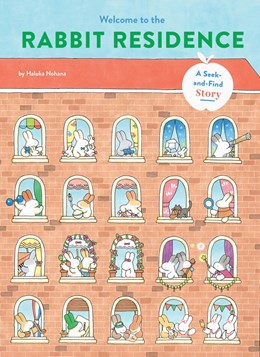
Welcome to the Penguin Cruise: A Seek-and-Find Adventure – written and illustrated by Haluka Nohana
Chronicle Books, 2025

These penguins do not even all dress alike. They are mechanics, explorers, athletes, musicians, and artists. Aboard their adventurous cruise, they have as many different professions as the residents of Celesteville in Babar the King. When the book begins, Chibi the Penguin and his family are about to board ship for a cruise. The magnificent vessel, which opens from the center as a four-page spread, contains every activity possible enroute to a mysterious location. Cutaway images of the ship invite readers inside, as in Richard Scarry’s works or the European wimmelbooks that inspired him and continue to be fascinating to children (see more here).

Look-and-find is a subcategory of these books. Searching for objects and people is entertaining and educational, but the pictures alone just reflect a view of the world as crowded with endlessly interesting experiences. The penguin theme adds a specific dimension. Wearing a variety of outfits over their simple black and white, these creatures read books, watch movies, prepare and eat meals, and pilot a massive ship.

Then the essential Gold Mermaid statuette disappears, offering Haluka Nohana the opportunity to quote Walt Whitman as the Oceano Penguino’s officer is alerted to her disappearance: “O Captain! My Captain!” A stop on Turtle Isle allows passengers to relax on terra firma, and also to search for a mermaid. Subtle overlapping among the pictures, with small differences, calls for careful reading and viewing. The film-watching penguins change in number and position an empty bed has sleeping occupants, the captain is assisted by a crew member. The Fire Dragon adds a magical touch as he interacts with passengers. What exactly is he doing on the cruise?

At the end of the book there is an additional inventory of items to find. But even once located, trips on the Oceano Penguino have not been exhausted. Leaping dolphins, penguin dance parties, and the elusive Phantom Thief Lupenguin merit many turns of the page, with or without mermaids.

Roman Holiday

Piccolo – written and illustrated by Dan Yaccarino
Christy Ottaviano Books (Little, Brown and Company), 2025

Piccolo is not actually set in Rome, but rather in Bella Città, a marvelous place where animals speak Italian, visit cultural treasures, and eat delicious gelato. A lively shrew who enjoys riding his moped and frequenting cafés, the title character has several friends who help him when he goes in search of his favorite hazelnut ice cream. There are several detours along the way, and Piccolo will never say “no” to an amusing distraction, or a chance to help out.

Dan Yaccarino’s picture book world is generally reassuring. Populated by people, and the animals who sometimes are similar to them, his stories maintain a balance of challenges and happiness. Whether in Every Friday, whose father and son pair enjoy a special weekly time together, Doug Unplugged, where a young robot breaks free of his charger, or I Am a Story, an ode to literacy, readers connect to his colorful images and comfortingly familiar characters.  Every Yaccarino book is different, but identifiable for its warmth and humanity.

Piccolo has created a list with his fountain pen while sipping espresso and planning his day. He “loves his friends very much,” and the truth of this statement, while obvious, is also proven by multiple examples.  Enzo the hedgehog, Mr. Rosso the fox, and Brother Mantis are all greeted with an enthusiastic Buongiorno or Ciao.

Piccolo’s need for gelato is not so pressing that he can’t help Mr. Rosso, an artist, to carry his painting to the museum, or to ensure that Mrs. Gallina and her chicks safely cross a busy street. (This errand seems like an homage to Robert McCloskey’s Boston street scene in Make Way for Ducklings.)

The cinematic scenes include Piccolo racing to rescue his friend Sofia’s hat by climbing to the top of Tempo Tower clutching the hands of its clock with bravery and skill. In another artist’s vision, this feat could be frightening, but Piccolo’s determined expression makes it clear that he is not taking an unnecessary risk.  Not every one of his detours is so dramatic. He is also happy to retrieve a soccer ball from the fountain and play for a while, and to assist a young crocodile with his necktie.  Yaccarino can easily devote his attention to the smallest actions as well as the most difficult ones. There is some real tension when Piccolo reaches the gelateria and presses his nose against the glass, his purple shadow illustrating the hour, and that “he is too late.” But when Miss Dolce arrives, her leftover hazelnut gelato becomes a simple problem to solve. Grazie, Dan Yaccarino, for this affectionate introduction to Italian culture, perfectly designed for young, and older, readers.

Not Just Any Store

Our Corner Grocery Store – written by Joanne Schwartz, illustrated by Laura Beingessner
Tundra Books, 2025

Tundra Books has reissued Joanne Schwartz’s and Laura Beingessner’s classic  picture book, about family and community. Originally published in 2009, this ode from a child’s perspective to her loving grandparents and their unpretentious shop seems instantly familiar. Anna Maria describes her Nonno Domenico and Nonna Rosa’s corner establishment, where the provide every food needed by residents of the town. At the same time, Schwartz’s words and Beingessner’s images almost startle with their simplicity.  The place where Anna Maria helps out is practical and magical. 

Even Anna Maria’s inventory has a poetic sound: “On one side we have the apples, oranges, pears, bananas and strawberries.  On the other side are tomatoes and cucumbers, broccoli and green beans.” (image) Clear organization and aesthetically pleasing display are a testament to the store’s importance.  Anna Maria and Nonno Domenico collaborate on ensuring that everything is in order. Even standing on a crate, Anna Maria does not reach her grandfather’s height, but they are coequal partners in quality control.

Detail defines Beingessner’s illustrations, along with careful composition and bright colors.  Anna Maria is precise in her descriptions. She traces her steps: “There are only two short aisles in our corner grocery store. When I come inside, I have to close the boor before I can get to the counter.” An adult might minimize the need to establish scale this way, but to a child it matters. The bottom of the page with text sets out several small items, including a box of paints and a slice of pizza.  On the facing page, the store becomes a cutaway doll house, with each room individually constructed. You will want to look at this page for a long time, noticing the floral upholstery on the armchair, Nonna in her green dress making coffee, and the incredible array of miniature products juxtaposed on their shelf. 

Children use metaphor without self-consciousness.  To Anna Maria, baguettes resemble swords and cornbread “looks like big, flat stones.” When her friend Charlie visits, both children become artists, drawing with chalk on the sidewalk in a kind of meta reference to the illustrator’s work. (image).  A pirate and a girl seem to be self-portraits, proudly signed by the painters. Of course, the neighborhood children are valued customers, treated with respect by the proprietors.

They order their sandwiches with specific requests, “’Provolone, please,’ someone calls. ‘Mortadella and Havarti for me,’ somebody else says.” Observing the cold cuts and cheese passing through the slicing machine is part of the process.   Soon, separate components are transformed by Nonno into an unforgettable sandwich. It’s almost a theatrical production, and even the cat is intrigued.

Every picture in the book stands alone as a work of art, and also advances the building of characters.  The delicious smells filling the store attract customers, who ask Nonno what dish Nonna is cooking. He recites the recipe, and then completes his expression of love, raising his fingers to his lips and kissing them. A visual timeline of the stuffed mushrooms’ creation appears on the facing page.  The entire book is delizioso.

Not So Fragile

Broken – written and illustrated by X. Fang
Tundra Books, 2025

A picture book by X. Fang has an unmistakable identity (see my reviews here and here). The actual species of the mysterious visitors in We Are Definitely Human may be ambiguous, and the vivid dream imagery of Dim Sum Palace seamlessly transforms to the warmth of a family restaurant. Broken is about the unbreakable bond between a grandmother and her grandchild, and also the reassuring truth that many things that are broken can be repaired (grandparents being a constant presence in children’s books, as seen in my list at the beginning of this review). Maybe the new object will appear identical to the old one, or perhaps some small difference will be evidence that its importance is not compromised by a beautiful, jagged crack and some glue. The sturdy, rounded characters who populate Fang’s earlier books are back, but they are not repetitive. She has a specific visual interpretation of humanity and it is inimitable.

A little girl, Mei Mei, introduces the story with an invitation and an outright confession: “Let me tell you the story of the day I broke Ama’s cup.” A day at Ama’s house is full of unspoken comfort, but sometimes boredom. Thick dashes connect the girl’s activities, like a familiar board game.

Then it happens. Having made the conscious decision to frighten Ama’s cate, the girl bumps into a table and hurls the cup towards its trajectory. Not only does it break, but the damage results in three pieces. Appealing to young readers with a direct statement of her guilt, the girl futilely tries to escape her own fears. What if Ama’s unconditional love has conditions attached?

The girl’s senses become exaggerated. Her grandmother calls to her, maybe in anger. That may seem unlikely to an adult reader, but only her warm smile convinces Mei Mei that nothing fundamental has changed. Ama brings her some cake. Mei Mei has the opportunity to blame the broken cup on the hapless cat, but she can’t bring herself to be dishonest. A full page picture of the cat’s accusatory stare is the counterpoint to Mei Mei’s closed eyes behind her oversized glasses.

Overcome with anxiety, she hides in the closet, obviously a temporary solution. Fang even includes a helpful graphic of Mei Mei in silhouette profile, the truth emerging from her insides in arrows that turn into words of apology.

Mei does not only forgive her; she offers an explanation. Repairs make meaningful objects stronger. Each one tells a story. Ama takes on a new identity, as a “fixer,” in a series of portraits framed with old-fashioned photo corners. She is a super competent, and also compassionate, role model to her beloved and unique granddaughter.

Listen Carefully

Sound: Discovering the Vibrations We Hear – written and illustrated by Olga Fadeeva, translated from the Russian by Lena Traer
Eerdmans Books for Young Readers, 2025

Imagine for a moment that you are about to pick up a children’s book explaining the physics of sound. How do we hear and transmit noises? Then being to page through it, noticing that the illustrations, in acrylic paint and water, would be worth the proverbial price of admission. Then, as you begin to read, you realize that the ambitions behind this project go way beyond the scope of what you had anticipated. Author and artist Olga Fadeeva has produced an information-rich picture book that moves among physics, biology, history both distant and recent, spoken and signed languages, culture from music to architecture, and technology. That list is still incomplete.

Sound requires careful attention and rewards it on every level.  Opening the book, we see a mother cradling a baby; this is the setting for how we first experience sound. Then, we enter a kitchen, the familiar setting for objects emitting noises, so ordinary that we might ignore them: a boiling teakettle, a clock, a phone, a pot of soup. There is no division between the informational and artistic components of this picture, or in any other section of the book.  Aware of how attention is naturally segmented, Fadeeva places her intriguing introductory premise in a rhombus that is actually in inside of an open window. The metaphor is perfect. A window is opening onto the meaning of sound.

Some pages use different sizes and colors of font, and have captions, as well as words that are sound effects framing the text. There are carefully employed graphics, such as a line indicating the intensity of decibels, or the organs of hearing and speaking labeled and described. The progression among topics is not frenetic; every idea is clearly linked to the ones preceding and following.  While Fadeeva cannot anticipate every question about sound, there are many common sources of wonder that are clarified. How do bats hear? What are some common birdcalls?  What is distinctive about underwater sounds?

There are other angles from which to explore sound and Fadeeva credits young readers with the curiosity to include them. She actively engages them with invitations to consider different contexts.  What was sound like in prehistory? How did the audience hear in the amphitheaters of the ancient world? (images). Medieval music makes an appearance, visualized with the excitement of charging knights and the lovely concert of flute, timbrel, bagpipe, and lute. Musical notation has its own pages. Even if children have never read music, they will be drawn in by the basic premise: “How can you write down music on a page – and turn it back into sound?” Glamorous performers and intricate pages of notes give the effect of collage. Pages on recording sound includes images of antique devices, and the question of “How do you fill the world with sound?” is followed by a concise but detailed answer superimposed on a dial telephone. Even the cord is covered with words.

The concluding endpapers feature brightly colored pictures and instructions for experiments.  Even after this incredible excursion into the world of sound, children may still want to fill a plastic bottle with buttons or beans, and create an orchestra.  Sound is an intricate and engaging performance for children and adult audiences.

Sisters You Won’t Forget

Stella & Marigold: Mermaids and Mix-Ups – written by. Annie Barrows, illustrated by Sophie Blackall
Chronicle Books, 2025

The second volume in Annie Barrows and Sophie Blackall’s series about an unforgettable pair of sisters continues their adventures, and the development of their relationship. Stella & Marigold established that their closeness, characterized by both unrelenting love and occasional friction, was as believably narrated as Beverly Cleary’s Ramona books (astute readers of my blog will recognize that its title derives from a quote in Ramona the Brave.) The outward similarities between the two series are not superficial, but rather are based on the way which both sets of books communicate how it feels to be a child, without a touch of condescension. Both also invite adults to identify with characters, whether by remembering their childhood or following along as Stella and Marigold’s parents, teachers, and grownup friends, who also propel the plot. (I reviewed the first Stella & Marigold book here.)

Each chapter may be read independently, but are interconnected. The book begins with a gift which the sisters receive from their Aunt Judy. Like many of her gifts, this one turns out to be a Trojan horse. A sparkly purple covered diary with high-pressure demand to record “Me and My Besties! Our Secrets, Our Faves, Our Fun!” sets Stella and Marigold on a series of attempts to find friends worthy to fill in the blanks. Even though this involves some distress, it eventually leads to an understanding of friendship and empathy, minus the high-stakes categories.

In “Snow, Snow, Snow!” Stella tries to win the friendship of a classmate by using mind control to ensure a snowstorm. When their teacher, Mr. Banagal, intends to dissuade the children by calling this “magical thinking,” Barrows reveals how differently adults and children sometimes interpret reality. His phrase has the opposite result. After all, what else could magical thinking be but “encouraging?” Adults will read this passage with recognition, but not a sense of superiority unless they don’t remember what it felt like to fruitfully “misinterpret” adult’s language. Barrows does employ a little bit of gentle humor at adults’ expense when Teacher Kaitlin carefully avoids direct praise of Marigold’s artwork, instead focusing on one quality:

“Wow, your picture is so detailed”…She always said things like that. Never, “Your picture is great…the best I ever saw.”

Blackall’s pictures feature her ability to convey a character’s feelings with slight alterations of their features. (I reviewed another of her books here.) A range of crayon-box colors, and careful composition of images against white background, give every page of the book its own impact. Stella and Marigold sit across from one another at a table, as they collaborate on coping with the diary. Marigold desperately tries to get her father’s attention when he is absorbed in his work; his temporary rejection leaves her curled into a question mark, embodying her feelings about why his priorities would be so misplaced.

There are so many series about girls and their friendships; many of these are terrific. Stella & Marigold fits securely into the category of classic.

A Bridge to Somewhere

Late Today – written by Jungyoon Huh, illustrated by Myungae Lee, translated from the Korean by Aerin Park
Eerdmans Books for Young Readers, 2025

The opening endpapers of Late Today show an overcast sky. The following two pages feature the consequence, a bridge accompanied by the warning that “Morning rush hour traffic is congested all over Seoul,” with the report’s words alternating in word of the report alternating in level relative to the image.  The title page shows an adorable kitten with golden brown eyes that match the lid of the carton which has become her bed. Readers join the traffic jam and the rescue mission.
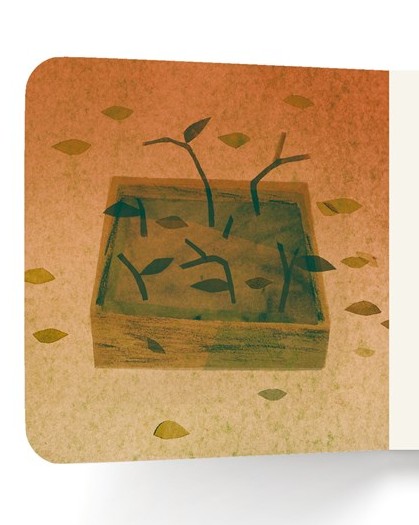
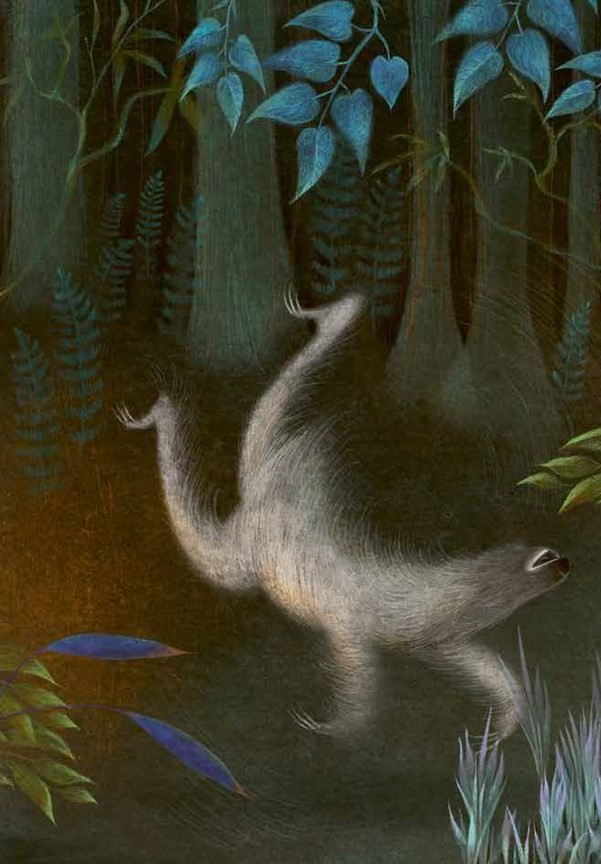
Jungyoon Huh’s minimalist text (ably translated by Aerin Park) conveys just exactly the amount of information needed.  Myungae Lee’s illustrations, rendered in colored pencils and oil pastels, combine black and white scenes, graphic novel panels, and earth and jewel tones against white background. They are beautiful in their simplicity, but also convey motion, sense impressions, and the imminent threat of losing a kitten on a traffic-clogged bridge.  The black font ranges in size, with some pages reminding me of the lettering used in Margaret Wise Brown and Leonard Weisgard’s The Noisy Book, and sequels. (The Winter Noisy Book is illustrated by Charles G. Shaw.)

Public transportation passengers, each in isolation, express their own thoughts about the danger, and their appropriate response to the kitten’s plight.  Parents and caregivers sharing the book with children will want to discuss all the implications of these natural, but possibly inadequate, emotions: “Why is no one helping out,” “Too heartbreaking to see. I’ll just look away,” and Oh no…what should I do?” One incredible two-page spread is a bird’s eye view of the vehicles, each one inadvertently threatening the tiny kitten weaving between them. The text is enclosed in a rectangle similar in size to the vehicles themselves, the words visualizing the ominous situation.

Cinematic techniques dedicate to full pages to a darkening storm, and another two to pelting raindrops.  Readers pause and take a deep breath. Then, a driver rescues the kitten, his or her hands cradling the animal in a gesture of human kindness. Someone has intervened at exactly the right moment. The cars and buses move. Everyone is relieved.  Being late is sometimes exactly right.