Into the Woods

Camp Monster – written by Kate Messner, illustrated by Falynn Koch
Bloomsbury Children’s Books, 2026

Too many people, not enough yetis. At least that seems to be the problem when Tasha’s parents decide to re-launch the summer camp that had served their species.  Only by welcoming a more diverse group of monsters will they have a chance of success.  Tasha describes this dilemma in a letter to her Gramp Abominable. She is consumed with excitement about sharing the experience of his own youth, even with her mother’s ominous warning about humans lurking in the woods, ready to spoil their fun. Kate Messner and Falynn Koch’s graphic novel about a camp populated by yetis, goblins, vampires, and griffins describes everyone enjoying a harmonious time together.  Not really.
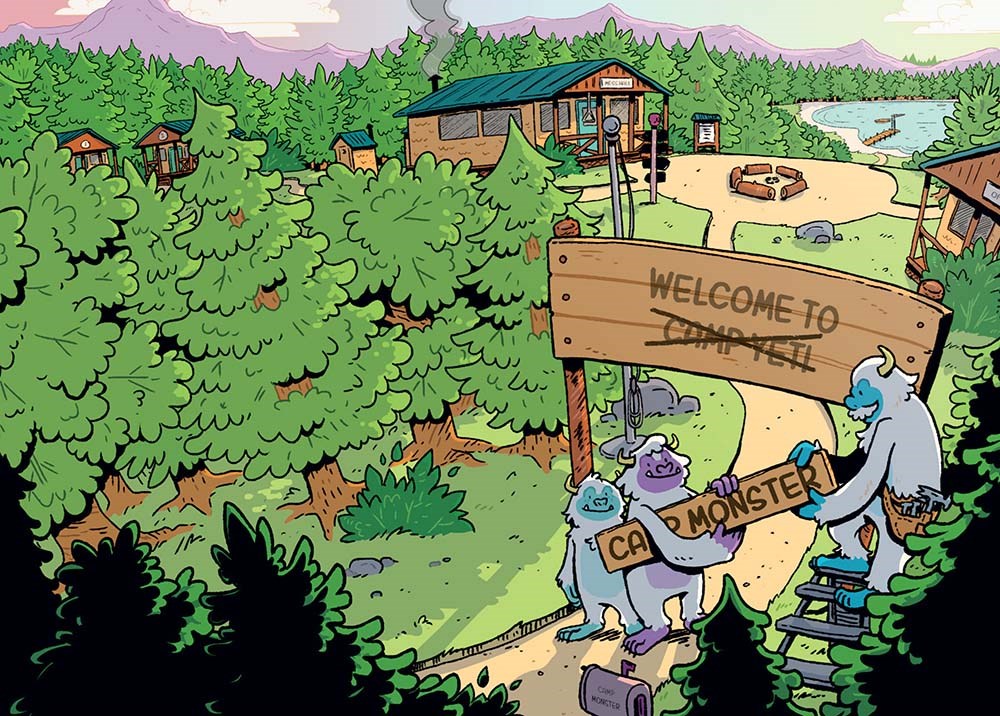
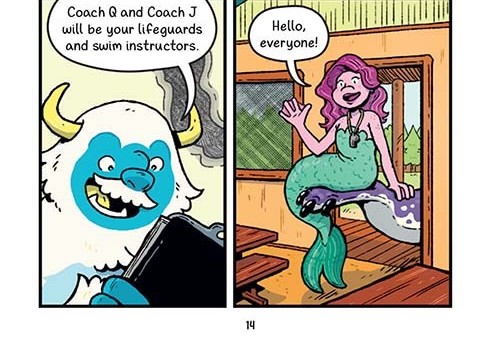
The prominently displayed Code of Conduct for arriving campers lists some familiar dos and don’ts, along with other prohibitions, such as “No turning your fellow campers into frogs or anything,” and the seemingly aspirational, “We treat one another with respect at Camp Monster.”  The swim instructor is a mermaid, which certainly sounds more promising than Ms. Sphinx, the cafeteria manager.  Imagine having to answer a riddle, with dangerous consequences, before you can eat. 

Interspersed with comic strip and word bubble pages are profiles of campers and letters home.  The expectation that everyone would get along turns out to be unrealistic, what with goblins creating a robotic monster out of spare parts, and Lupo undergoing weird metamorphoses.  Isabelle, an ogre with an artistic soul, has a countercultural preference for the feminine term, “ogress,” which “sounds much more elegant.”  She hates sleeping in a rustic cabin, but is convinced that the lead role in the camp musical will be awarded to her.
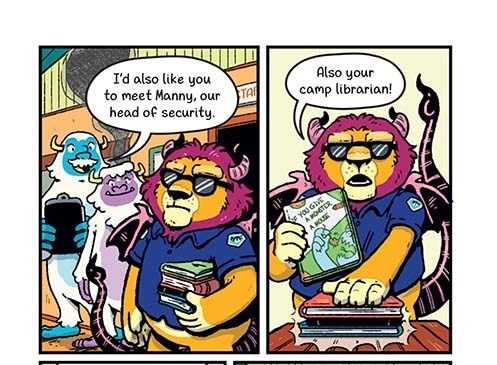
There are some restrictions on projects in Maker Space: no magic allowed. But the camp librarian, Manny, has a well-stocked literary treasure house of classics such as If You Give a Monster a Cookie, One Ogre, Two Ogre, Red Ogre, Blue Ogre, and The Very Hungry Cyclops, with remarkably familiar cover art.  When swimming lessons seem unfairly biased against the more aquatically challenged monsters, the instructor decides to accommodate everyone, defining success according to effort. 

There is a point at the center of all the fun.  Humans, or least evidence that suggests their presence in the woods, become a frightening possibility.  No one is sure, but where there are horse’s hoof prints and candy wrappers, can humans be far behind?  When the terrified campers decide to build a wall, and force the alleged humans to pay for its construction, Tasha the warm-hearted yeti points out that walls are “ineffective.” Some monsters have more common sense than others.  There are some surprises in the plot, and humor for both young readers and adults.  Summer camp can be a time for relaxation and growth, as well as fear mongering and terror.  At the end of the first session, there are some loose ends, but also campers who are eager to return.
Instructional Jam

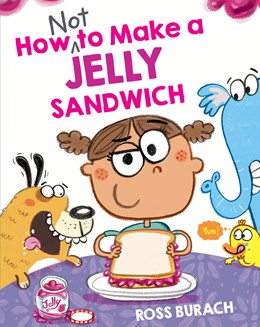
How Not to Make a Jelly Sandwich – written and illustrated by Ross Burach
Scholastic Press, 2026

There are an endless number of projects that demand instructions for adult readers. For children, some of these may seem quite pointless. Ross Burach’s How Not to Make a Jelly Sandwich gets right to the point, providing clear guidelines for the preparation of a culinary favorite. There is not even any peanut butter here, just jelly, apparently grape or maybe strawberry. There is a determined little girl, and some animals to help.

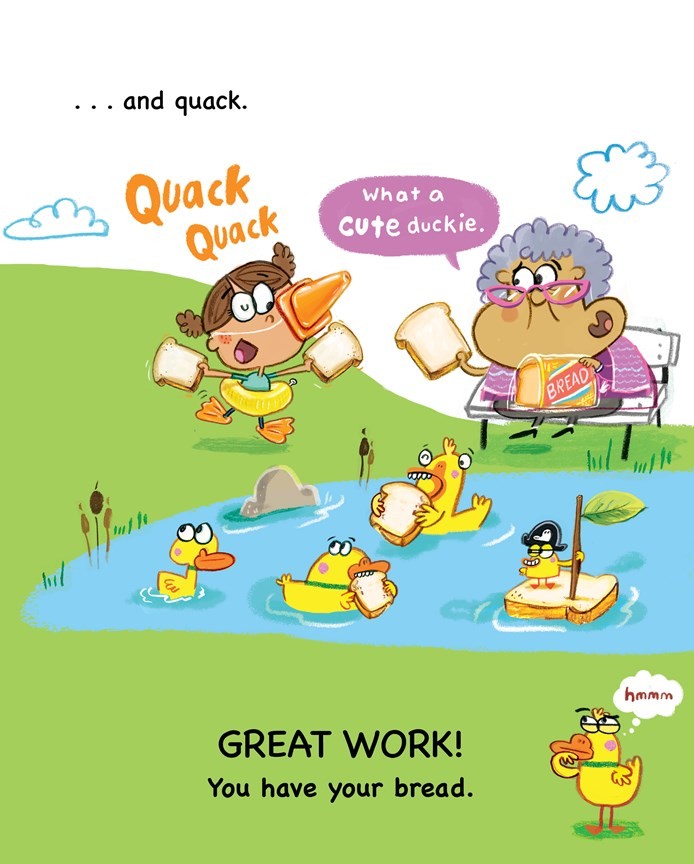
Starting from the beginning, she draws plans on an architect’s planning board. Nothing will be taken for granted. There are only “five simple steps,” cutting out grownup nonsense about specialized qualities of the ingredients. She begins with a trip to the supermarket, where she purchases scuba diving equipment and bread, distributing the latter to some ducks in a pond. The series of detours in making a sandwich are a kind of parody of self-important instructional literature. For kids, they are just funny.

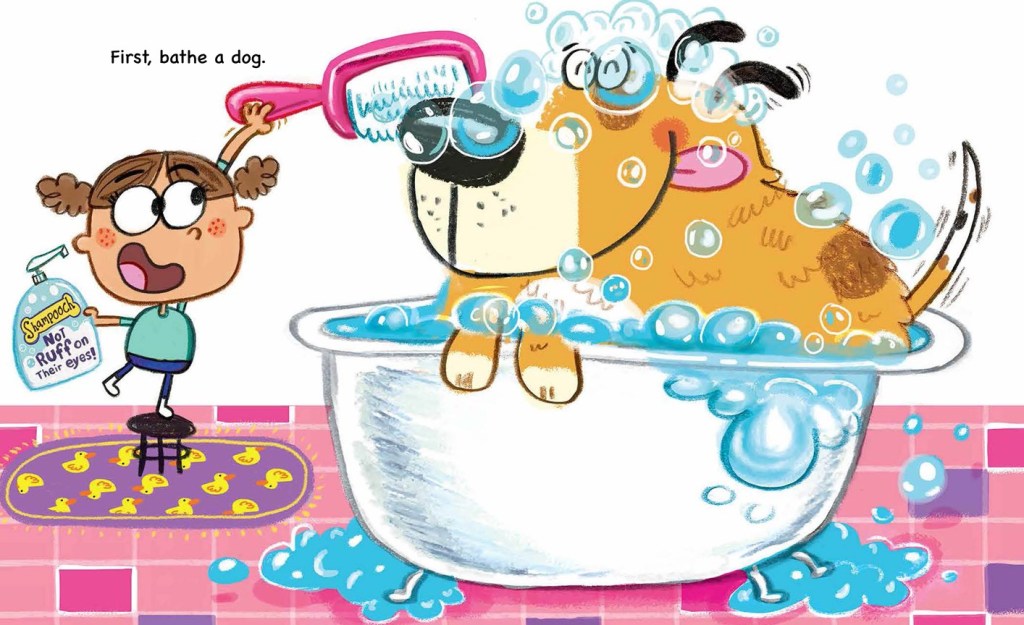
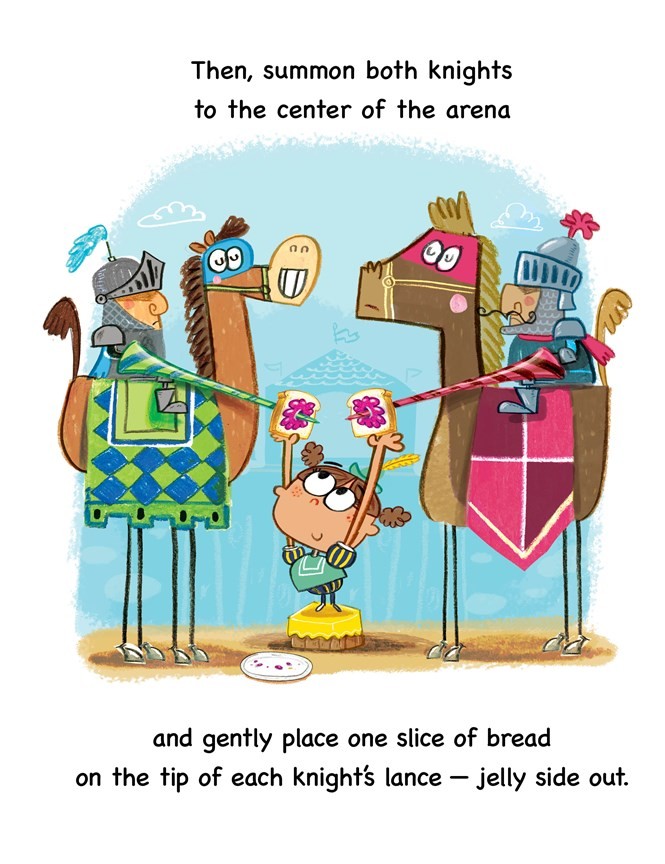
The next step is bathing a dog (other children’s authors have also handled the pet-bathing conundrum), followed by directing a medieval pageant. It may seem like a digression, but the dog’s tail will become a jam knife. Here is where spectacle becomes part of the sandwich preparation, involving placing bread and jelly on the tips of the knights’ lances. Since cultivating the right attitude is often considered essential, the girl uses positive reinforcement with hamsters, who will employ their unicycles to cut the sandwich in half. Seemingly useless activities often have an ultimate goal, especially to children.

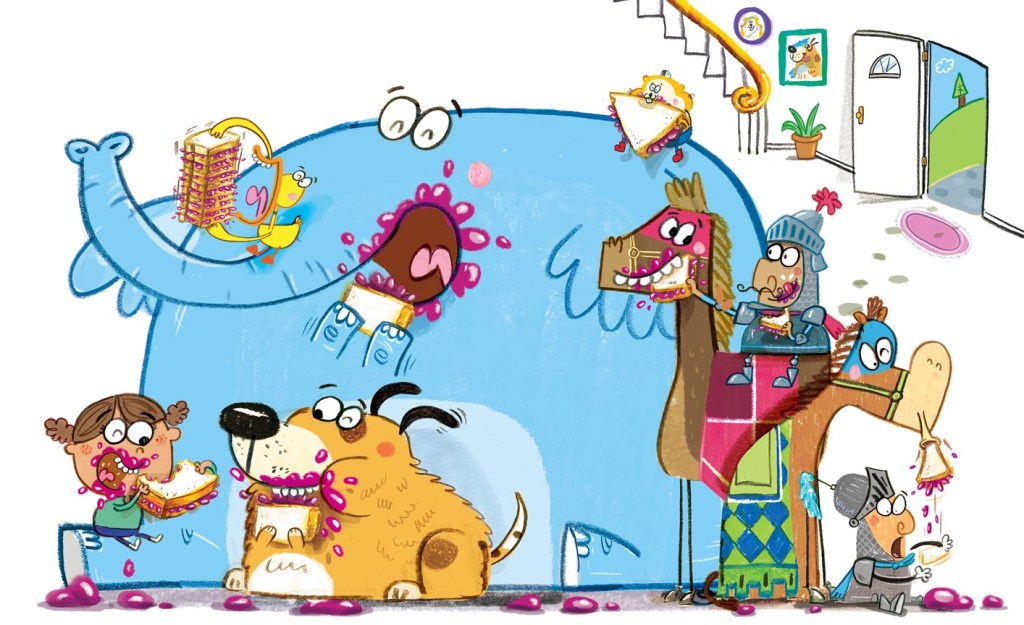
The reward for all of these focused series of actions is a jelly-sandwich eating event, including everyone who has helped, or temporarily hindered, the sandwich construction. Returning to the title, with its “Not” inserted between “How” and “to,” according to the author information on the back cover, the author is having ironic fun with a typical school assignment. How much room for creativity is available when listing instructions on demand? Backmatter offers some more unorthodox suggestions for sandwich prep, and children will undoubtedly come up with more.

These Penguins Are Not All Alike

Welcome to the Penguin Cruise: A Seek-and-Find Adventure – written and illustrated by Haluka Nohana
Chronicle Books, 2025

These penguins do not even all dress alike. They are mechanics, explorers, athletes, musicians, and artists. Aboard their adventurous cruise, they have as many different professions as the residents of Celesteville in Babar the King. When the book begins, Chibi the Penguin and his family are about to board ship for a cruise. The magnificent vessel, which opens from the center as a four-page spread, contains every activity possible enroute to a mysterious location. Cutaway images of the ship invite readers inside, as in Richard Scarry’s works or the European wimmelbooks that inspired him and continue to be fascinating to children (see more here).

Look-and-find is a subcategory of these books. Searching for objects and people is entertaining and educational, but the pictures alone just reflect a view of the world as crowded with endlessly interesting experiences. The penguin theme adds a specific dimension. Wearing a variety of outfits over their simple black and white, these creatures read books, watch movies, prepare and eat meals, and pilot a massive ship.

Then the essential Gold Mermaid statuette disappears, offering Haluka Nohana the opportunity to quote Walt Whitman as the Oceano Penguino’s officer is alerted to her disappearance: “O Captain! My Captain!” A stop on Turtle Isle allows passengers to relax on terra firma, and also to search for a mermaid. Subtle overlapping among the pictures, with small differences, calls for careful reading and viewing. The film-watching penguins change in number and position an empty bed has sleeping occupants, the captain is assisted by a crew member. The Fire Dragon adds a magical touch as he interacts with passengers. What exactly is he doing on the cruise?

At the end of the book there is an additional inventory of items to find. But even once located, trips on the Oceano Penguino have not been exhausted. Leaping dolphins, penguin dance parties, and the elusive Phantom Thief Lupenguin merit many turns of the page, with or without mermaids.

Invitation to a Voyage

Journey of the Humpbacks – written by Juliana Muñoz Toro, illustrated by Dipacho, translated from the Spanish by Lawrence Schimel
Eerdmans Books for Young Readers, 2025

Although this fabulous informational book about humpback whales has not relation to Baudelaire’s poem, “L’invitation au voyage,” I could not help thinking of its title and famous refrain when I turned the first page.  The author states her purpose: “This is an invitation for us to go on a journey. We don’t need a backpack or shoes. Just our eyes wide open.” Every book fits this description. By framing the experience of reading this way, Juliana Muñoz Toro raises expectations and meets them. Baudelaire invites readers to encounter a world where “Là, tout n’est qu’ordre et beauté,/Luxe, calme et volupté,” (“There, there is nothing but order and beauty,/Richness, calm and beauty.”) Instead of dream world, Muñoz Toro, and illustrator Dipacho, extend an invitation to the natural order and beauty of the environment.  Science books for young readers need not omit a sense of wonder.

I won’t try to summarize the wealth of information in this book about the often misunderstood sea mammal, the humpback whale, otherwise known as Megaptera novaiangliae. Did you know that its Latin name means “giant-winged New Englanders?” Probably not, even though you may associate whales with New England, where this one was originally sighted by Europeans.  To orient you on your journey, Dipacho’s elegant graphics, paired with captions, text boxes, and color judiciously added to black-and-white.  Some of the questions even present the answer upside down, adding the sense of a game.  To help you envision scale, a parade of Emperor Penguins sits atop the huge creature, whose principal features are carefully labeled.

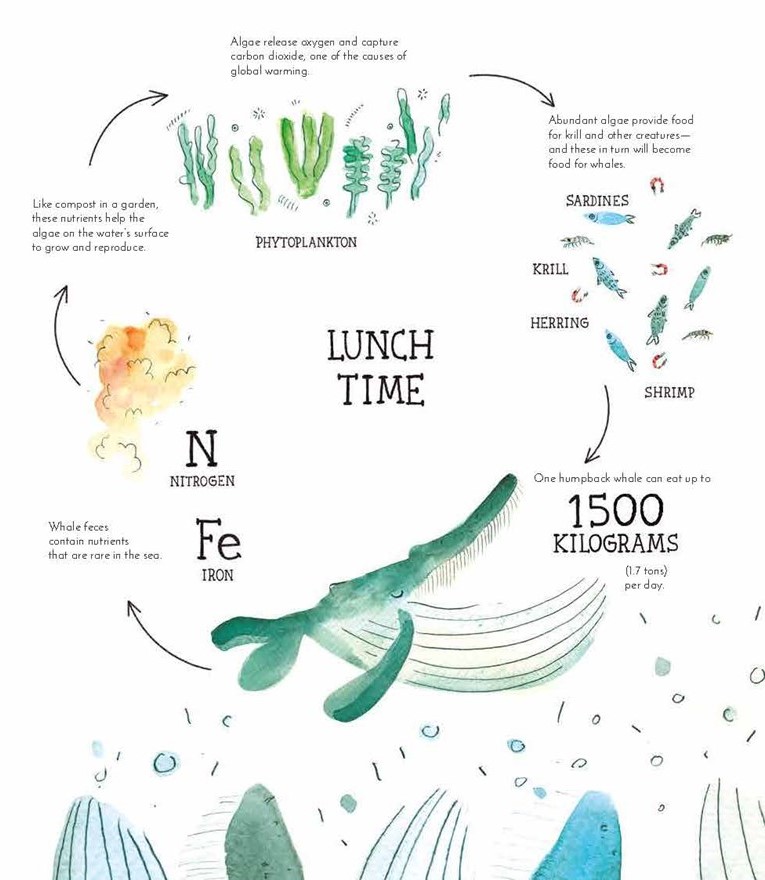
If you come to the book with some basic knowledge of humpback whales, you will still learn a great deal. Nothing is necessarily obvious, including the basic fact that every part of the environment is related to one another. “Nothing that happens in the water does so in isolation.”  “Lunch time” involves a nutrients provided by algae, sardines, and krill.

The pictures are meticulously accurate, but also personify the whales a bit, with their balletic movements that seem almost joyful.  Referring to the segments of their day as “nap time, “ “time for adventures,” and, of course, “time to breathe,” sets a tone of familiarity, but also awe: “The breathing of humpback whales is long and deliberate, as if they were meditating.” Note the phrase “as if.” 

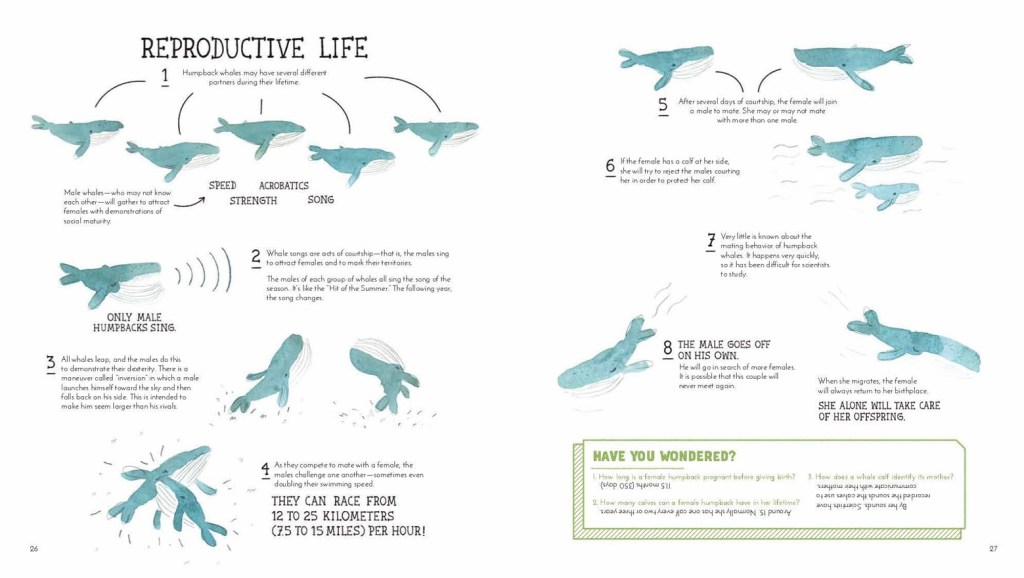
When people appear, they are comically observant, watching the whales and taking notes of what they see. Here Dipacho presents richer colors than in the extensive factual scenes, as he brings humans into the picture.  They are important and provide perspective, but they don’t compromise the whales’ starring role. In fact, a wonderful two-page spread categorizing the baleen whale family (image) identifies the humpback, with a touch of humor, as “the protagonist of this book.”  Another concise and complete section on the whale’s reproductive life is, again, accurate and also performative.

Steps numbered in sequence give the facts and also allow the reader to draw her own conclusions. “She alone will take care of her offspring.” The “Have You Wondered” section reveals how a calf learns to identify its mother.  The book’s backmatter declares that it was created by “a team of people who love whales.” By this point, you will not have any doubt of that essential fact.