Four Seasons: A Complete View

Now I See Winter
Now I See Spring
Now I See Summer
Now I See Summer
Written by Mac Barnett, illustrated by Jon Klassen
Tundra Books, 2026
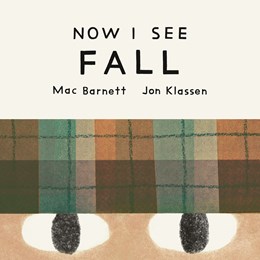
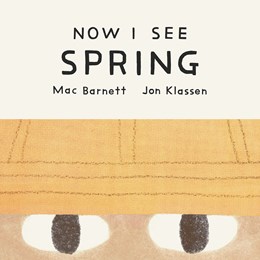
There are board book editions of children’s classics, others that are original stories, and many that have tactile elements or photographs of familiar objects. All those categories are wonderful for introducing literacy to babies, toddlers, and young children. (Older children, and adults, also appreciate the sturdiness, portability, and other features of this format.)  Mac Barnett and Jon Klassen have written and illustrated a systematic view of the four seasons based on two different premises, continuity and change.  The four books are inventive and appealing, and surprising, as well. Even if you own many seasonal books for young readers and listeners, these are different.
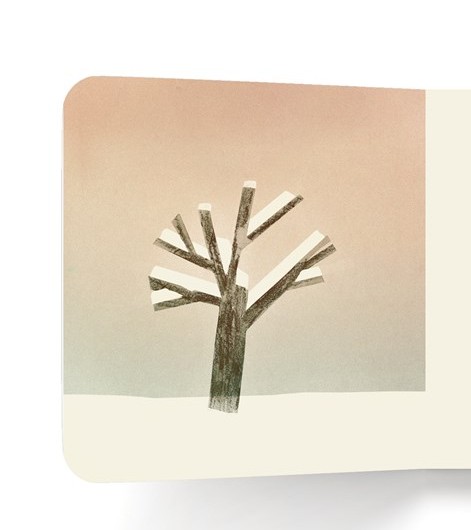
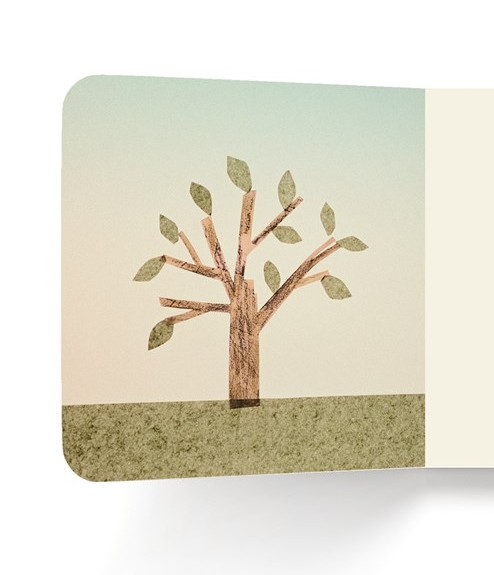
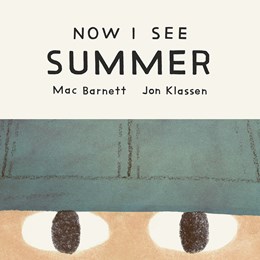
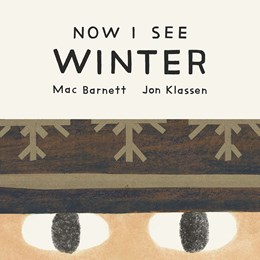
Each of these small, square, books has identical text, and pictures of the same location or object, varied according to the time of year when it is experienced. Each has a similar cover, featuring a pair of eyes ready to focus, and a color and pattern specific to winter, spring, summer, or fall. The tree is covered in snow in winter, accented with green leaves and grass in summer.
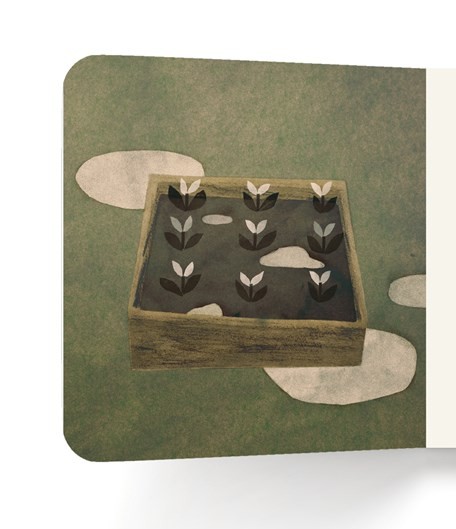
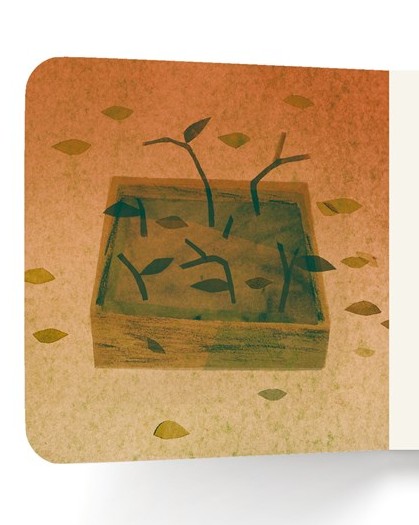
The garden, encased in a small box, is beginning to sprout in spring, and in transition between growth in the fall and emptiness in the fall. The page dedicated to “me” shows a child’s shadow observing the changed scenes. The simplicity of the text is a sign of its depth, a kind of Zen-like approach to the changing environment in the perception of a child.  There is nothing inevitable about Barnett’s choice of few words. One page in each book is dedicated to “something red;” the fall image of a lone red wagon calls to mind William Carlos Williams’s famous red wheelbarrow. “The perfect hat,” of course, Jon Klassen’s hat trilogy.  The hat changes for each season, but the child’s intent stare through the window is constant, a reminder that the book is about observation.  Children do not miss some details that adults might, and they may attach different significance to them. 
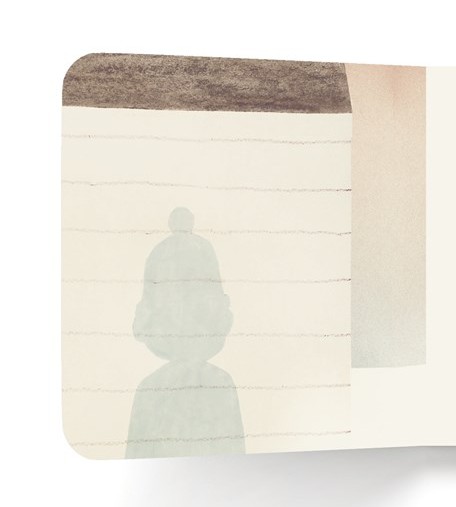
The series celebrates the acute perceptions of childhood, both for children themselves and the adults who recollect the time when a house, tree, or the expanse of sky were both predictable and strange, depending on time.
Treehouse Inhabitants

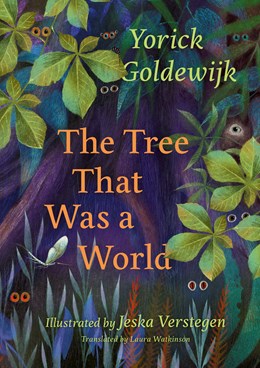
The Tree That Was a World – written by Yorick Goldewijk, illustrated by Jeska Verstegen, translated from the Dutch by Laura Watkinson
Eerdmans Books for Young Readers, 2025

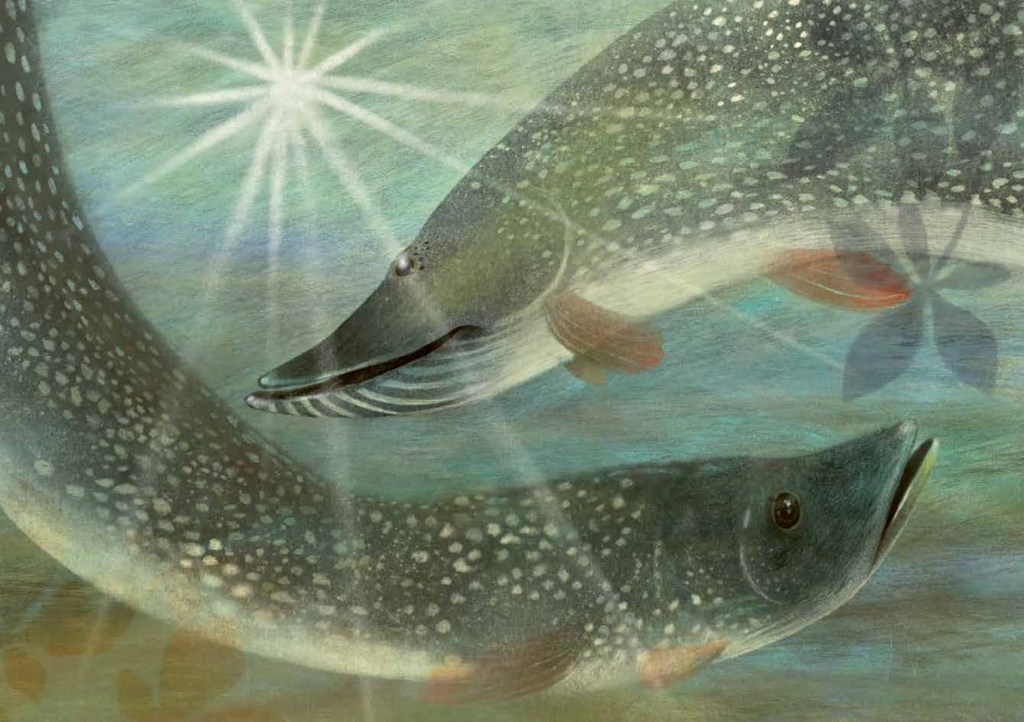
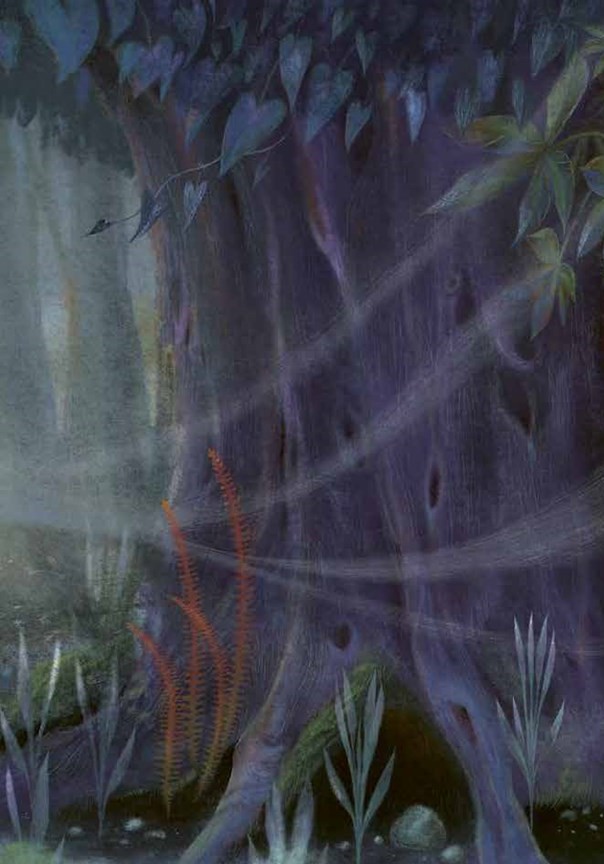
The Tree That Was a World is unexpected.  The central premise of a multitude of creatures who all inhabit, or interact with, the tree, and the dream-like mixed media illustrations, predict a kind of eco-fable. While the natural environment is the scenery to the story, its idiosyncratic characters form a unique cast that defies any didactic message. Readers will meet two pikes, one of whom finds the other to be “arrogant and self-important.”  There is a big brown bear having an existential crisis, and an owl who doubts his own identity. These are animals who argue, become discouraged, and pronounce, “Fuhgeddaboudit” when they reach their wits’ end.

The tree is majestic, a metaphor for age and stability. It’s also a place where everyone has a distinct niche and harmony is not always the order of the day.  A moon moth caterpillar contemplates the meaning of freedom. Her friends boast and obsess with their beauty, while she finds herself unwilling to play their game.  All the characters are similarly endowed with an independent spirit, which is far from idealized. They can be cranky and irritating, even while their refusal to conform is admirable. No, this is not George Orwell’s Animal Farm. Yorick Goldewijk’s carefully expressed irony sets them all, from spider to barn swallow, apart from allegory.

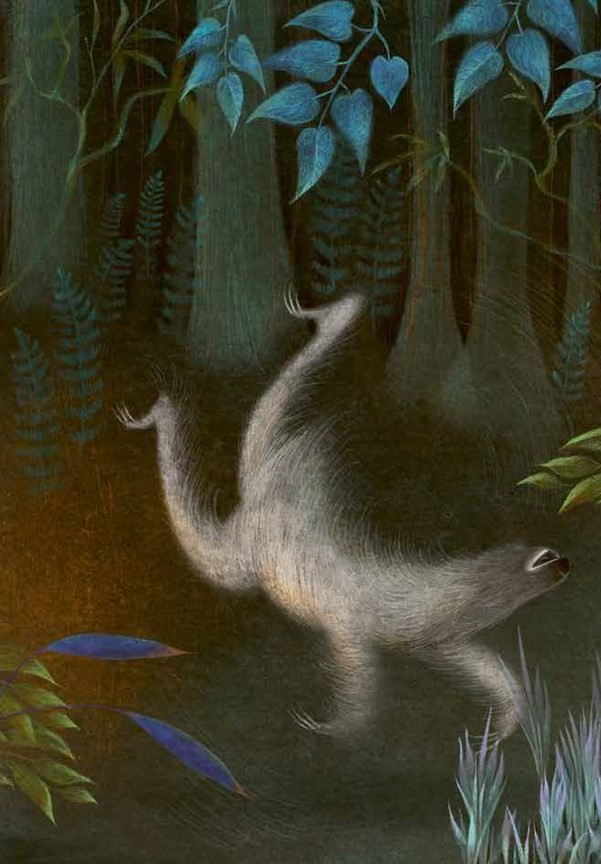
Jeska Verstegen’s pictures are dark, with dashes of illumination (I’ve reviewed her work here and here).  A sloth determines to defy expectations, swinging gently from the tree. He projects his thoughts onto everyone who assumes they know him, even when they don’t, declaring that “he’s going to do some running, jumping, and somersaulting. And screaming. Lots of lovely screaming.” The angry pike swims by his nemesis, insistent that his distress is all the fault of the other fish.  Oddly, the glassy green of this image reminds me of Martin and Alice Provensen’s illustrations for Margaret Wise Brown’s The Color Kittens. Yet for all the innocence of the lovely Golden Book classic, there is a mysterious depth the images, along with Brown’s poetry, share.  The characters are anthropomorphic, but retain their identity as animals.

Other classic works of children’s literature will come to mind, including The Wind in the Willows, Winnie-the-Pooh, and even Frog and Toad (not to mention George and Martha.) A red squirrel gets into a heated argument with a toad, which includes a debate about the existence of gnomes, and the danger of socializing with humans. “If you’re not careful,” the toad warns, “you’re going to turn into one of them.” Children and adults will both take to heart those words to live by in this bold story, as non-compliant as the tree’s peculiar, yet also familiar, residents.

Stellar Dendrites (Snowflakes)

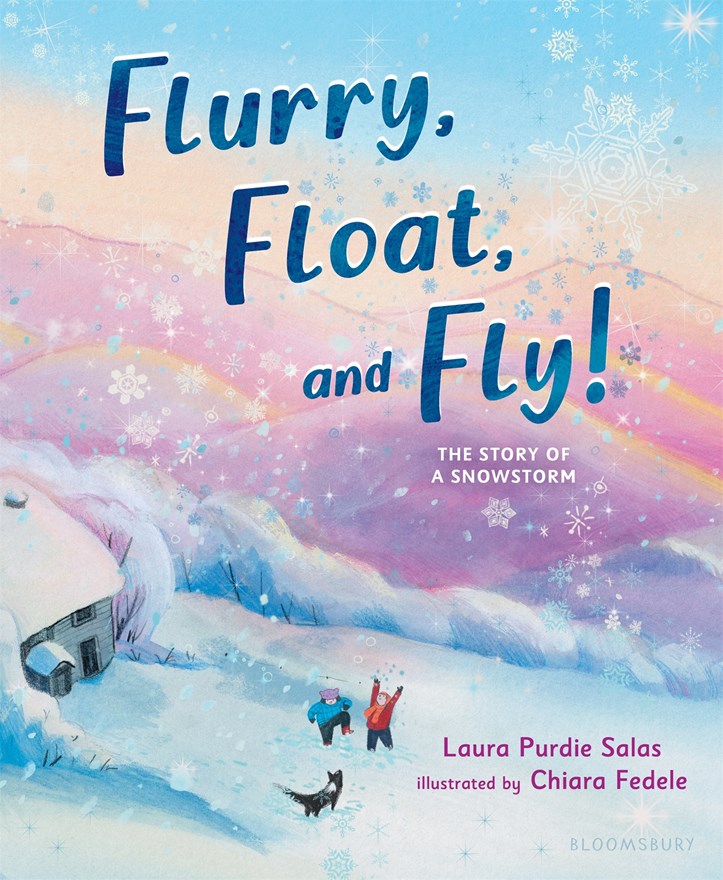
Flurry, Float, and Fly!:The Story of a Snowstorm – written by Laura Purdie Salas, illustrated by Chiara Fedele
Bloomsbury Children’s Books, 2025

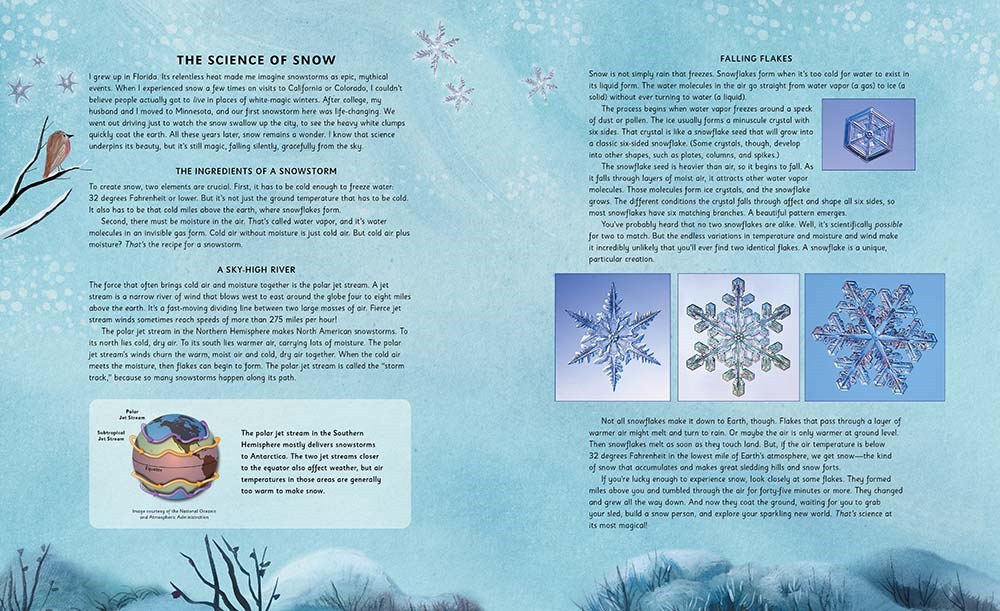
There are STEM picture books that integrate the informational content into a story, and others that place aesthetic appeal at the center, adding the scientific context in the backmatter.  The text of Flurry, Float, and Fly is full of momentum and joy, while the pictures, rendered in watercolor, gouache, and pencils with digital editing, are both bold and delicate. Jewel tones are placed against pastel or muted shades. Snow itself is a precise phenomenon, explained in detail in a separate section, “The Science of Snow.” The unparalleled wonder of welcoming a snowstorm emerges from every page. Regular readers of this blog know that snow books are one of my favorite genres (my most recent one before today includes links to the earlier ones).

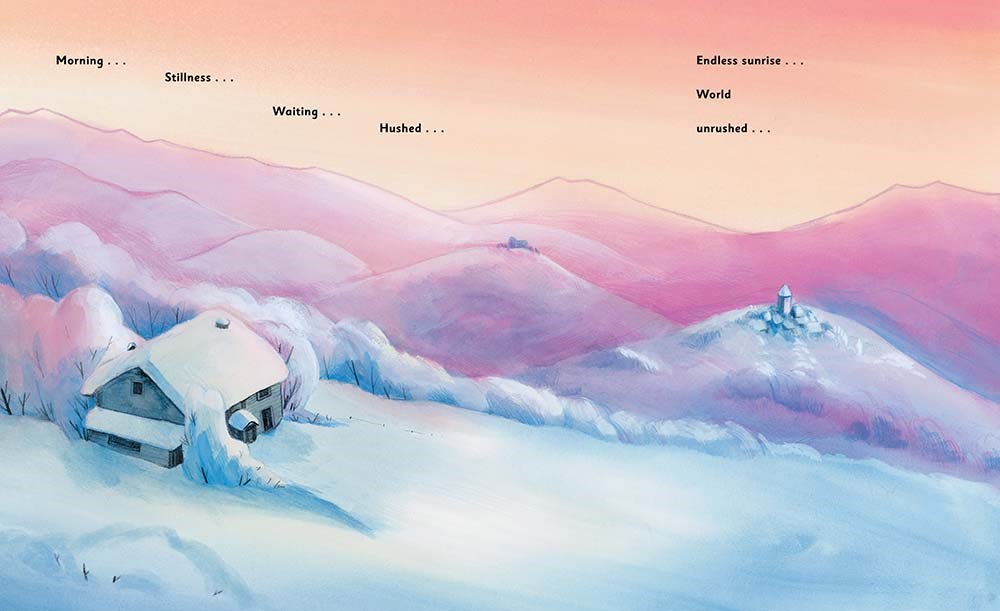
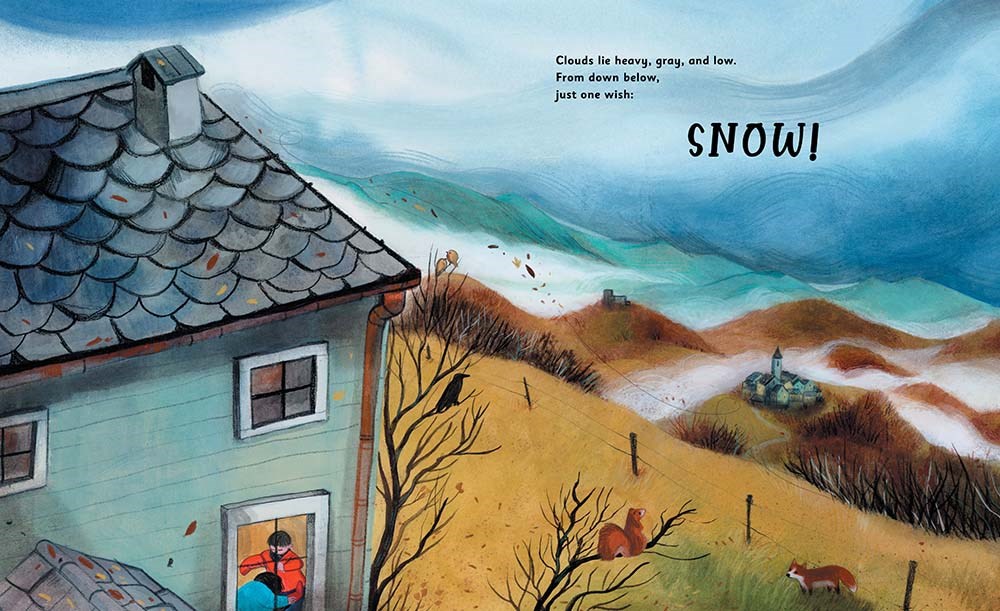
Laura Purdie Salas’s text and Chiara Fedele’s pictures are composed to interact perfectly (I reviewed Salas’ book on thunderstorms here, and I have reviewed several books illustrated by Fedele—here and here and here–but this is their first joint effort I have seen). The bold black text is in a minimalist, poetic style. A house with a snow-covered roof in the foreground, other buildings in a distant background, and a blanket of white fill the bottom of a two-page spread. A pink and yellow horizon allows the words to speak quietly: Morning…Stillness…Waiting…Hushed.” Perspective supports the effect of comparing human activity to the expanse of nature. In one corner of a scene, two people are framed by the window of their house. In the center, a fox and a squirrel look up expectantly. In the distance, a town appears as if in miniature, while the blue and white sky appears ready to fulfill a wish for “SNOW!”

The words of the title actually first appear as a disappointment. Two children are ready with a sled, but they are sitting and standing on a bed of leaves.  Fedele’s use of color is dramatic within a quiet setting.  One child wears a bright red coat. The girl sitting on the sled has red boots, a cobalt blue jacket and violet hat.  The fox is red, as are two small birds sitting on the bare branch of a tree.  “No snow to flurry, float, and fly” is about to be replaced by its opposite.  Another picture reverses the position of house and outdoors, with a family sitting in the window on the right of the scene, and the “merging crystals” beginning to form and fill the sky on the right. The interior of the family’s room is shimmering gold and the green of their sweaters recalls the distant season of spring more than the forest green of winter.

There are allusions to the fact that snow is not formed out of poetry throughout the book, as in the reminder that “Water vapor clings to dust,/begins to form a slushy crust.” The carefully presented information at the book’s conclusion illuminates the intersection between different experiences.  “Columns don’t have arms or branches.  Instead, they’re simply tubes with six sides, like old school pencils.” Those old pencils might even be multicolored, aligning the complexity of a snowflake’s structure with the sheer excitement of a storm.

A Different House, A Different Perspective

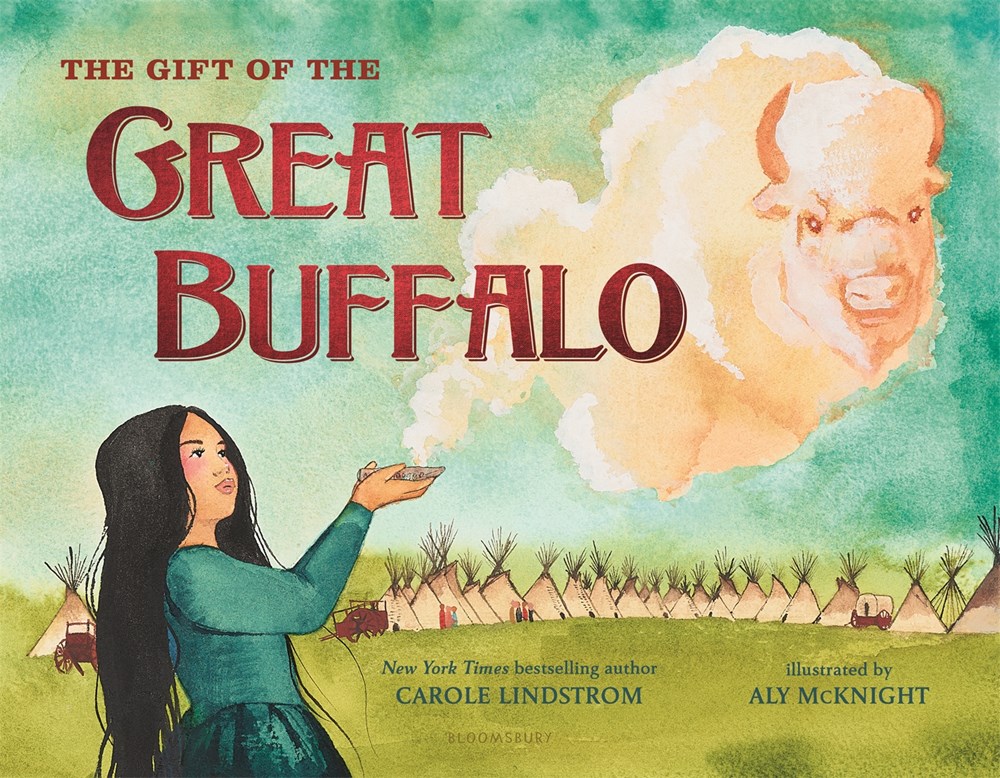
The Gift of the Great Buffalo – written by Carole Lindstrom, illustrated by Aly McKnight
‎Bloomsbury Children’s Books

Rose lives on the prairies, in a Métis-Obijwe indigenous community. Preparing for the buffalo hunt that will sustain her people, she is eager to actively take part.  This elegant picture book takes place in the 1880s, and, like Laura Ingalls Wilder’s Little House on the Prairie series, Rose’s dwelling is small and homemade.  However, as author Carole Lindstrom explains in her detailed “Author’s Note,” she was motivated to tell Rose’s story by her own sense of distance from Wilder’s accounts.  The Gift of the Buffalo offers the perspective of the Native Americans who are a shadowy and distorted presence in Little House. Lindstrom and the artist, Aly McKnight have not created a rebuke, but rather, an alternative and illuminating vision.

I have written about the complexity of Laura Ingalls Wilder’s works (see here and here and here and here and here), which, along with racism, include a great deal of ambiguity about how a young girl interprets the conflicting messages of her parents and community about the people whose land they have appropriated.  The Gift of the Buffalo would stand alone for its excellence, even without the essential commentary that Lindstrom and Ally McKnight offer about the reality of an autonomous world, which is not merely a frustrating background for the story of Wilder’s pioneers.  Rose is an intelligent and perceptive child. When her father discourages her from accompanying him on the buffalo hunt, insisting that “that’s no place for you. Besides, Ma needs you more,” she cannot accept his restriction. 

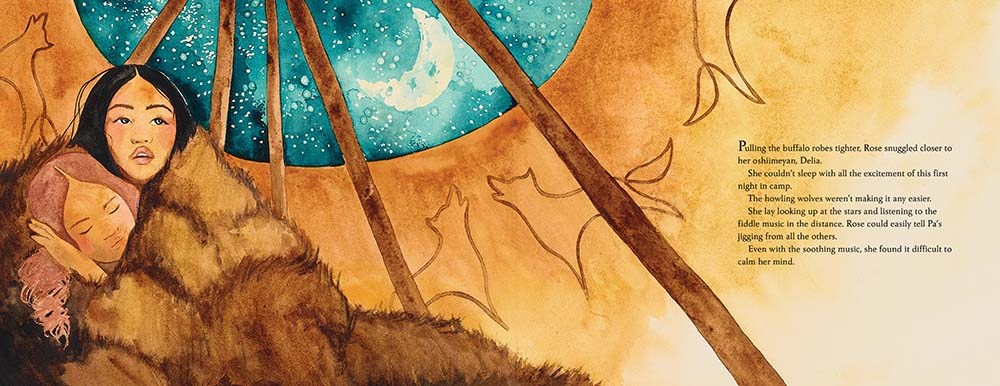
Rose’s decision to defy her father is not based principally on her individual needs, although there is an implicit statement about the independence of a young girl. She is deeply concerned about her family and friends. Lying in bed next to her oshiimeyan (younger sister), both of them enveloped in buffalo robes, she is excited about the hunt.  When she later hears adults express concern about their lack of success, she knows that she will need to step forward. Pragmatism is connected to spirituality; Rose will communicate directly with the spirit of the animals that, in the Métis consciousness, will give their lives to sustain their fellow beings. 

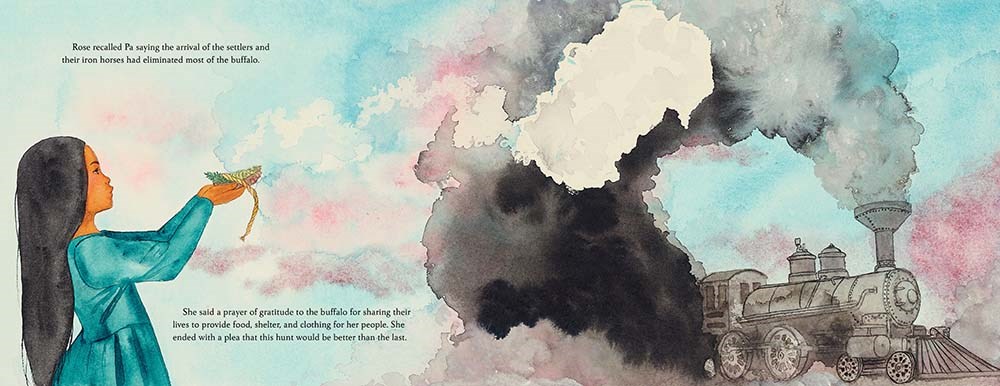
The watercolor and graphite illustrations are stunningly beautiful.  Earth and jewel colors, expressive faces, and alternating dark and light, frame realistic depictions infused with metaphor.  Rose, in a blue dress that complements the lighter blue of the sky, offers up a prayer of gratitude, in advance, expecting that the buffalo will “provide food, shelter, and clothing for her people.” Her father sometimes wears a wolf skin when hunting, and Rose assumes the mantle of his authority by putting on the special garment and identifying with the wolf. This ritual enables her to hear the buffalo assure her that her efforts will be productive: “We offer our lives for our relatives.” This evidence of mutual connection contrasts sharply with the exploitation of settlers, who had exhausted the supply of animals, even hunting for sport.

After the hunt, Rose’s father gently admonishes her. She had located the buffalo, but only by breaking his rule.  His suggestion that she might, in the future, accompany him on a hunt, shows  recognition of her needs as well as those of the tribe.  Readers will find familiar elements in Rose’s story of independence and growth, as well as an invitation to learn about a different house, family, and world.