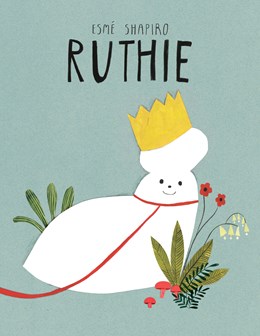
Ruthie – written and illustrated by Esmé Shapiro
Tundra Books, 2026
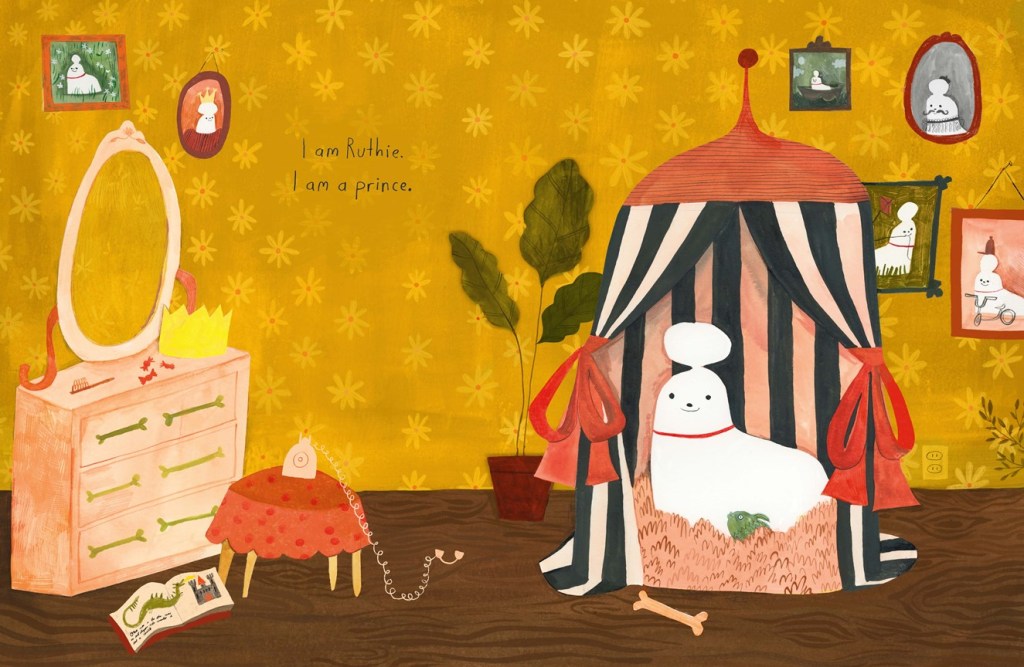
It’s impossible to mistake a book by Esmé Shapiro with the work of any other artist (I’ve reviewed her work here and here and here). Her odd, rounded, comically proportioned figures, their quirky thoughts put into the perfect words, as well as the underlying premise of Shapiro’s universe, are all there. (Her pictures in this book are rendered in gouache, watercolor, colored pencils, and collage.) Life is strange, funny, poignant, and always suitable to be made into art. In Ruthie, a haughty dog believes that he is a prince. Just look at this pet’s bedroom, with its pink-ribboned canopy and fancy vanity. Royal pictures adorn the walls and a crown, perhaps paper, sits next to brush and hair ornaments. A picture book, left carelessly open, on the floor, features a castle and dragon. Someone must be in charge of picking up this mess, but it’s not the monarch himself.
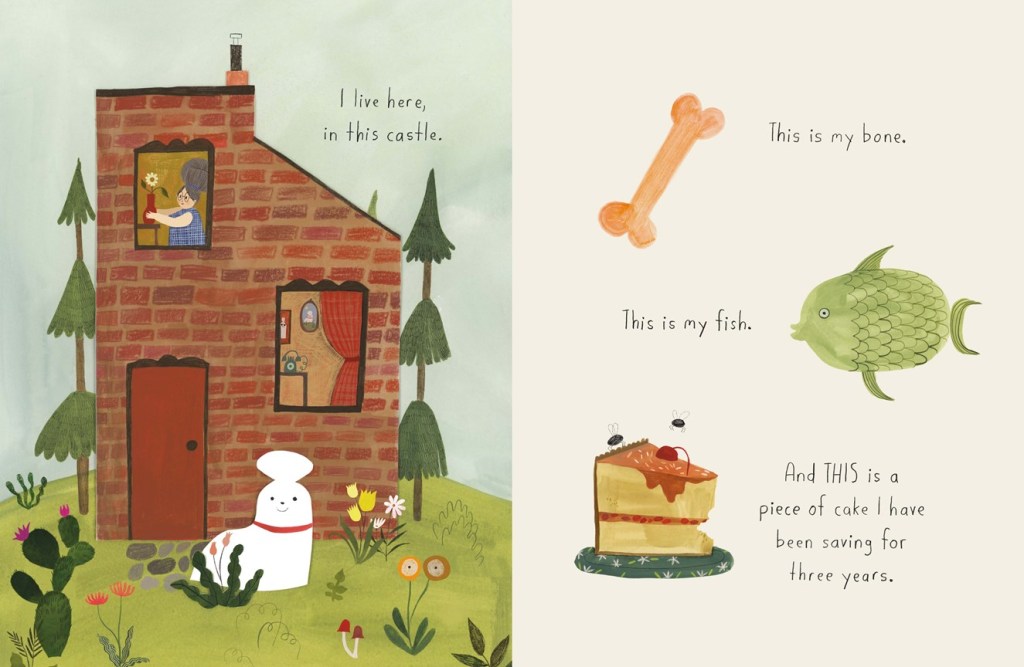
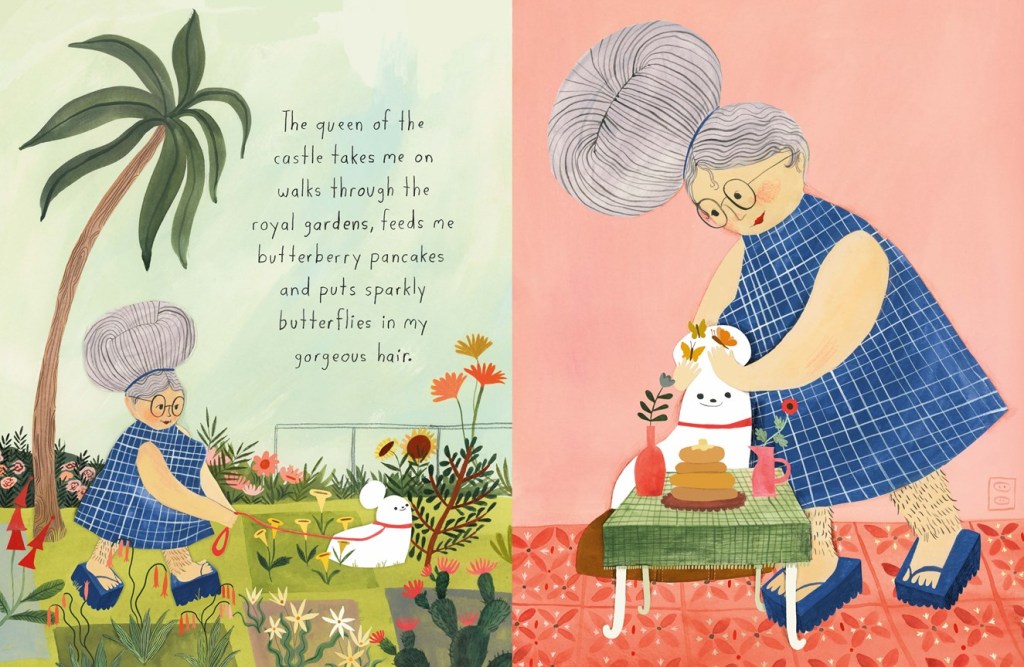
Ruthie lives in a smallish castle, resembling a brick house. Through the window we can see Ruthie’s human queen, the same one who feeds and grooms him, taking care of his every need. Ruth imperiously identifies some of his favorite objects: bone, fish, and three-year old piece of cake. This is the only tone he knows how to adopt when communicating his needs.
There are some disadvantages to her living arrangement. The responsive and super-competent queen sometimes keeps Ruthie on a short leash. The dog-prince suspects that there may be experiences which he is missing, such as a parade given in her honor, but freedom is inconsistent with instantly available blueberry pancakes and a relaxing bath.
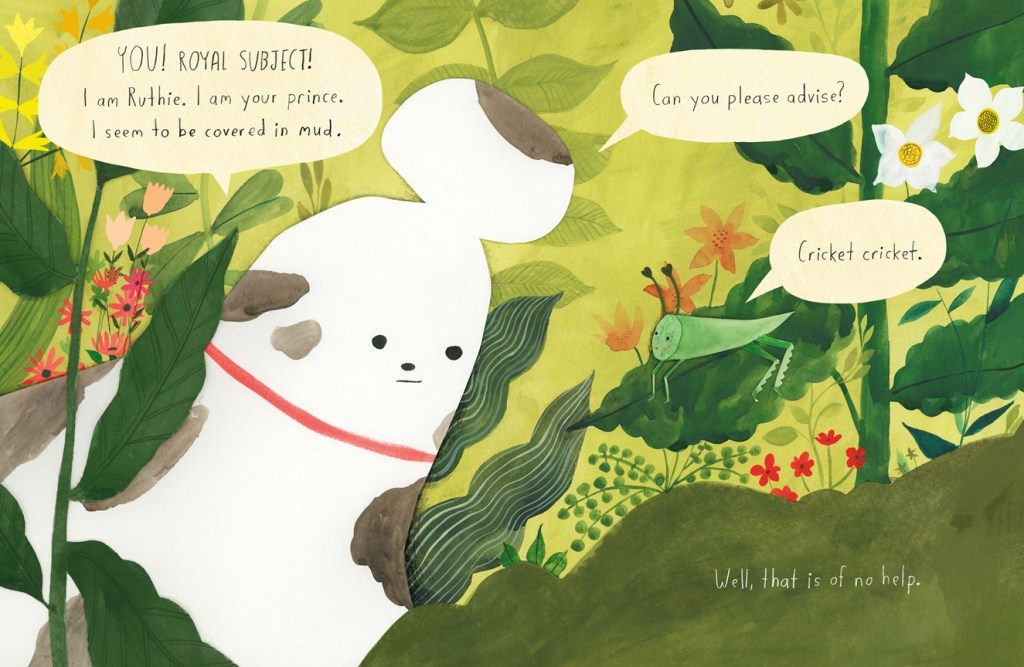
Preaching is not part of Shapiro’s vocabulary. When Ruthie breaks loose, he is initially thrilled with the possibilities, but soon he is covered with mud. Strangely, the animals he meets don’t recognize his authority. But explaining his predicament to a, naturally, wise owl, Ruthie finally has the means to return from his Oz-like journey, back to the safety of the person who loves him unconditionally. He even recognizes that, in his quest to get rid of the mud, he has made “a new friend or two.”









 Imaginary Elevators