Into the Woods

Camp Monster – written by Kate Messner, illustrated by Falynn Koch
Bloomsbury Children’s Books, 2026

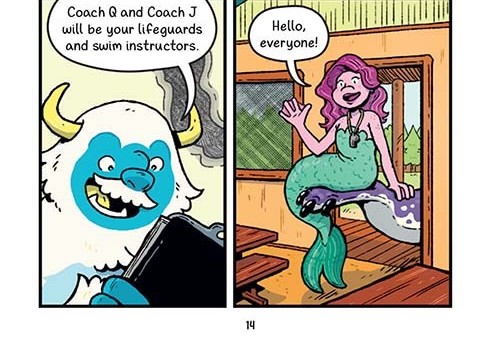
Too many people, not enough yetis. At least that seems to be the problem when Tasha’s parents decide to re-launch the summer camp that had served their species.  Only by welcoming a more diverse group of monsters will they have a chance of success.  Tasha describes this dilemma in a letter to her Gramp Abominable. She is consumed with excitement about sharing the experience of his own youth, even with her mother’s ominous warning about humans lurking in the woods, ready to spoil their fun. Kate Messner and Falynn Koch’s graphic novel about a camp populated by yetis, goblins, vampires, and griffins describes everyone enjoying a harmonious time together.  Not really.
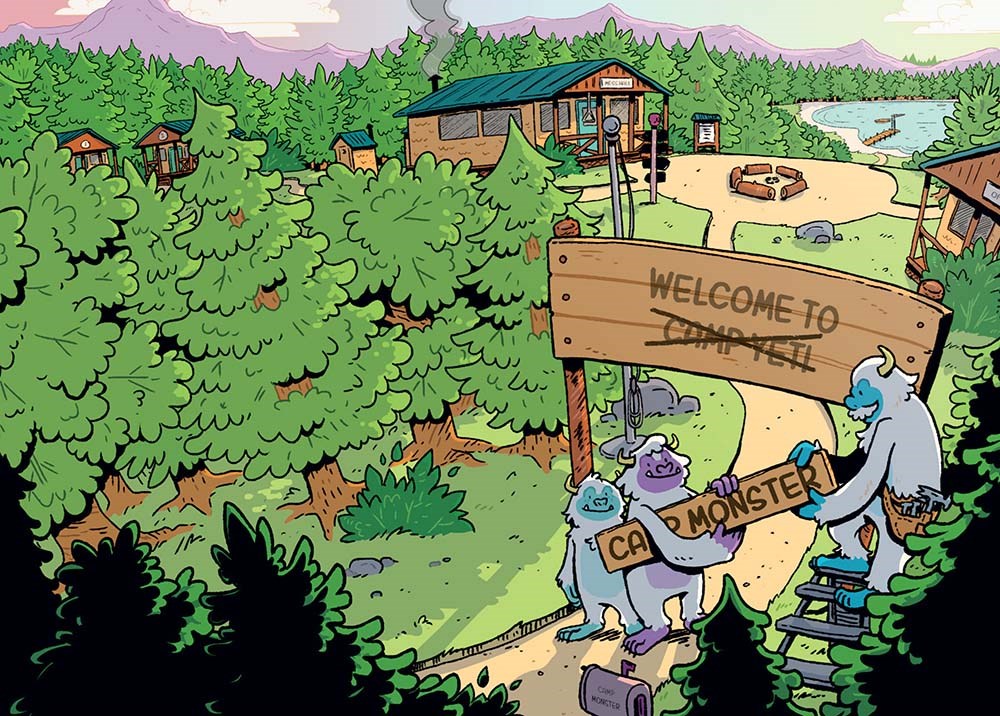
The prominently displayed Code of Conduct for arriving campers lists some familiar dos and don’ts, along with other prohibitions, such as “No turning your fellow campers into frogs or anything,” and the seemingly aspirational, “We treat one another with respect at Camp Monster.”  The swim instructor is a mermaid, which certainly sounds more promising than Ms. Sphinx, the cafeteria manager.  Imagine having to answer a riddle, with dangerous consequences, before you can eat. 

Interspersed with comic strip and word bubble pages are profiles of campers and letters home.  The expectation that everyone would get along turns out to be unrealistic, what with goblins creating a robotic monster out of spare parts, and Lupo undergoing weird metamorphoses.  Isabelle, an ogre with an artistic soul, has a countercultural preference for the feminine term, “ogress,” which “sounds much more elegant.”  She hates sleeping in a rustic cabin, but is convinced that the lead role in the camp musical will be awarded to her.
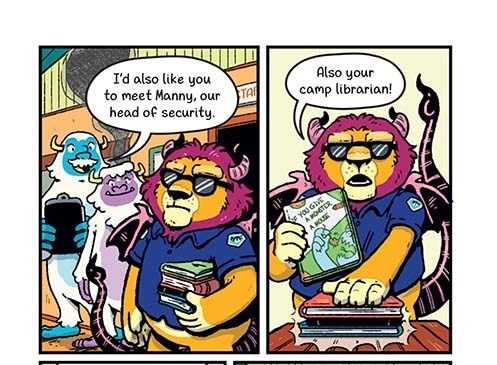
There are some restrictions on projects in Maker Space: no magic allowed. But the camp librarian, Manny, has a well-stocked literary treasure house of classics such as If You Give a Monster a Cookie, One Ogre, Two Ogre, Red Ogre, Blue Ogre, and The Very Hungry Cyclops, with remarkably familiar cover art.  When swimming lessons seem unfairly biased against the more aquatically challenged monsters, the instructor decides to accommodate everyone, defining success according to effort. 

There is a point at the center of all the fun.  Humans, or least evidence that suggests their presence in the woods, become a frightening possibility.  No one is sure, but where there are horse’s hoof prints and candy wrappers, can humans be far behind?  When the terrified campers decide to build a wall, and force the alleged humans to pay for its construction, Tasha the warm-hearted yeti points out that walls are “ineffective.” Some monsters have more common sense than others.  There are some surprises in the plot, and humor for both young readers and adults.  Summer camp can be a time for relaxation and growth, as well as fear mongering and terror.  At the end of the first session, there are some loose ends, but also campers who are eager to return.
One Person, One Character, One Goal

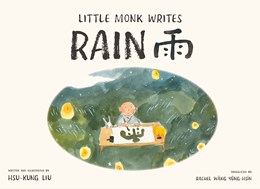
Little Monk Writes Rain – written and illustrated by Hsu-Kung Liu, translated by Rachel Wāng Yῠng-Hsín
Eerdmans Books for Young Readers, 2026

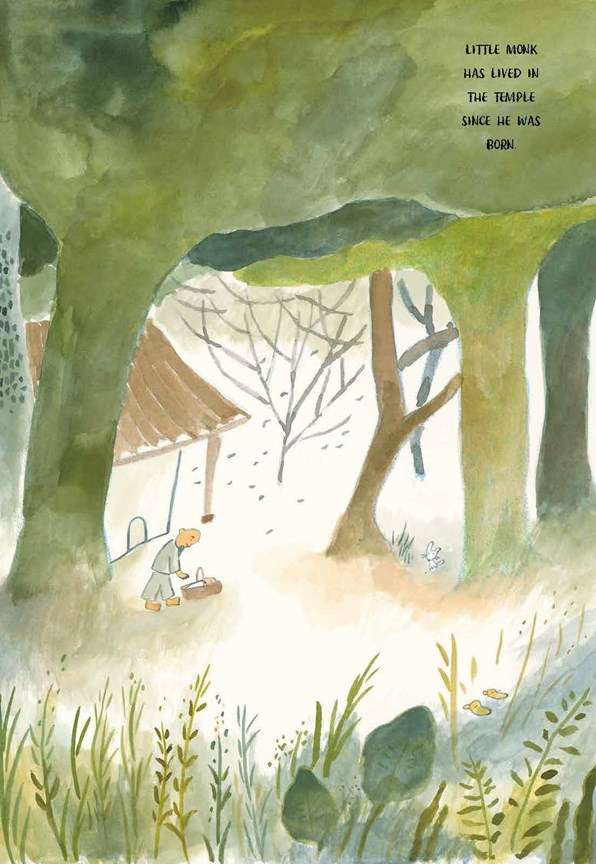
This exceptionally beautiful and gently philosophical picture book is about a Buddhist monk who has difficulty learning written language, with the exception of one Chinese character. He is singularly focused on writing the character for “rain,” and this limited but powerful ability persists throughout all the onslaughts, as well as the peaceful times, of his life. The book opens vertically, like a writing tablet.  Delicate watercolor and ink drawings reflect traditional art, without mere imitation.  When the book begins, the character is a young boy. Of course, character has two meanings here, an individual human and a symbol for written expression. 
He first appears at the monastery in a tiny woven basket; as he grows, he is integrated into the community of prayer and manual labor, as well as reading and writing. For better or worse, he is not completely isolated from the outside world.  A mention of casual cruelty makes this clear, because “Little Monk is not able to learn to read. And sometimes, other people laugh at him.” Those people are shown as children peering through a doorway. One has a bird on his head, an allusion to innocence, or perhaps of something worse. That oddly positioned bird may point do a different and less excusable deficiency, lack of empathy.

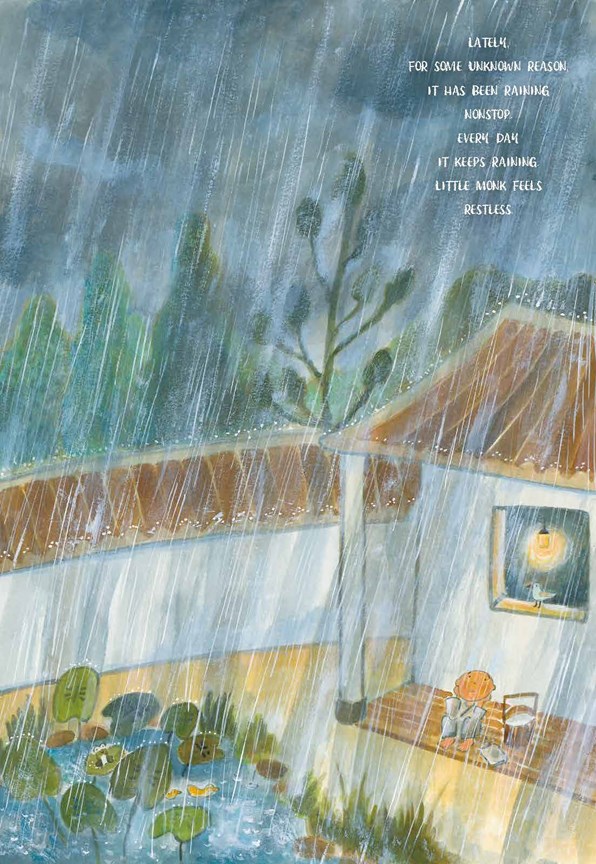
Suddenly, “for some unknown reason,” it begins to rain incessantly. Joining an older monk indoors, the little monk learns to write the character for rain. After introduction of the character, whenever it appears in the book, it is simply left standing without any guide to pronunciation.  The reader may choose to read the character as “rain,” or to research how to pronounce it and attempt to do so. This seems a deliberate feature of the book, given that the nature of language, at least as people use it every day, is as framed by “some unknown reason” as the rain itself.

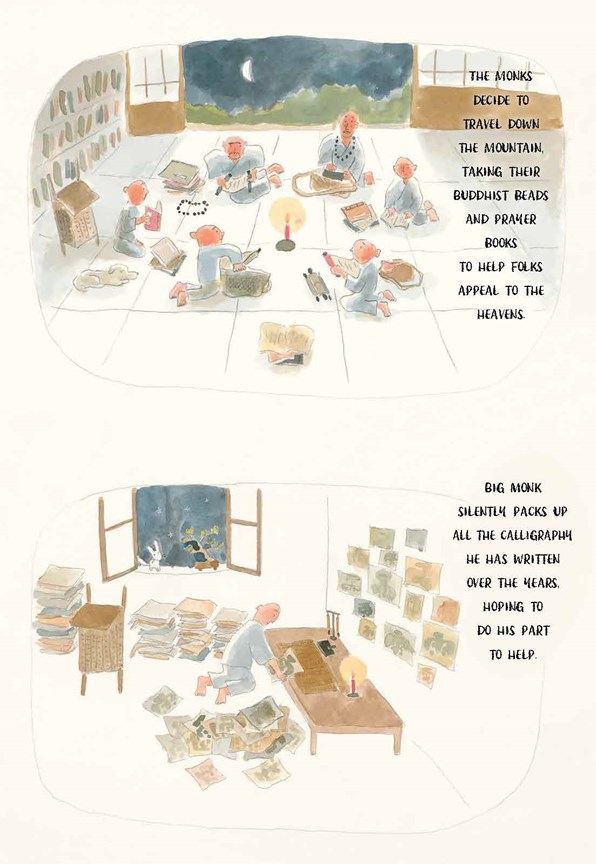
As in a fairy tale, the hero persists against adversity. Every day he performs his work tasks, but also writes the one character he has been able to master. Over the years, he grows up, becoming “Big Monk,” but his inner character remains unchanged. Then the environment suffers a reversal, and a drought threatens the world.  The monks take responsibility for leading others in prayers to end the drought. They are well-equipped and organized, “taking their Buddhist beads and prayer books to help folks appeal to the heavens.” There is no sense of superiority in their actions. Meanwhile, Big Monk also prepares, by gathering together his impressive collection of calligraphy, all consisting of the one character for rain..

A vertical two pace spread is a magnificent scene washed in red and gold, of a plaza where ordinary “folks” pray while important men and “splendid altars” dazzle. “Even the Emperor is here.” When the monks arrive, they also appear important to the reader, wearing their crown-like broad hats and bearing their sacred scrolls. But their clothes are “shabby.” In folklore, many times the high and mighty are brought low by their sense of self-importance. At first the monks are unable to respond, feeling faint and weakened by the intense heat. But, seeing the distinguished shifu, for all their knowledge, reduced to angry and petty squabbling, they gather to pray. Big Monk cannot read the prayers, but opens his basket of rain characters and is “flooded with memories.”

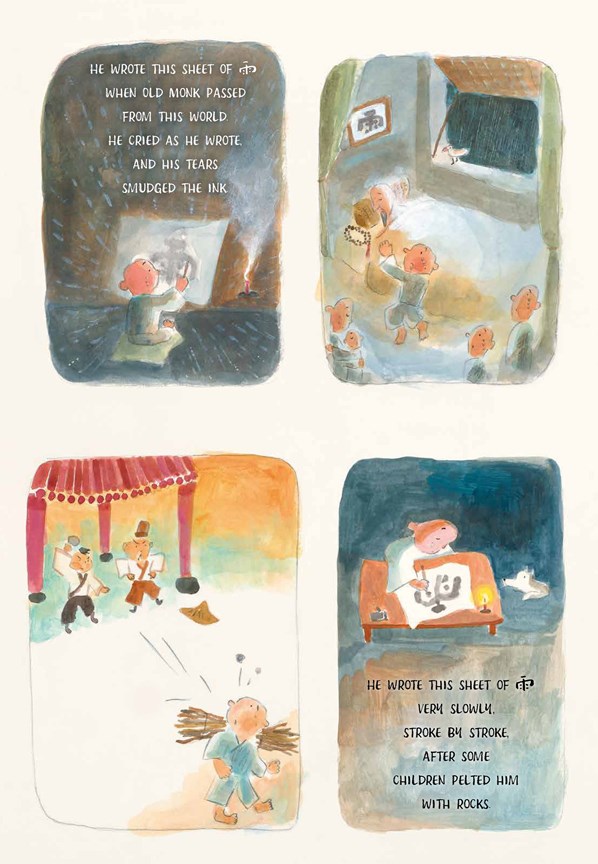
Now the monk has a biography. He remembers a conversation overheard long ago. He learned that he was an orphan who had been brought to the monastery. At the age of five, he began to learn writing. His teacher, originally a child, grew old, and the died. The cruelty mentioned earlier in the book intensifies in his memories, as he is “pelted with rocks.” All his thoughts of the past, and all his distinctive qualities, together form a response. He offers his sheets of writing to the heavens and the rain begins. An “ecstatic” crowd of people personifies the rain, elevated above the rain drops with joy.

Little Monk Writes Rain does not use the word “dyslexia.” An afterword, as thoughtful in tone as the rest of the book, explains that some people have difficulties learning to read. Hsu-Kung Liu presents thoughts and questions about the relationship between pictures, words, and the stories that they record. He reminds readers that sometimes “one word means everything.” Of course, those readers may be either children or adults. This remarkable book is a work of art, and a bridge to understanding life itself.

Instructional Jam

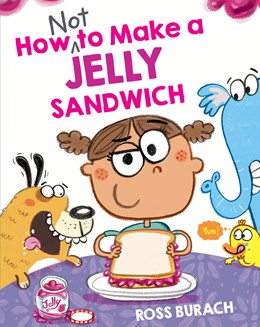
How Not to Make a Jelly Sandwich – written and illustrated by Ross Burach
Scholastic Press, 2026

There are an endless number of projects that demand instructions for adult readers. For children, some of these may seem quite pointless. Ross Burach’s How Not to Make a Jelly Sandwich gets right to the point, providing clear guidelines for the preparation of a culinary favorite. There is not even any peanut butter here, just jelly, apparently grape or maybe strawberry. There is a determined little girl, and some animals to help.

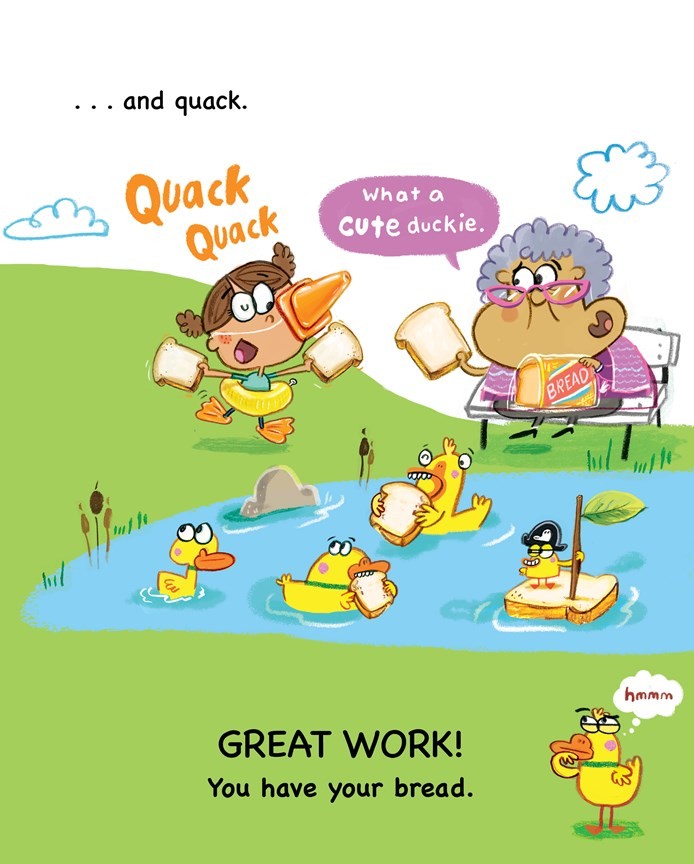
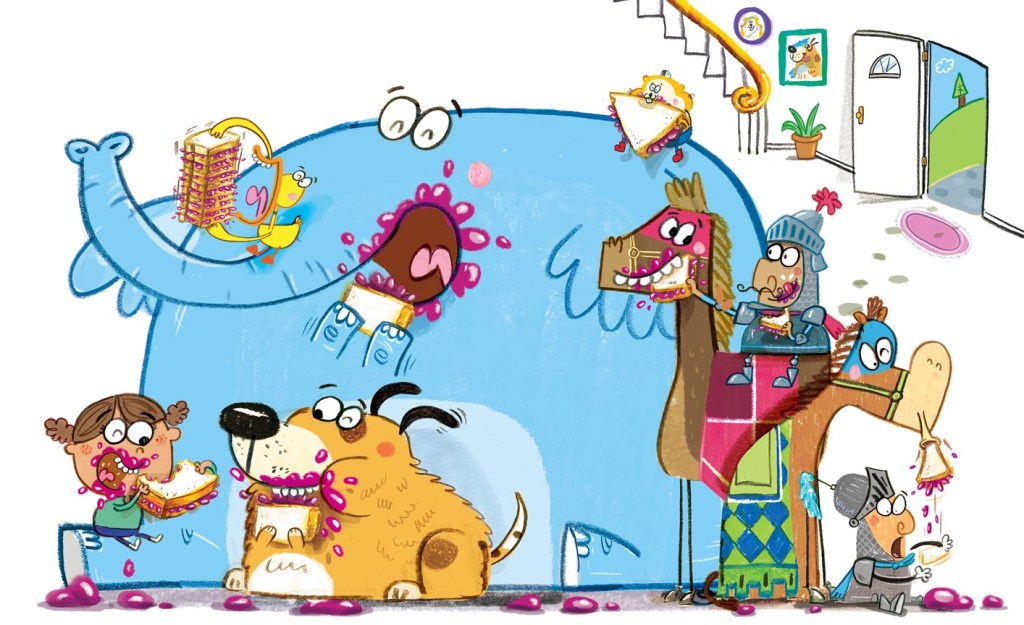
Starting from the beginning, she draws plans on an architect’s planning board. Nothing will be taken for granted. There are only “five simple steps,” cutting out grownup nonsense about specialized qualities of the ingredients. She begins with a trip to the supermarket, where she purchases scuba diving equipment and bread, distributing the latter to some ducks in a pond. The series of detours in making a sandwich are a kind of parody of self-important instructional literature. For kids, they are just funny.

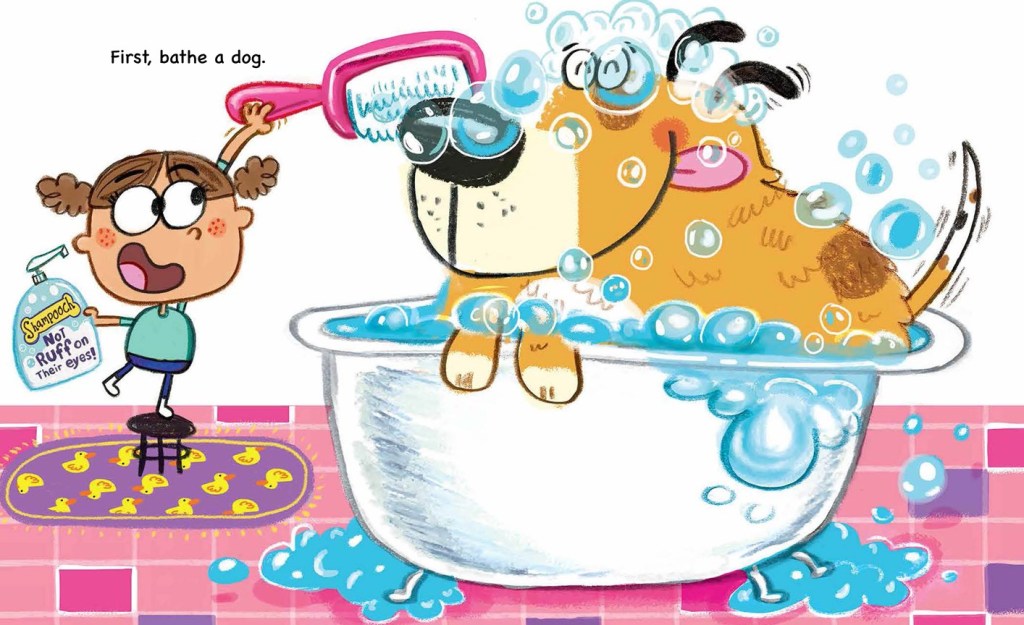
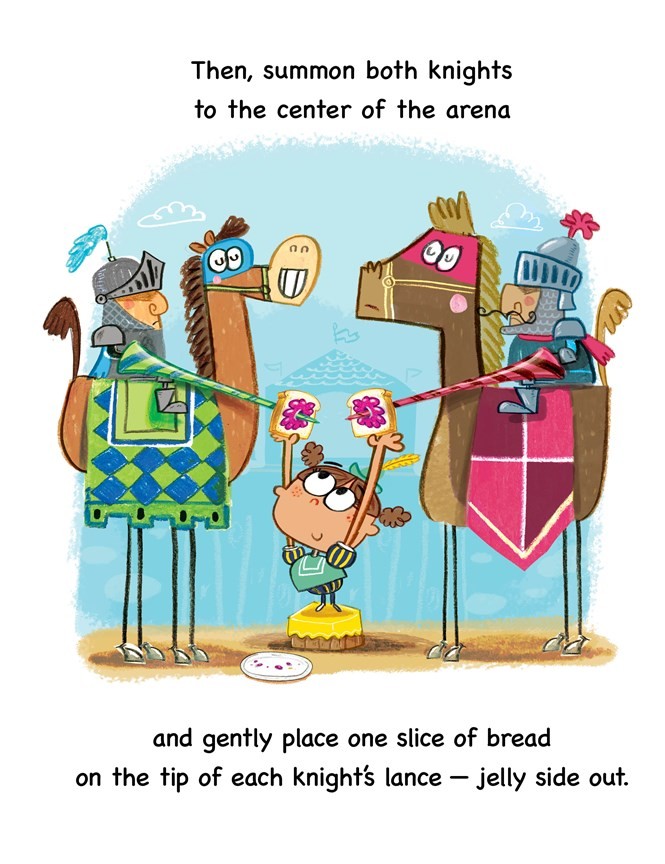
The next step is bathing a dog (other children’s authors have also handled the pet-bathing conundrum), followed by directing a medieval pageant. It may seem like a digression, but the dog’s tail will become a jam knife. Here is where spectacle becomes part of the sandwich preparation, involving placing bread and jelly on the tips of the knights’ lances. Since cultivating the right attitude is often considered essential, the girl uses positive reinforcement with hamsters, who will employ their unicycles to cut the sandwich in half. Seemingly useless activities often have an ultimate goal, especially to children.

The reward for all of these focused series of actions is a jelly-sandwich eating event, including everyone who has helped, or temporarily hindered, the sandwich construction. Returning to the title, with its “Not” inserted between “How” and “to,” according to the author information on the back cover, the author is having ironic fun with a typical school assignment. How much room for creativity is available when listing instructions on demand? Backmatter offers some more unorthodox suggestions for sandwich prep, and children will undoubtedly come up with more.

Starring Cecilia

The Curious Life of Cecilia Payne – written by Laura Alary, illustrated by Yas Imamura
Eerdmans Books for Young Readers, 2026

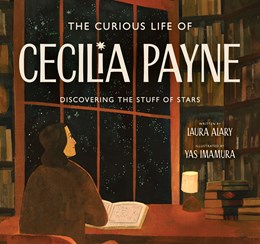
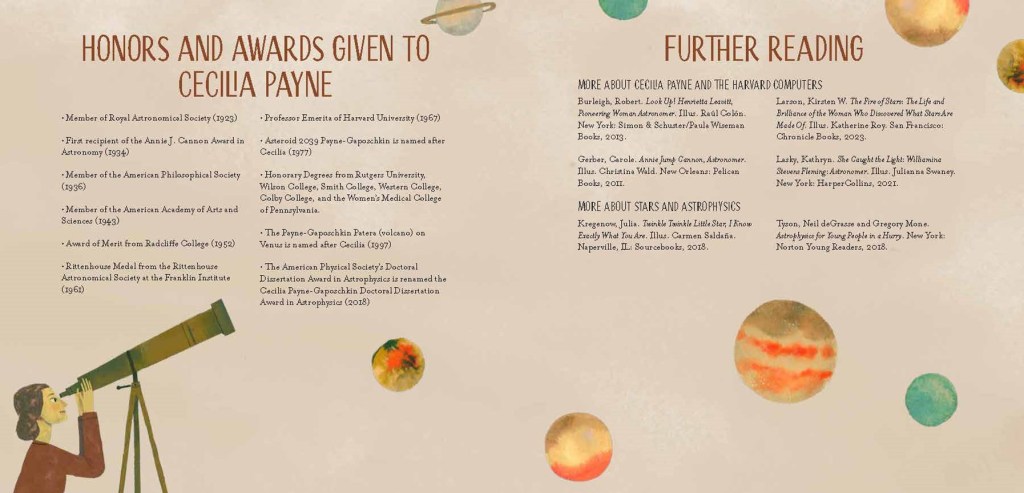
Cecilia Payne-Gaposchkin: her name has the ring of poetry.  Before she married Russian scientist Sergei Gaposchkin, she was Cecilia Payne, a brilliant and curious young woman born in the U.K., who later emigrated to the U.S. to pursue studies at Harvard.  In Laura Alary and Yas Imamura’s picture book biography (I previously reviewed an Imamura book here), Cecilia Payne’s intellectual gifts and incredible persistence pave the way to her unlikely success as an astrophysicist in an era when women confronted almost insurmountable obstacles.  The adjective of the title refers both to Payne’s inquiring mind, and to the way that her distinguished career evolved.

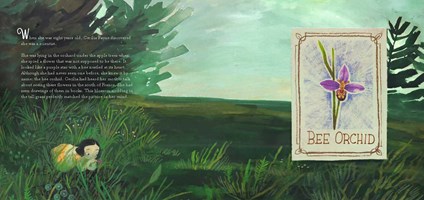
The book begins with a significant statement: “When she was eight years old, Cecilia Payne discovered she was a scientist.” Alary asserts that Cecilia knew this essential fact, not merely an aspiration, about herself.  Yet she begins at ground level, only later pursuing the stars. At first, Cecilia notices a bee orchid, a flower that, according to her mother, did not grow in England.  The scientific method begins to form in her mind, like the bee enclosed in this flower.  She continues to examine the flower, but also promises herself that she will not allow herself to become discouraged by resistance to her ideas.

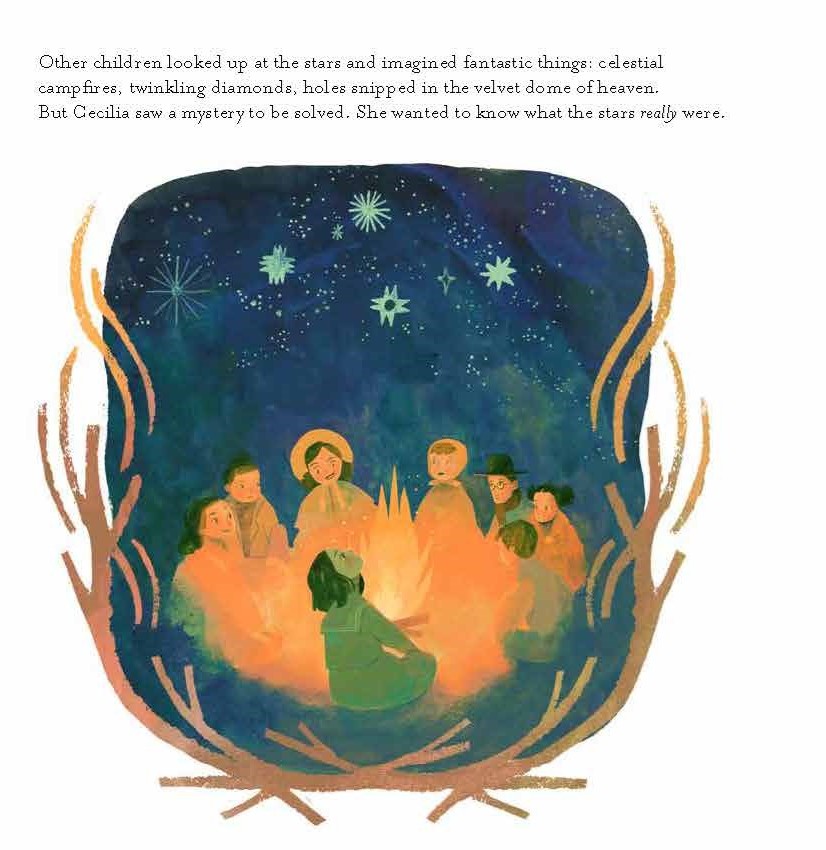
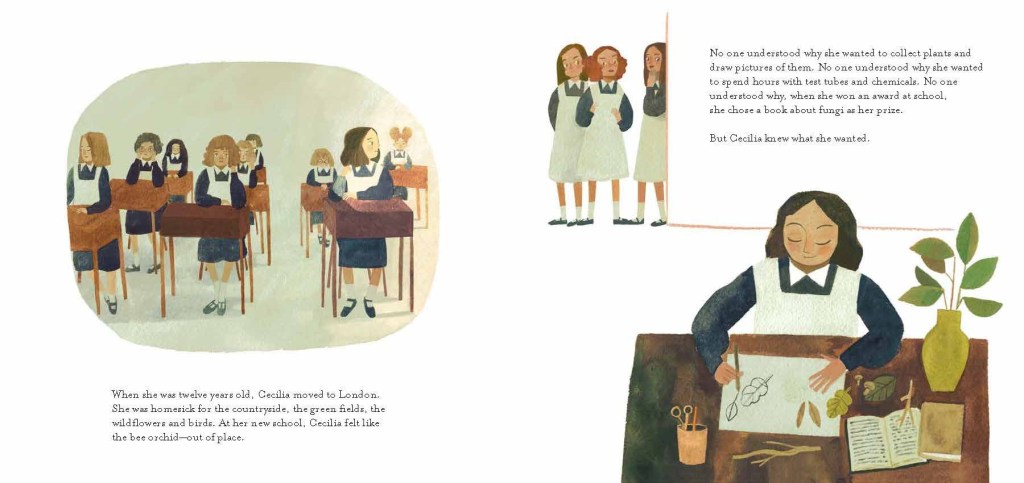
The qualities that drew Cecilia to the study of nature contrast with the social expectations surrounding her.  When other children see “twinkling diamonds” in the heavens, she is compelled to determine the actual substance and origin of these beautiful visions.Fortunately, a teacher promotes Cecilia’s scientific literacy, but she encounters setbacks when her family moves to London, where, in a new school,  she is isolated by her singular love of knowledge. Imamura’s picture captures both this potentially destructive social deficit, as well as Cecilia’s healthy response. Seated at her desk, she is the only girl looking, not distracted, but intently focused. A group of girls observe her drawing natural objects, but their apparent disapproval cannot dissuade Cecilia from her purpose.

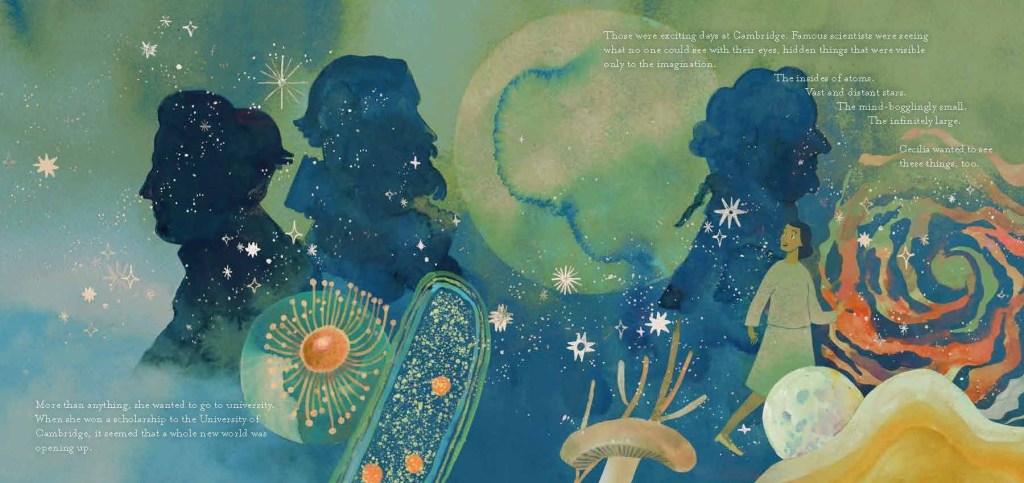
If childhood disdain is difficult, the adult version can be even worse. Arriving at Cambridge University, Payne is thrilled to be in the midst of possibilities.  Knowledge is not limited to what is immediately visible.  Against a background of male profiles, Imamura envisions a young woman who believes herself to be part of this world, but problems will emerge. Soon she be observing the skies with a telescope, but on the planet earth, men make the rules.  Forced to sit by herself in a lecture hall filled with arrogant male scholars, Payne’s determination is forged even further by adversity. Imamura’s quiet depiction of this scene is free of overt drama, but clearly sends a message about the reality that Payne will repeatedly confront.

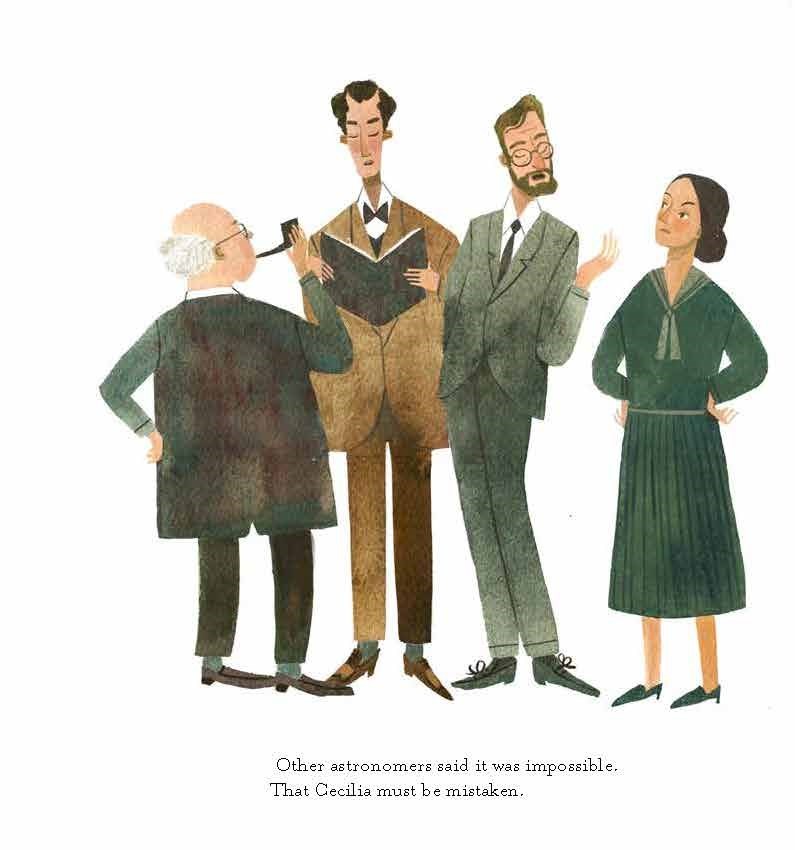
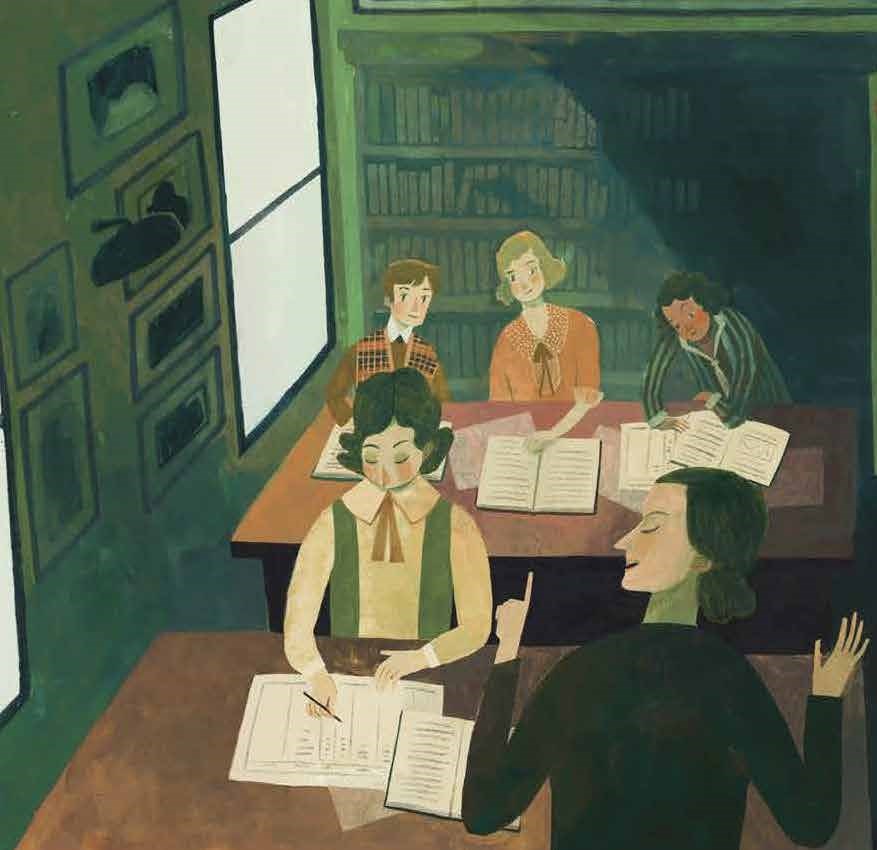
Arriving at Harvard, Payne finds both the proverbial room of one’s own, and the support of other women scientists, but also, a thick layer of disdain beneath the hypocritical veneer of hypocrisy.  Imamura’s vision of this phenomenon is perfect. Attempting to explain to her male colleagues her revolutionary hypothesis about the true substance of stars, she is subjected to Harvard mansplaining. One distinguished perpetrator smokes his pipe and looks away, as if her ideas don’t even merit attention. Another stares into a book, while a third, gesturing with his hands for emphasis, informs her that she is wrong. In a later scene of understated triumph, Payne engages with her students, encouraging their questions and treating them with respect.

There are many excellent picture books about women in the sciences (for example, I have previously reviewed biographies of Emmy Noether, Lise Meitner, and Rosalind Franklin).  Brilliance and determination are not always enough to assure fairness.  The detailed backmatter of The Curious Life of Cecilia Payne  offers clarification about her life, times, and successful career, with Imamura’s beautiful illustrations complementing the information, as it does everywhere in this outstanding and inspiring book. 

More Books for Purim

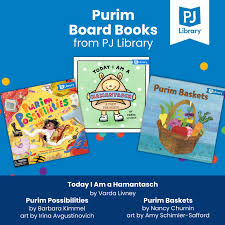
Today I Am a Hamantasch: A Poem for Purim – written and illustrated by Varda Livney
PJ Library, 2026

Purim Possibilities – written by Barbara Kimmel, illustrated by Irina Avgustinovich
PJ Library, 2026

In addition to the Purim board book I reviewed last week, here are two more Purim board books, all from PJ Library; these emphasize the flexibility of who you are on the holiday of Purim. Today I Am a Hamantasch is small, square, scaled to young children’s hands. They may have different ideas for Purim costumes, changing their minds several times before their final decision.

The child in the book is actually a rotating cast of animals: bunny, mouse, cat. She begins as the iconic three-cornered pastry, and then becomes a tree. The sequence seems random. There are cut-out holes on several pages through which the reader can see the animals changing costumes. Queen Esther, of course, is lovely in her pink dress, crown, and proud six-pointed star scepter. There is an interlude, where the bunny decides to just be herself, wearing overalls. Then back to the costumes. The mermaid, again, is a not derived from the Purim story, but the grogger, a noisemaker activated every time the villain, Haman’s, name is mentioned, is key to the Megillat Esther. Back to a cupcake, and to a kitten happy to be herself. If you feel dizzy reading it, that’s to be expected. Purim as a day when norms are reversed, but, finally, the holiday ends and “we’ll all be back to normal.” That’s a relief, maybe.

Purim Possibilities also emphasizes the freedom of temporary change. It begins with a lively scene of the Megillat Esther reading, with the scroll unrolled and held at each end by a young girl. Then we experience the same series of choices, but this time the protagonist is identifiably human. She may impersonate a train engineer, a robot, a superhero, or a baker. Then again, Queen Esther is as heroic as may be imagined, fearless in her glittery outfit. Artistic creativity is part of the story, with colored pencils available to sketch the costumes. Finally, the young artist decides on an eclectic combination of elements. Sometimes you don’t have to make a choice. The book concludes with a selection of outfits as reusable stickers, to be removed from a closet and placed on the girl. Anything seems possible in these two books.

Seasons of Words

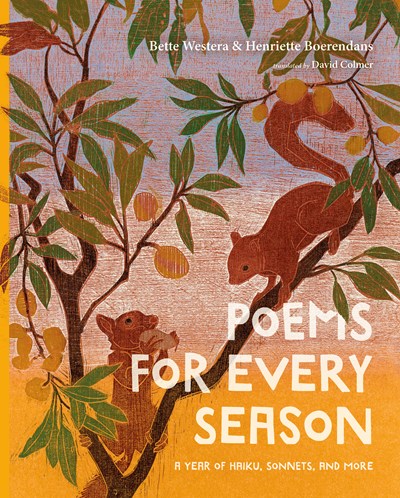
Poems for Every Season: A Year of Haiku, Sonnets, and More – written by Bette Westera, illustrated by Henriette Boerendans, translated from the Dutch by David Colmer
Eerdmans Books for Young Readers, 2026

Poems for Every Season is tranquil, beautiful, and also, thorough. There are many excellent illustrated anthologies of poetry for young people (here, for example), and also manuals for how to compose specific types of poetry. Often these how-to books are also anthologies with representative examples of verse forms. Bette Westera, Henriette Boerendans, and translator David Colmer have produced an exceptional book of wonder, for those who are drawn to poetry as well as readers who are tentative about exploring it.

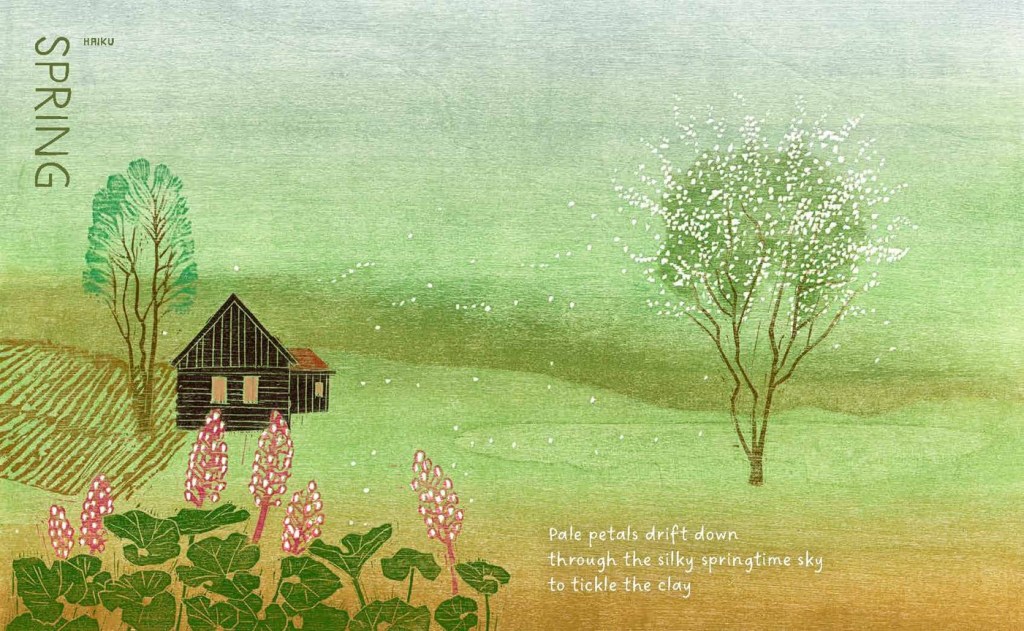
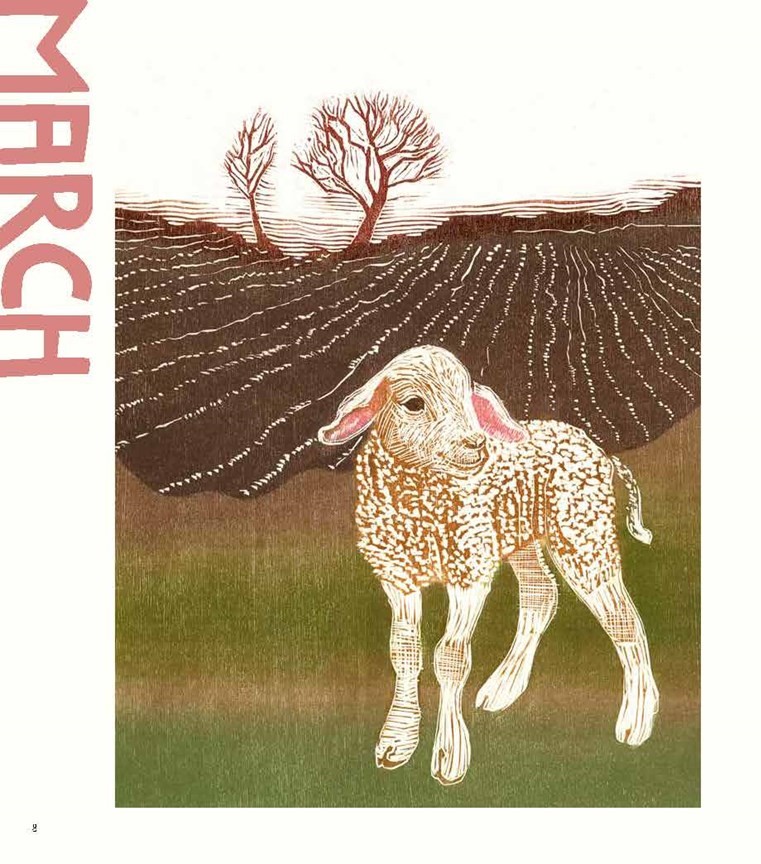
The book’s endpapers open with a flock of birds. Boerendans’s woodcuts embed poems in the world of nature, and the birds seem to be inviting readers to enter this environment, where poems and pictures are more than the sum of their parts. (A brief and useful preface explains how the author and translator have adapted the choice of verse forms to reflect differences between Dutch and English.). Each section begins with the name of the season in large font, placed vertically down the side of one page.

The seasonal page and poem are followed by a page identifying the month, in larger font. This is one of several interesting artistic choices which are not obvious. Do months require more attention than seasons? The variety ensures that reader experience each page and poem as something new.

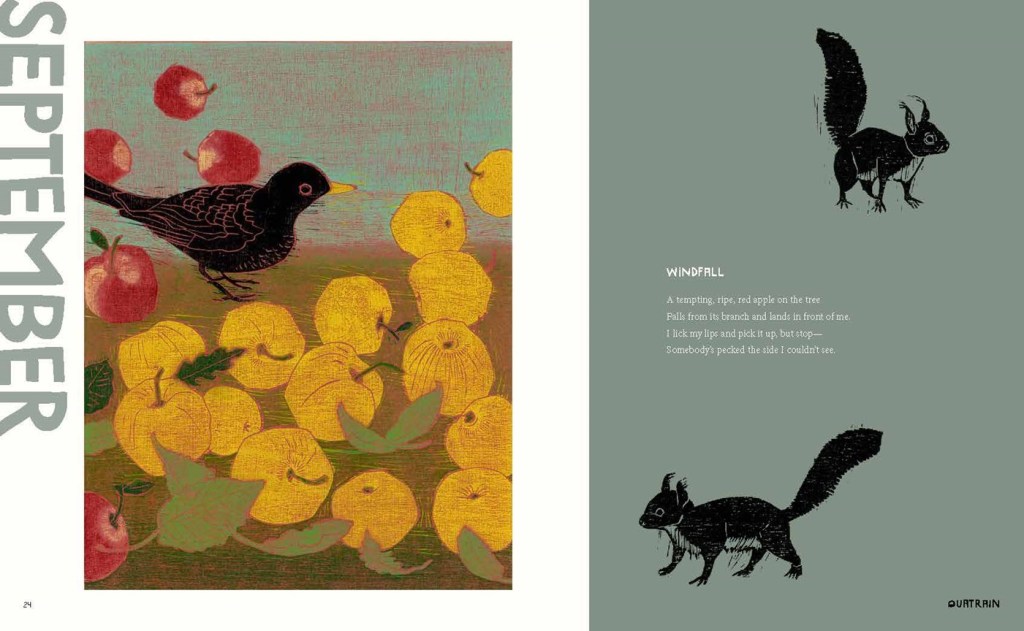
The animals and plants that share the space of the book each belong where they are placed, but not necessarily in a literal way. For September, a crow sits among apples, both red and gold. The image suggests Asian block prints. On the facing page, two squirrels, facing in opposite directions, seem alert. They may notice the apples, or be looking for other food. The poem is a quatrain. As Westera explains, this form could refer to any poem with four lines, or to a more specific set of rules about rhyme. The tone is informative, but minimally prescriptive. The work of Persian poet Omar Khayyam moved the four lines in the direction of a changed rhyme in the third one. No previous knowledge is assumed. In fact, the famed poet is introduced with the phrase, “He was called Omar Khayyam.”

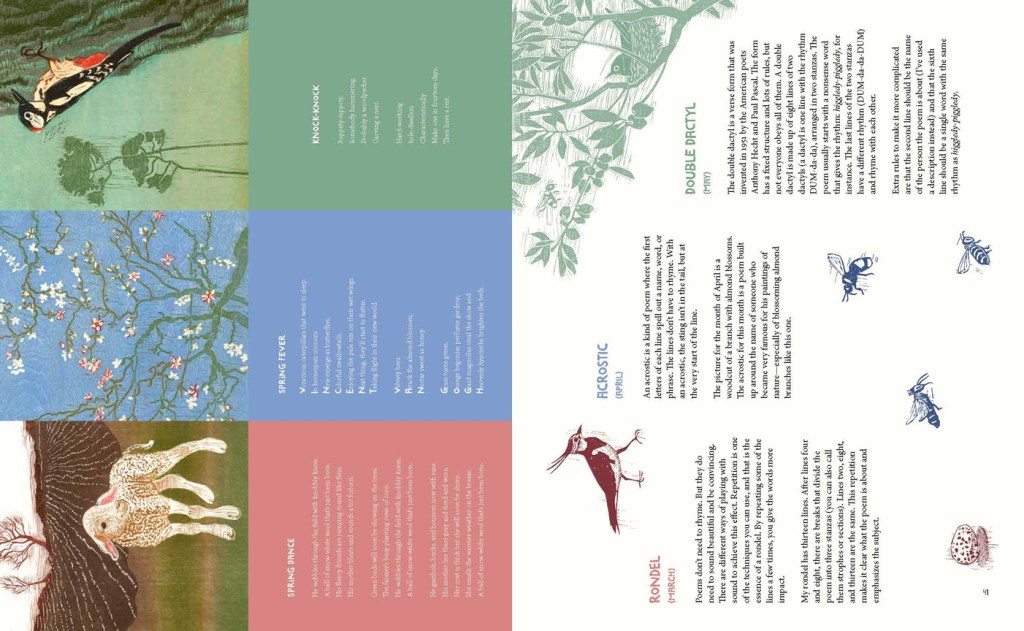
Each season begins with haiku. Every month has a poem in a different verse form. Following the twelve months and their poems, there is a section read by turning the book vertically. There are three columns of text and pictures, which are actually the same ones that appeared earlier, encouraging access to the description of the form that accompanies each poem here. Instructions for how to write in each form are not provided as a formula or a graphic, but they may certainly be used that way by aspiring poets.

You may be thinking that this format alludes to the way that we read documents digitally, sometimes keeping different windows open. You would be right. The windows here, though, are different! They look outwards at the natural world, inwards at the imagination, and describe the technique of how poems function. Yes, there are similarities to text and hypertext. You have to read this book to believe the incredibly imaginative the synthesis that results.

Thinking Outside the Basket

Purim Baskets – written by Nancy Churnin, illustrated by Amy Schimler-Safford
PJ Publishing, 2026

The Jewish holiday of Purim, which this year is observed on March 3 (beginning at sundown on March 2), is a joyous event. Celebrating the heroism of Queen Esther in saving the Jews from annihilation at the hands of the evil Haman, it includes several mitzvot (obligations), and other traditions. One requirement is the sending of mishloach manot/shalach manos, to friends and neighbors. These “sending of portions” are small baskets or bags containing at least two different food items. (There is a separate mitzvah requiring tzedakah, charity, to those in need) But customs evolve, and more elaborate packages often now arrive on your doorstep on this holiday. In their lovely board book for your readers or listeners, Nancy Churnin (whom I have interviewed as well as reviewed) and Amy Schimler-Safford explore some possibilities, beyond hamantaschen. What might you offer to animal friends if they were part of your holiday?

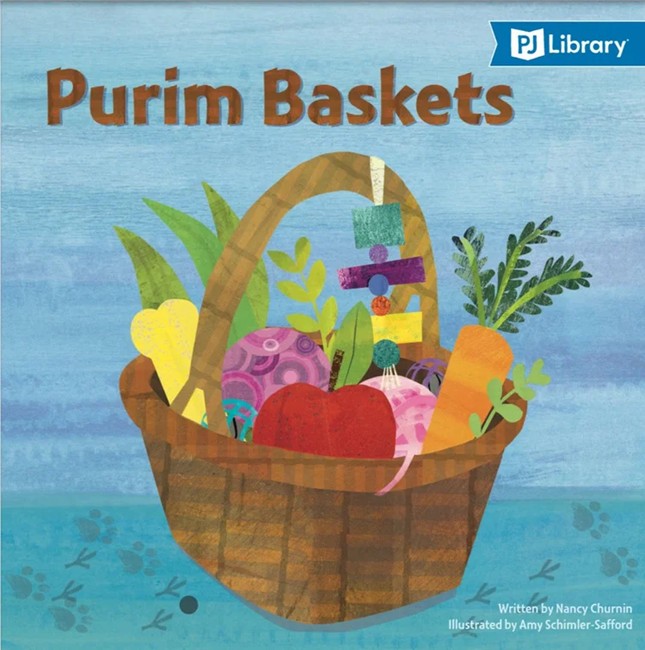
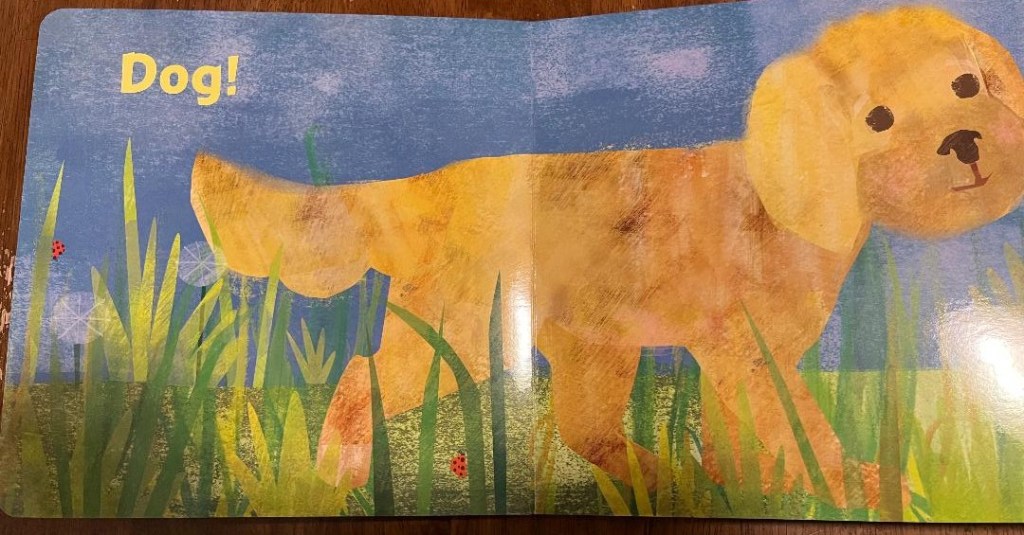
The basket on the cover is a clue to what is inside. An apple, carrot, and leafy greens are joined by a bright yellow bone and a wiffle ball. As the book begins, Churnin poses the question, about what these baskets contain. Her answer is “That depends!” If your recipient is a golden-colored dog depicted, like the other animals, on a two- page spread, then a ball might be nice. For a cat, a basket of yarn in bright hues. Even a fish shouldn’t be excluded; its dedicated basket might offer some coral and aquarium accessories.

Schimler-Safford’s pictures are painterly, with rich colors that will appeal to children. The animals’ importance is signified by how much space they occupy in the pages, regardless of if they are big, like dogs, or smaller, like fish. To an adult sharing the book with kids there is an element of humor. Animals do not actually need their own mishloach manot. To a child, it might seem natural that they deserve one. Of course, human-oriented gifts would not be what these beloved creatures want or deserve.

Churnin concludes with another question, “What’s in your Purim basket?” with the same contingent answer. As any child knows, humans like different gifts, too.

Cloudy with a Chance of Beauty

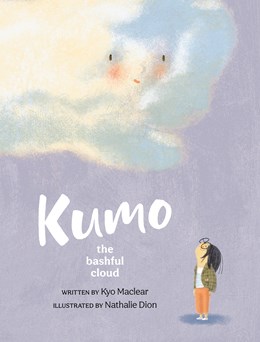
Kumo the Bashful Cloud – written by Kyo Maclear, illustrated by Nathalie Dion
Tundra Books, 2022

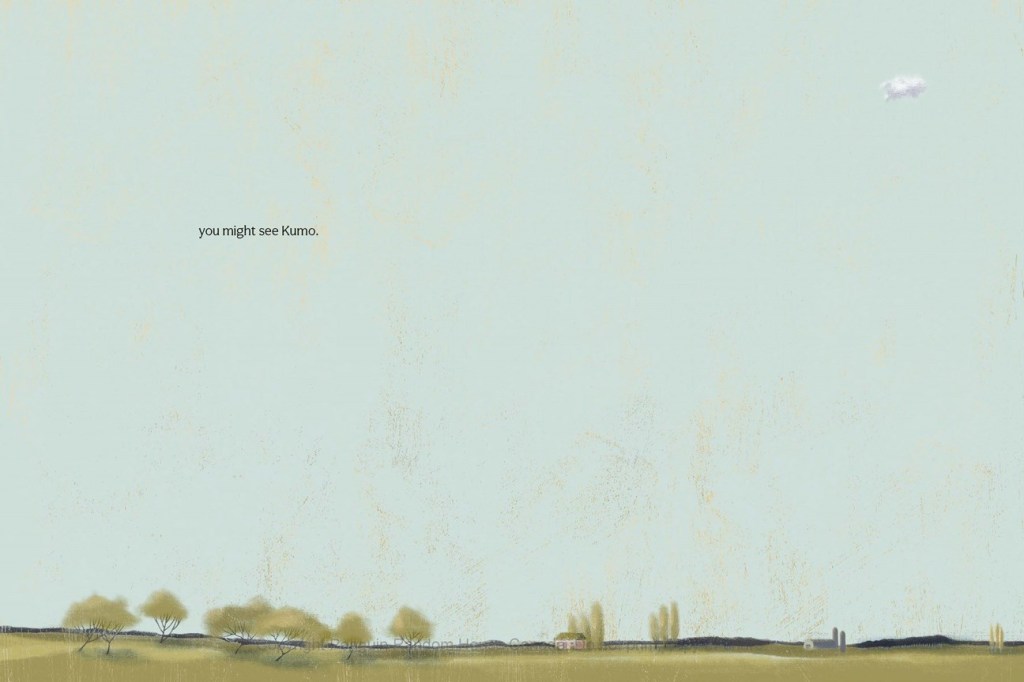
Children sometimes personify clouds, and so do adults. While the actual scientific facts about their existence is also enthralling, spinning stories about their evanescent shapes is an important pastime. Kumo is bashful, insecure, but also socially enough inclined to welcome the friendship of Cumulus and Cirrus.

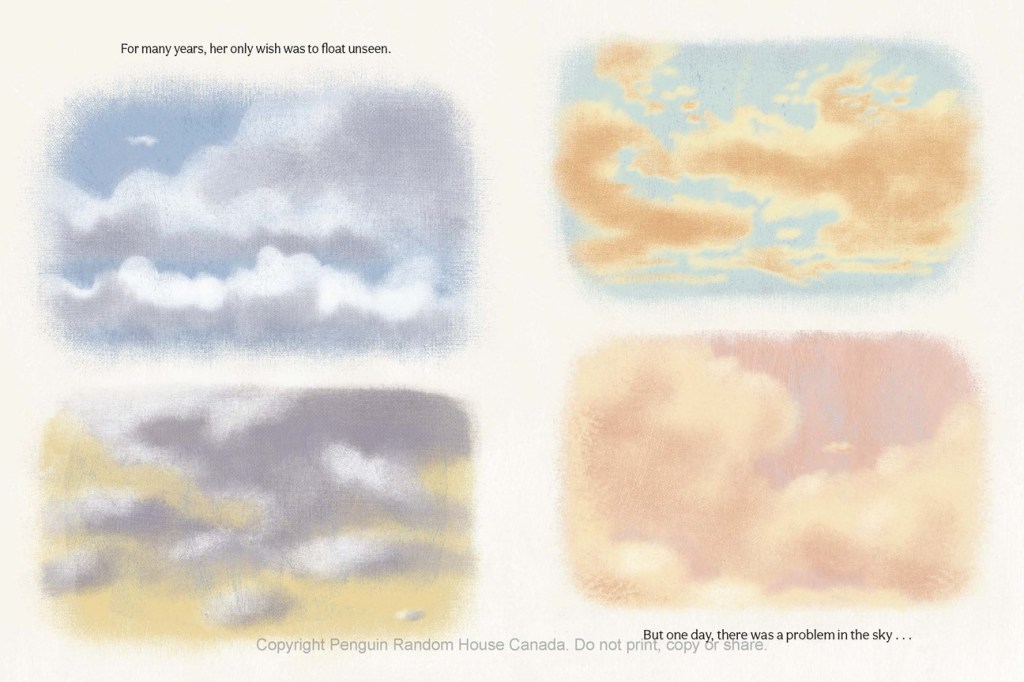
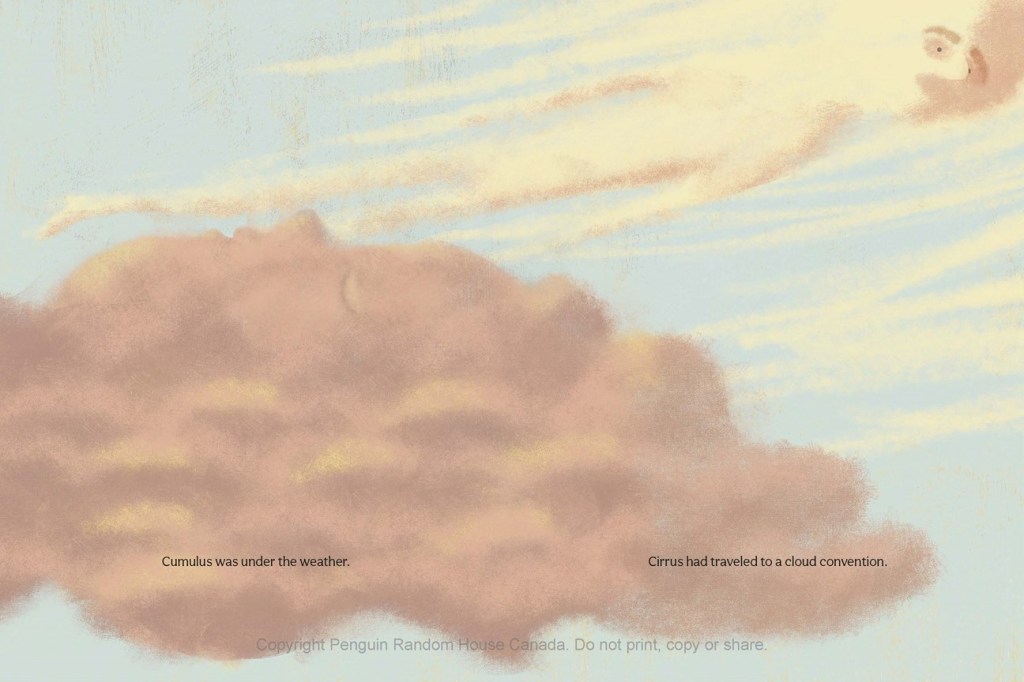
When the book opens, Kumo is so pale as to be almost invisible. As Kyo Maclear narrates (I’ve reviewed her other works here and here and here and here and here), “for many years, her only wish was to float unseen.” Yet circumstances change and she adapts, if, at first, reluctantly. “Her mind was heavy with doubt” may seem an intense statement of consciousness to a child, but it makes sense. She is frightened, then trapped in a tree. A friendly kite, not a cloud by cloud-adjacent, helps her out. So does the wind, and a lake, fields, and “singing glaciers.” The natural world is her ally. But When Cumulus feels “under the weather” and Cirrus departs for a cloud convention, she is worried.

Nathalie Dion’s pastel images with touches of brighter color perfectly match the poetry of the text. Eventually, Kumo begins to interact more with the human world, helping a man to plant petunias, and even enjoying an urban scene full of lively families. One child holds a red balloon, while another, with oversized black glasses and dark hair, wears matching red pants. That child is revealed to be somewhat like Kumo. With his head in the proverbial clouds, he loves to dream. Soon he transforms Kumo into a bunny, a car, and a flying horse.

With the boy’s help, Kumo ascends to “the top of the world,” and even reaches out to new friends. With the lovely Japanese names of Fuwa-chan, Miruku, and Mochi, helpfully explained in a short glossary, they support one another, both literally and figuratively. Being alone and having friends, both meteorological and human, both turn out to be within Kumo’s flexible reach. Kumo the Bashful Cloud reveals wisdom with a light touch.

Snail Mail

Gift & Box – written by Ellen Mayer, illustrated by Brizida Magro
Alfred A. Knopf, 2023

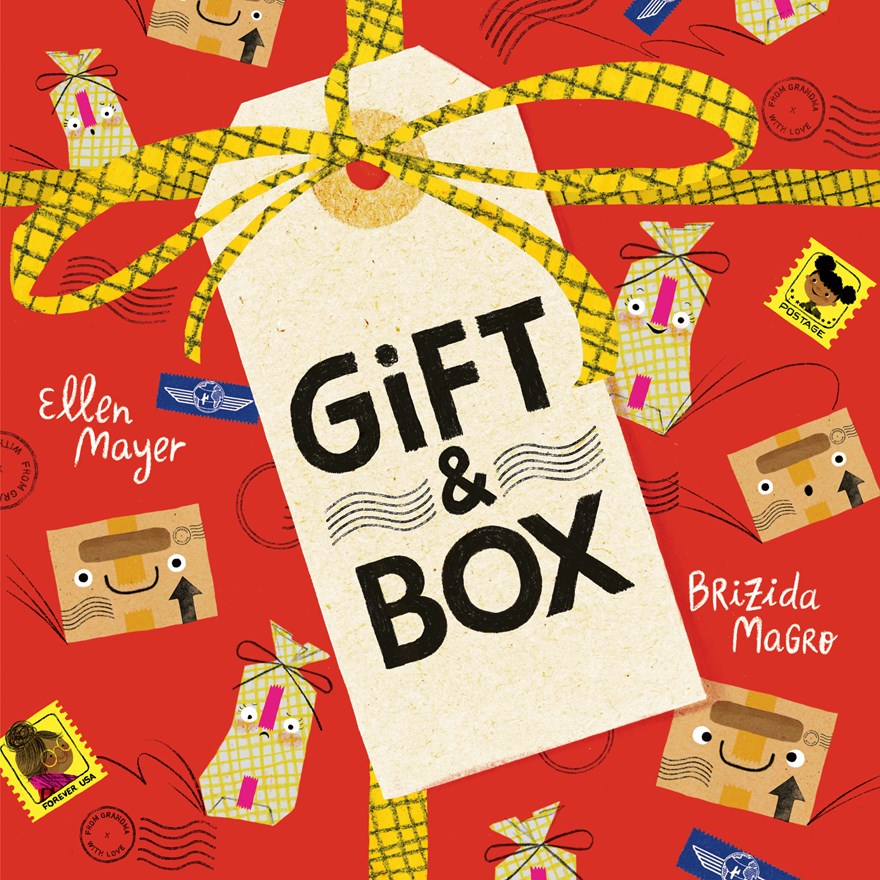
It’s good to know that there are still authors and illustrators celebrating the postal system.  Ellen Mayer and Brizida Magro’s wonderful addition to this genre opens with endpapers that display visually specific examples of snail mail. There are some real stamps, invented ones, postmarks, and snippets of correspondence.  In the tradition spanning Tibor Gergely’s Seven Little Postman, Rosemary Wells’s works, and Zoey Abbott’s I Do Not Like Yolanda, Gift & Box describes the unique experience of sending a letter or package via USPS. 

Two personified objects, a gift and a box, meet and employ their complementary skills to make someone happy.  The pictures are composed artfully.  The love between a grandparent and grandchild is also at the center of the story. (Regular readers of this blog know that picturebooks about grandmothers are one of my favorite subgenres; see here and here and here and here and here and here.) We see Grandma happily tying a bow on a bag decorated with lovely eyes and a friendly smile.  A scissor, string, tags, and scraps occupy the bottom of the page, with white space in between. There are also images of real stamps.  They are real not only in the sense of legitimate, but they are from the era when stamps were actually engraved, on woven paper in a range of beautiful colors. These three appear to be deep green, carmine, and bright blue-green. (If you look closely, the one cent “Industry and Agriculture: For Defense” stamp is reproduced with inverted lettering. This might be a deliberate choice.)

The gift and box work together.  Mayer emphasizes the cooperative aspect of their task: “Gift’s purpose was to delight. Box’s purpose was to protect.” Their long journey may be important, but it is also tedious at times, involving a lot of waiting. There is even some danger involved. There are collage elements in many of the pictures, reflecting the artist’s use of several media. (“The illustrations were created using rolled printmaking inks, crayons, handmade stamps, and paper collage, then assembled digitally.) Busy city streets are a context for the gift’s voyage, with earth and jewel-toned vehicles passing apartment buildings. The human figures have an Ed Emberley-style simplicity.

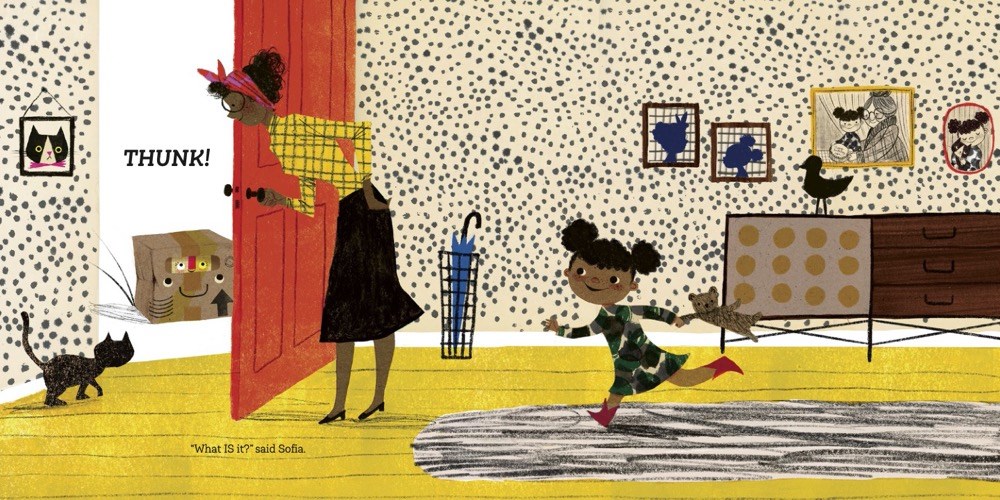
Eventually, the package arrives. A little girl, Sofia, asks her mother about the loud noise outside the door. Her mother opens the door expectantly. Their home is filled with mid-century design: a streamlined bureau, a bright blue umbrella in a wire stand. The pictures on the wall include one of Sofia and Grandma.  Sofia is delighted with her gift, but is reluctant to part with the box. Readers have been prepared throughout the story for the moment when gift and box, having accomplished their goal, will part. Instead, Sofia’s energy and imagination transform them into something new.

Bright But Fragile

Penelope’s Balloons – written and illustrated by Brooke Bourgeois
Union Square Kids, 2024

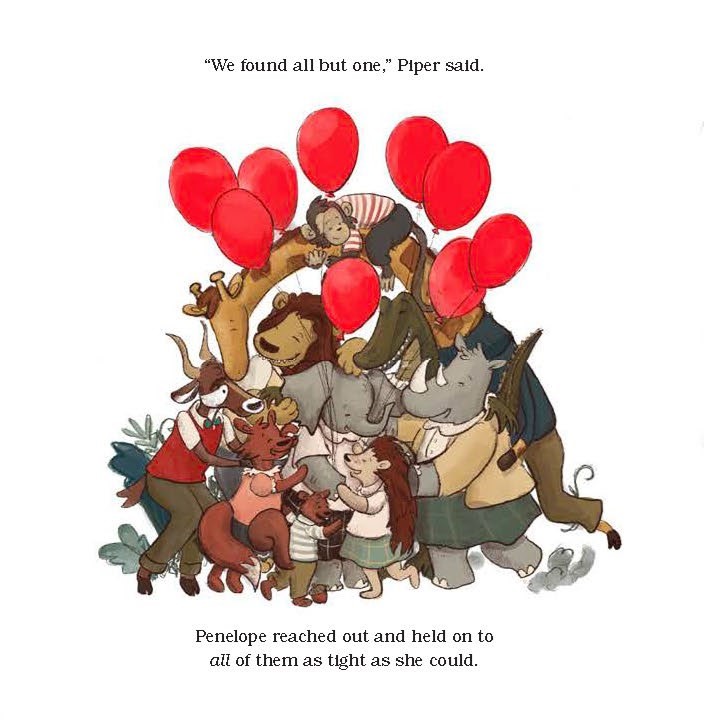
Children can become attached to unexpected objects. Some, like balloons, have a limited life span. In Penelope’s Balloons by Brooke Bourgeois, a young elephant who is “quiet…bright,” and “a bit particular,” cannot let go of ten red balloons, either literally or figuratively. She is happy lying on her back and watching them suspended in the air, but also keeps them close while eating or diving.

From the beginning of the story, it seems evident that there will be both a problem and a message here. Penelope’s balloon obsession does not prevent her from socializing, In fact, she has many friends of different species. The balloons only make her more “perceptible” and popular, to choose another adjective that is alliterative with her name. The problem is the fragile nature of her favorite item.  Her best friend, Piper, is a hedgehog; say no more. Allie is an alligator with sharp teeth. On the other hand, Gerry the giraffe is a good friend to have, her long neck offering some protection from potential piercing. 

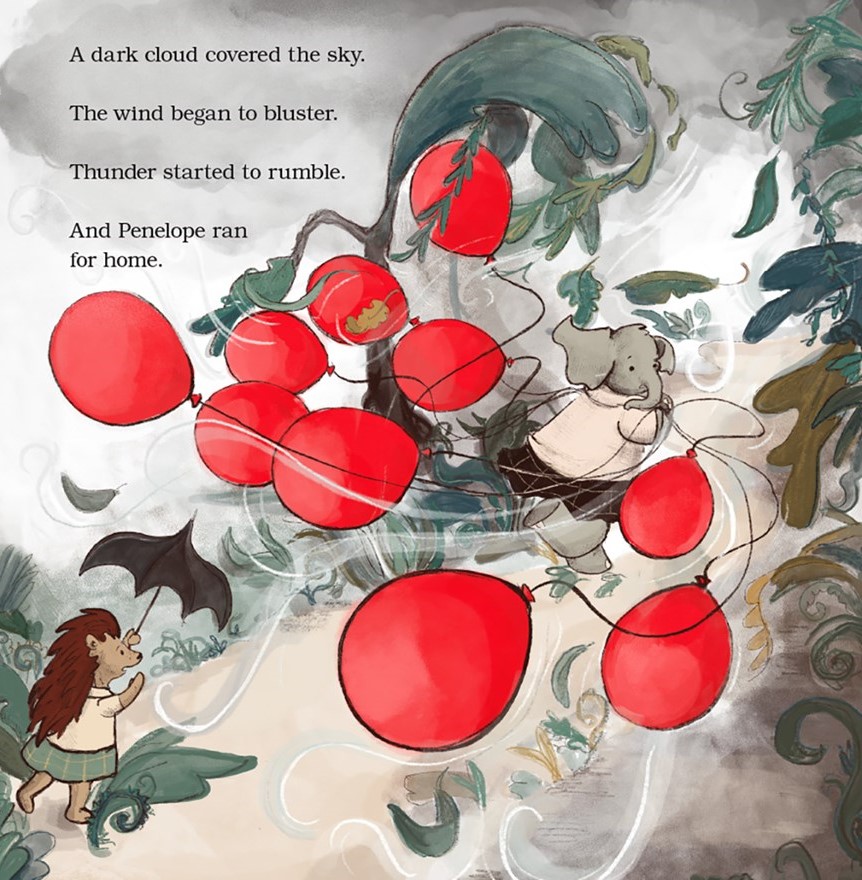
Eventually, Penelope learns the inevitable lesson about avoiding disaster. Sometimes you cannot.  A thunderstorm does not have functional points, but it’s invisible winds can still destroy. Forlorn, Penelope shelters in the forest. She is alone. This picture has no bright red to contrast with the gray and green foliage. Even her friend Piper’s comforting words cannot erase Penelope’s grief.  As Piper leads her across a thick branch serving as a bridge, the young elephant is hunched over, her ears falling like flaps over her face. All of a sudden, she seems old.

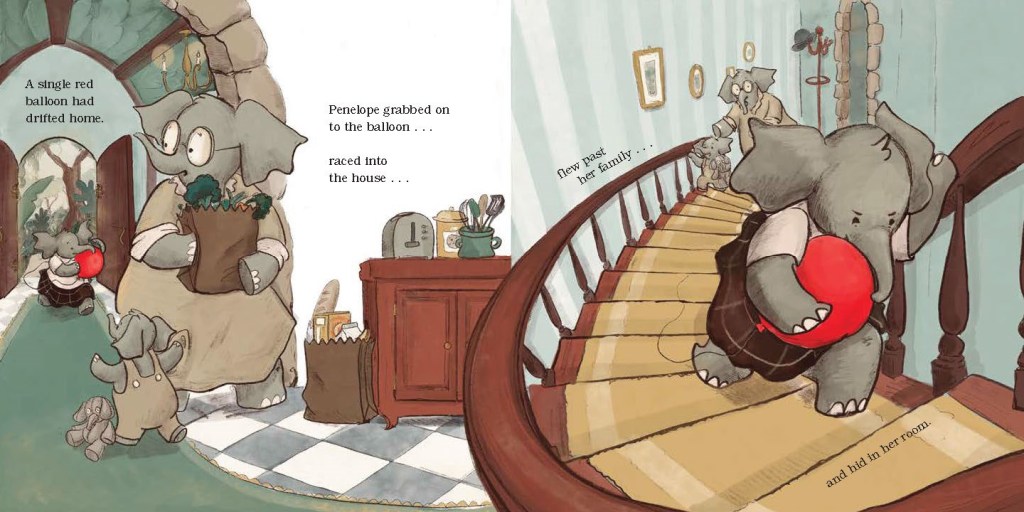
Arriving home, Penelope stands in front of the doors and rushes in. One balloon has survived and accompanied her. Now we meet her parents. Her mother seems almost confused, which is surprising. Surely her family is well-aware of her balloon problem. There is an expressive scene, viewed from the top of the staircase, of a determined Penelope racing her room.  Her mother and younger sibling are small and helpless figures receding into the background.

Penelope frantically sets to work creating an elaborate fort to protect the balloon. Her intense anxiety foreshadows the upcoming disaster, as well as the solution.  Sometimes, with patience, things will work out. The likelihood of this scenario, with the other nine balloons all magically reappearing, seems like pure wish fulfillment (as in Claire Keane’s Love Is). However, Penelope decides that giving her balloons, or, by extension, any beloved, a little space, is the best way to keep them close.  The author also suggests that Penelope’s strange attachment had actually been distancing her from her actual friends, “the sharp and spiky ones” who posed a threat to her happiness.

A word about Babar seems required. Any children’s book presenting anthropomorphized elephants seems, to some extent, an homage to Jean and Laurent de Brunhoff.  Certainly, some of her animal friends include monkeys, rhinos, and other residents of Celesteville. (Although the rhinos are not bad guys here.) Penelope is certainly less sophisticated and cosmopolitan than Babar, but there is still a sweet reminder of how animals with human qualities offer a unique connection with children.  There is more than one lesson in Penelope’s Balloons, and the book is well-worth sharing with them.