The Legacy of Alice Provensen (1918-2018)

I was saddened to read in The New York Times this morning that Alice Provensen had died.   Along with her husband Martin (1916-1987), as well as in her independent career, Alice’s distinctive style found its subject in a wide range of subjects: history, poetry, and delightful original stories for children. They illustrated their own writing as well as the work of other authors.
colorkittens

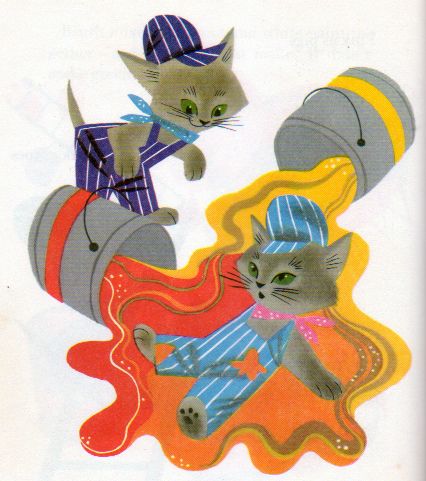
The lush colors and fantastic swirling images of The Color Kittens, the information-packed parade of U.S. presidents in The Buck Stops Here, (updated  in 2013 to include President Obama), and the Provensen original interpretation of both Robert Louis Stevenson’s A Child’s Garden of Verses and traditional  Mother Goose rhymes, are all unforgettable.  Much of her work is still in print, including the recent A Day in the Life of Murphy and Murphy in the City¸ but some of the most outstanding of the Provensens’ work can only be purchased on the secondary market: The Golden Treasury of Myths and Legends Adapted from the World’s Great Classics by Anne Terry White, The Provensen Book of Fairy Tales, and Leonardo da Vinci. These are sophisticated works with high expectations of young readers.  Why must they disappear?

glorious

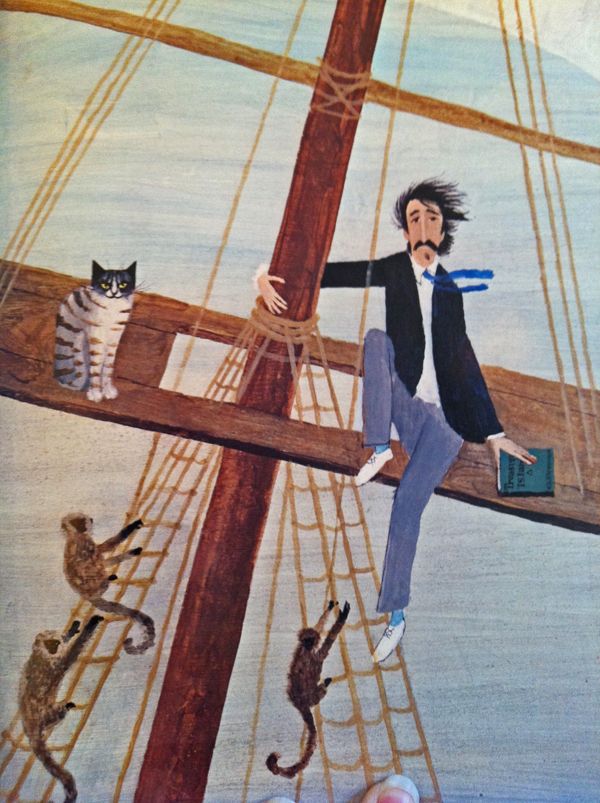
The Provensens won a Caldecott for The Glorious Flight: Across the Channel with Louis Bleriot July 25, 1909, and a Caldecott Honor for A Visit to William Blake’s Inn: Poems for Innocent and Experienced Travelers, by the brilliantly inventive poet Nancy Willard (1936-2017). The latter is an incredible achievement, with Willard’s original poems and the Provensens’ artwork conjuring a fictional past rooted in Blake’s life.  The Provensens include primitivism, medieval imagery, and the architecture of 18th and 19th century London, as ingredients in their indelible vision of the poet and his imagined guests.  Tigers and cats sleep side by side, busy artisans work at their trades, and the Blake himself composes poetry undisturbed by all the activity.  The subjects this book encourages for discussion with children, as well as adults, include the Romantic Age, Blake’s work, architecture and art, and the creative process itself. A related work also by Nancy Willard and the Provensens, The Voyage of the Ludgate Hill: Travels with Robert Louis Stevenson, also opens a window to the past, with the Provensens’ Stevenson holding to the ship’s mast, his tie fluttering in the wind, and a copy of Treasure Island in his hand.
ludgate

The world of children’s literature has lost an artist who embodied all the best qualities of her profession: genius, originality, continuity, breadth and range of work, and respect for the intelligence and imagination of children.
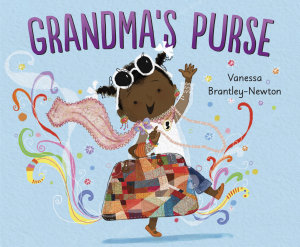
A Purse That Everyone Needs

Book Reviewed:  Grandma’s Purse – Vanessa Brantley-Newton, Alfred A. Knopf, 2018

If you are a grandma, had a grandma, and whether or not you or your grandma carried a purse, this is the book for you.  Vanessa Brantley-Newman’s Grandma’s Purse is not so much about Grandma’s accessories as about the deep well of boundless love and approval that her purse symbolically holds.  Brantley-Newman is a prolific author and illustrator. Unfortunately, she received some negative publicity during the controversy over A Birthday Cake for George Washington, a book that Scholastic actually removed from production because of its unfortunate implication that Washington’s slave was happy and honored to serve him.

pursecover

I cannot defend that book, but Vanessa Brantley-Newman is a gifted artist who has contributed so much more: Grandma’s Purse is one beautiful example. Brantley-Newton is described in the book’s cover copy as a “self-taught Illustrator, doll maker, and crafter,” and that modest list of her qualifications is evident in her portrayal of Grandma Mimi and the little girl who looks forward to her visits. Mimi looks old, in a really nice way! She has lovely grey curly hair,… Continue reading “A Purse That Everyone Needs”

Happy May Day!

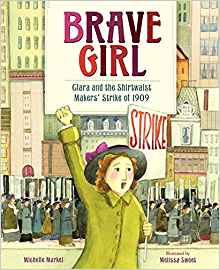
Book Reviewed:  Brave Girl: Clara and the Shirtwaist Makers’ Strike of 1909 – Michelle Markel and Melissa Sweet, Balzer + Bray, 2013

BraveGirlCover

Today is May Day, known internationally as the workers’ holiday, the day to acknowledge the contributions of labor, to honor the history of workers, and to stand up for the rights of working people. In the U.S., our Labor Day is in September; the decision to distance it from the more radical associations of Europe’s labor movement was a conscious one. Fortunately, there are many children’s books, both fiction and non-fiction, which introduce kids to the trade union movement and other social and political organizations that empower the people who produce what we all need or want (The Horn Book just posted a list here).

Even the youngest children can identify with the persistence of the animals refusing to be exploited in Click Clack, Moo: Cows That Type, also available as a beginning reader for beginning activists.  The Day the Crayons Quit shows as much conflict between the crayons as resentment against the people who exploit them, which may be more realistic, if less inspiring.

MY favorite non-fiction picture book (also on the Horn Book list) about a real leader of the labor movement is Brave Girl, the true story of Clara Lemlich, a Jewish immigrant who found her place in the early twentieth century garment workers’ crusade for safer working conditions and adequate pay (I previously wrote about Lemlich for Tablet Magazine.)

The book does not avoid the cruel reality of workers’ daily lives…

Continue reading “Happy May Day!”

Story of Hate, Not Hope

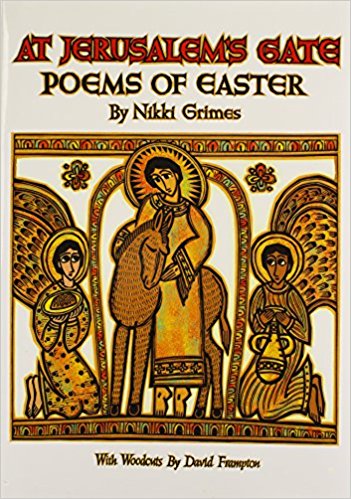
Book Reviewed:  At Jerusalem’s Gate: Poems of Easter – Nikki Grimes and David Frampton, Eerdmans’ Books for Young Readers, 2005

gate_cover

Recently, while writing about another book with illustrations by David Frampton, I came across his collaboration with the esteemed poet and Laura Ingalls Wilder Award recipient, Nikki Grimes.  I read some selections online, and then ordered the book.  I was deeply disappointed to read a work which is a disturbing repetition, even if its poetic language is sometimes beautiful, of some of the worst misrepresentations of Judaism and the life of Jesus I have read in a  modern children’s book.  At Jerusalem’s Gate was clearly not inspired by anti-Semitic rancor, but by Ms. Grimes’s deeply held Christian faith. However, I feel compelled to point out how insidious is her unquestioning acceptance of the Gospel narrative, especially those parts which depict Jesus’s fellow Jews in a way that led to centuries of brutal violence and oppression.

The Gospels were written between forty to sixty years after Jesus’s death, and the New Testament was not codified until around 140 C.E. By that time, early Christians were beginning to make inroads in proselytizing to Romans.  Eventually, Christianity’s origins as a Jewish sect would be denied, and the Church insisted on emphasizing the demonic nature of the people who had supposedly denied their own Messiah, the Jews.  An essential part of this myth, used to defend Christian persecution of the Jewish people, was the constant insistence that the Jews had killed Christ.  Frequent reenactments of the torture and execution of Jesus in the form of Passion Plays, popular lore, and Christian teaching, inculcated hatred of Jews very deeply in the peoples of Europe and their colonies. Ultimately, even the anti-religious Nazis were able to exploit this disease to circumvent opposition to their policy of annihilation.

I would like to quote from these poems and point out how several anti-Semitic tropes form the core of Ms. Grimes’s story, one that is meant to teach children about Easter.  Children will learn from this book that the Jewish people and their leaders were greedy and cruel, and deliberately sought the death of Jesus.

Continue reading “Story of Hate, Not Hope”

Owl Can’t Sleep, Writes Poems


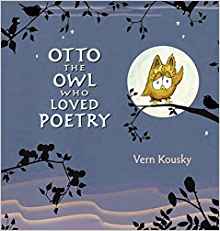
Book reviewed:  Otto The Owl Who Loved Poetry – Vern Kousky, Nancy Paulsen Books, 2015

There is whole category of children’s books about owls with a kind of sleep disorder; they want to stay awake in the daytime, when nocturnal animals should be fast asleep.  There are obvious challenges to socializing when most other species are not awake.  Some of the most endearing examples of these stories are the Little Owl books by Divya Srinivasen, and Brian Won’s Hooray for Today!

otto

In Otto the Owl who Loved Poetry, Vern Kousky has created a more anxious and insecure creature, one whose circadian rhythm problem is exacerbated, but finally resolved, by his literary creativity.  Kousky is both author and illustrator of Otto’s tale. His portrait of a sleepless owl who finds both himself and friends by writing poems, may speak to parents more than to children.

We meet Otto perched on a branch, enclosed in a crescent moon against a very dark sky. He looks upset.  No wonder, because “Otto is not like the other owls of the forest.”  When others are sleeping, he prefers to read books, although even this activity doesn’t seem to make him happy, judging by the picture of him immersed in a volume of Keats.  Worse, he doesn’t want to hunt mice, but to make friends with them.  Otto’s peaceful nature makes him a literary heir to Ferdinand, but without the bull’s rejection of fame.

Continue reading “Owl Can’t Sleep, Writes Poems”

Israel’s 70th Birthday

Book reviewed:  Jerusalem, Shining Still – Karla Kuskin and David Frampton, Harper and Row, 1987

On April 19 of this year many of us celebrated Yom Ha’atzmaut, the birthday of the state of Israel. There are a number of children’s books about contemporary Israel, its history, and sometimes, controversies surrounding the social and political problems which continue to challenge, or plague, the country, depending on your perspective. I am a proud supporter of the Jewish state, as well as a critic of some of its policies, and I am always concerned about ways to present Israel to children with both loyalty and realism. One of my favorites is still Leslie Kimmelman and Talitha Shipman’s Everybody Says Shalom, though others are more problematic).

Jerusalem

In 1987, which seems like such a long time ago, poet Karla Kuskin (1932-2009) and artist David Frampton collaborated on Jerusalem, Shining Still, a visually stunning and literarily ambitious tribute to the ancient and modern city of Jerusalem.  Although it is out of print, because this book takes so unusual an approach, I believe it is worth the effort to find and to share with children.

Kuskin has written a brief history of Jerusalem, interspersed with lines of poetry, although all the language of the book is suffused with poetic imagery.  She begins with an introduction which asks children to imagine Jerusalem in the context of time.  First, she suggests, picture one day, then “three hundred and sixty-five sunrises,” and then try to understand the four thousand years of Jerusalem’s existence.  Beginning with an acknowledgement of Jerusalem’s incredible diversity, symbolized by the fact that “Every morning sixty-four kinds of bread are baked here.” (Obviously, many more today!)

Continue reading “Israel’s 70th Birthday”

A Visit to the Doll Hospital

Book Reviewed:  The Doll Shop Downstairs – Yona Zeldis McDonough and Heather Maione, Viking, 2009

dollshop

A visit to the doll hospital in New Jersey last week with my young adult daughter’s “Beth” doll from the Alexander Doll Company’s Little Women series sent me back to an underappreciated example of modern doll books.  The Doll Shop Downstairs, as well as its sequel, The Cats in the Doll Shop, follow a familiar path in chronicling the attachment of children for their dolls.  However, it also offers a charming and detailed introduction for elementary age readers to life in New York City during World War I, as well as the way that immigration changed the city.  A blurb taken from Kirkus Reviews compares The Doll Shop Downstairs to Rumer Godden’s The Story of Holly and Ivy and to Sydney Taylor’s All-of-a-Kind Family. Certainly, the happily resolved doll adoption theme of Rumer Godden’s book is in an influence, and the immersion in Lower East Side Jewish immigrant life immortalized in Taylor’s books is made available to a new audience.  Zeldis McDonough even includes a helpful author’s note, glossary, and timeline to guide readers who are probably less informed than Taylor’s original fans.

By far the most interesting element of this novel is that it is based on the childhood of “Madame” Beatrice Alexander Behrman, a daughter of Jewish immigrants who became one of the first and most successful female entrepreneurs in the American doll industry, long before Ruth Handler created Barbie.

Continue reading “A Visit to the Doll Hospital”

A Child’s Garden of (Quirky) Verses

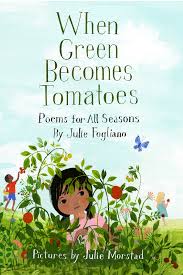
Book reviewed:  When Green Becomes Tomatoes: Poems for All Seasons – Julie Fogliano and Julie Morstad, Roaring Brook Press, 2016

It’s poetry month. There are innumerable books to help you introduce children to poetry.  These range from the classics by A.A. Milne and Robert Louis Stevenson to the modern classics by Jack Prelutsky, Bobbi Katz, Jacqueline Woodson, and so many others.  There are great anthologies, some with inviting illustrations that do as much to attract readers as the poems themselves. Even very young children will at first enjoy listening to brief selections for the rhythm and sound.  Even if you have read many of these, you may not be familiar with When Green Becomes Tomatoes by Julie Fogliano, and one of my favorite illustrators, Julie Morstad (see here and here and here and here).

tomatos

These are poems for the seasons, but they are not about Christmas, Hanukkah, or the Fourth of July.  They are, instead, quirky meditations in lower case, a mix of Haiku-like imagery, e.e. cummings, and William Carlos Williams (“So much depends upon a red wheelbarrow…”). The book is organized by season, with each short poem having a specific date.  Nature is personified, sharing feelings with the child narrator: “today/the sky was too busy sulking to rain/and the sun was exhausted from trying.” Some are meditations on the universe and its inconsistencies from the perspective of a child: “if you ever stopped/to taste a blueberry/you would know/that it’s not really about the blue, at all.” Note the distinction here. The speaker does not deny that the berry is blue, but rather that its blueness is not its essence, which you have to taste to experience.  If you don’t get it, your child might.

Julie Morstad’s pictures are, as always, exquisite.

Continue reading “A Child’s Garden of (Quirky) Verses”

A Tale of Survival and Loss

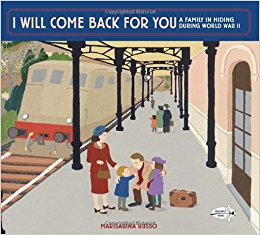
 Book Reviewed:  I Will Come Back For You: A Family in Hiding During World War II – Marisabina Russo, Schwartz and Wade Books, 2011

back

Yom HaShoah, the day on which Jews commemorate the victims of the Holocaust by remembering history, falls this year on April 12.  It is difficult, but also extremely important, to select age-appropriate books for children and young adults on this subject.  There are no perfect guidelines; some children may be ready to process information that others of the same age simply cannot assimilate.  (link to Jewish Book Council review and their lists).  Is it best to focus on tales of survival and resilience, or, in doing so, are we misrepresenting a cataclysmic series of events?  It is dishonest and disrespectful to the memories of those lost to invent a false narrative in the guise of protecting children.  We can only do our best to gradually introduce the highest quality books on this subject and to understand when children are simply not ready.  Marisabina Russo’s picture book, based on the experiences of her own family during World War II, is straightforward in narrating tragic events, but subtle and artful at the same time.

Continue reading “A Tale of Survival and Loss”

Poesiealbum/Poetry Album

Book Reviewed:  The Year of Goodbyes – Debbie Levy, Disney Hyperion Books, 2010

The assumption that children and young adults will want to read poetry is reflected in the many recent books that present history and personal experience through verse to young readers. Some of these, such as Jacqueline Woodson’s Brown Girl Dreaming and Marilyn Nelson’s American Ace, successfully experiment with the boundaries between lyric and narrative, offering the reader a new way to enter the past. Debbie Levy’s The Year of Goodbyes is also an experiment, a profoundly moving one, in combining documents, conversations, and original poems to make the sorrows of the Holocaust individual and real.

yearcover

In the book’s introduction, Levy (also the author of a children’s biography of Ruth Bader Ginsburg) explains the structure of the book through the custom of the poesiealbum, a volume something like autograph books, “but…much more serious enterprises,” which students collected, inscribed, and exchanged with their friends in the Germany of the 1930s, from which her mother became a refugee.  Reproducing translations of actual entries from these books, images, and interweaving her own poems, Levy has attempted to capture the fear and confusion of a young girl about to be uprooted from the only world that she knew.  Levy creates a complete world, bookended between her introduction and a detailed afterward, along with a time line, photos, and bibliography.  The Year of Goodbyes needs to be experienced in this context in order to appreciate the depth of what Levy has accomplished.

“It is January 1938.
I am Jutta Salzberg,
a Jewish girl
in the city of Hamburg,
between the Elbe and Auster rivers,
in the north of Germany.”

Continue reading “Poesiealbum/Poetry Album”