The Fruit of Your Labor

Hello Baby, It’s Me, Alfie – written by Maggie Hutchings, illustrated by Dawn Lo
Tundra Books, 2026

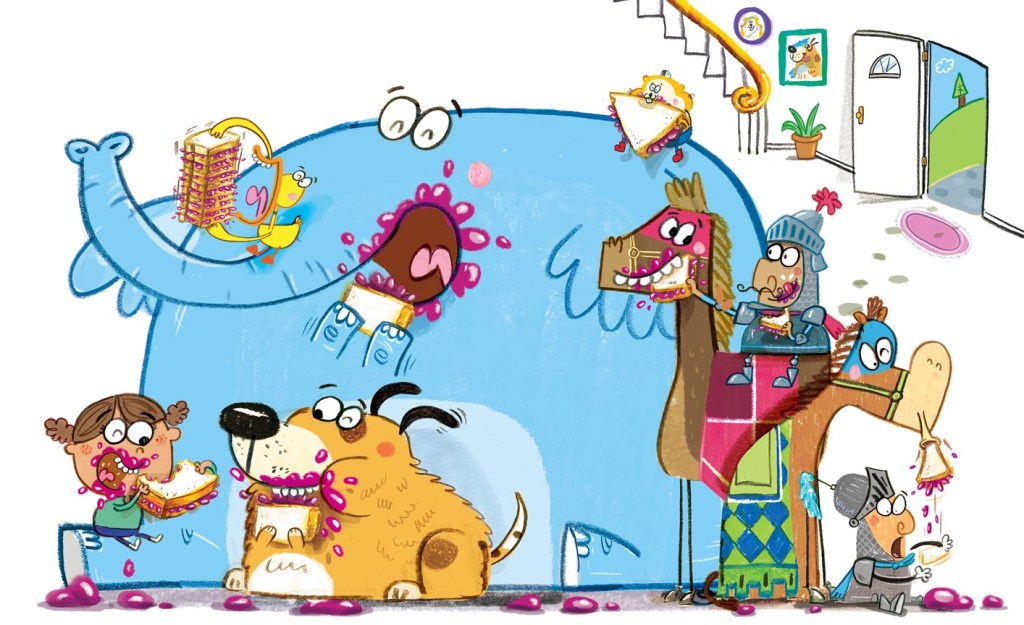
A long time ago, 1938, or 1931 if you lived in France, Babar the Elephant learned of his triplets’ birth with the sound of a cannon. Since them, many more children’s books have appeared with the purpose, more explicit than in the work of Jean de Brunhoff, of preparing older siblings for the birth of a new baby.  Hello Baby, It’s Me, Alfie belongs in the top rank of these works.  Narrated from the point of view of Alfie, the soon-to-be big brother, Maggie Hutchings’ and Dawn Lo’s picture book is totally believable. It is also artistically distinguished, illustrated with vibrant colors reminiscent of Fauvist painting, rendered with pencil crayons and gouache. Hello Baby is funny, tender, and thematically consistent. Each page is full of carefully composed images placed at varying angles, adding up to fully realized home life, both indoors and outside. When Alfie promises that “my heart is pretty big. So I’m sure I’ll find space for you,” your own heart will resonate with empathy.

The consistent motif that defines the book is Alfie’s curiosity and love, framed by the famous fruit comparisons used to measure a baby-on-the-way.  Someone, probably his devoted parents, have explained the baby’s growth to Alfie, and he is constantly adjusting his expectations. The endpapers prepare us with big, splashy examples of children’s artwork. Fruit is a great subject when you are learning to draw. We enter Alfie’s kitchen, where his bearded and apron-wearing dad is cooking, while his Mom patiently explains that a baby is growing inside her. Alfie’s wide-eyed expression registers surprise, perhaps disbelief.

You know Alfie’s parents, or at least you have met them or seen them in our neighborhood. They are real people, Mom in her green maternity overalls and Dad holding an ultrasound image to show Alfie who is soon to arrive.  Alfie is excited to follow the fruit comparison. He is even wearing a tee shirt covered with bright red cherries as he notes his own height, and learns that the unborn sibling, at 12 weeks, is “as big as a perfect plum” It helps to be concrete when providing children with explanations, especially for events with monumental consequences.

There is a fine line between emotion and sentimentality; Hutchings and Lo succeed in evoking a strong response without veering into patronizing territory. When Alife lies against his mother’s belly and feels the baby kick, he interprets this prenatal action as a sign of love, reminding the now mango-sized creature that his older brother is full of love, as well. Alfie communicates essential information to his sibling, including the fact that sometimes fear is part of life. When his dog is frightened of thunderstorms, Alfie hugs him..  This statement is not random; he intuits how vulnerable this future baby, now the size of a mere cauliflower, might feel when he joins their family.

At Alfie’s fourth birthday party, the pictures highlight a lovely bit of formality, with his mother now wearing a black and white polka-dotted dress accented by a pearl necklace. Dad takes a photo portrait of the scene. If you are a parent, I know you may be thinking that Alfie doesn’t actually know what to expect. The addition of a baby is not, at least at first, going to be unmitigated joy for him. It will be difficult. Again, there is an allusion to past and future feelings. Alfie has painted a rainbow for the baby, but he ran out of the yellow needed to complete his creation.  “That’s what the crying was about.” Maybe. He is upset enough to need a reassuring embrace from his father.  His mother is now really large, but still almost beatifically calm. 

The book ends, not with the typical picture of a newborn, but with Alfie looking into the crib that his father has carefully assembled.  The inside of the dustcover is a prenatal growth chart measured by pictures of produce. I will summarize by returning to Babar, because the stunning visual quality of this book elevates it way above the level of handy didactic works on the same theme: “Truly it is not easy to bring up a family…But how nice the babies are! I wouldn’t know how to get along without them any more.” Words to live by, for Alfie and his growing family.

Chanukah 2025/5786

Hanukah Money – written by Sholem Aleichem, translated and adapted by Uri Shulevitz and Elizabeth Shub, illustrated by Uri Shulevitz
Greenwillow Books, 1978

This year’s celebration of Chanukah has been marked by a horrific tragedy. The slaughter of 15 people, with many more injured, is now inseparable from the religious and cultural festival this year, but it cannot destroy the meaning of the holiday.  The great Yiddish author Sholem Aleichem (1859-1916) often wrote about both suffering and resilience. In his short story “Hanukah Money,” translated and adapted, and illustrated by Uri Shulevitz (who died earlier this year), Sholem Aleichem relates the tale of two young brothers eager to receive the traditional gift of gelt while their family observes the holiday. (Everyone knows of Sholem Aleichem, and you can find more of my reviews of Shulevitz’s brilliant work here and here and here.)

The boys’ mother is busy cooking latkes (potato pancakes). Their father recites the blessing on the candles. He understands the boys’ impatience, and rewards them with their small gift. While they spin their dreidels, their father and Uncle Bennie play checkers, discussing strategies of the game as if it had grave importance: “‘What’s to be done, what’s to be done, what’s to be done?’ intones father.” More relatives arrive and bring coins. The boys’ innocence, within their clearly impoverished home, reflects both their unawareness of material deprivation, and their joy in this occasional opportunity to delight in relative plenty.  Even counting the coins becomes a ritual and a game framed by playful language: “One chetvertak and one chetvertak makes two chetvertaks, and another chetvertak makes three chetvertaks, and two grivenniks is three chetvertaks…”

Shulevitz’s pictures, resembling sepia engravings, feature exaggeratedly comic figures. The children seem like small adults and the adults themselves have child-like limitations.  Some of the objects surrounding them are Hebrew prayer books, a wall of Jerusalem’s Tower of David, and a chanukyiah (menorah) displayed in the window.  When one brother dreams that the cook, Breineh, flies into the room, she is carrying a platter, not of latkes, but of paper bills. “Motl swallows rubles like pancakes,” before going back to sleep. Money is abstract and fungible, but available food fills an immediate need. The boys’ needs are briefly fulfilled in the unique customs of the Festival of Lights.

Let It Snow

The Snow Theater – written and illustrated by Ryoji Arai, translated from the Japanese by David Boyd
Enchanted Lion Books, 2025

The art of Ryoji Arai’s The Snow Theater demands strong adjectives: intense, stunning, original, but also: unpretentious, dream-like, and accessible. The reason for this contrast, aside from the artist’s incredible gifts, is the imagery’s blend of naiveté and sophistication, with splashes of color as well as carefully delineated figures. Arai’s pictures capture what it feels like to be a child, and specifically to be captivated by the experience of snow. Snow as theater is not at all artificial, from a child’s point of view. It is a gift, perhaps unanticipated, that then takes on different qualities, including joy. It is familiar, but can also be strange.

There are innumerable children’s picture books about snow, and many are excellent, beginning with the Ezra Jack Keats classic The Snowy Day (see some other examples here and here and here and here and here and here and here). The Snow Theater is not unique, but both its design and philosophy and language are distinctive enough to merit acclaim (it is translated by David Boyd, who has translated some of the Chirri and Chirra books, also published in English by Enchanted Lion). It opens indoors, where two boys are “keeping warm” and “looking at a book.” The first picture has the reader looking towards them from outside, where they are framed in the window, almost like residents of a dollhouse. Then, a two-page spread is divided into several more specific descriptions of their activity, and one larger scene of it result. At first they are sharing a picture book about butterflies in a cooperative spirit. Then, the friend of the boy who lives in the house “badly wants to borrow the book,” and the idyll is ruined. That adjective, “badly,” prepares you for the act of, perhaps accidental, aggression that results when the book is damaged.

Now the boy is devastated. Worse, the book is actually one of his father’s favorites, adding a dimension of anxiety to an already tense situation. Arai traces the arc of the boy’s feelings. They boy had wanted to share the book with his friend, not only because they both liked butterflies, but in order to communicate its special status in his family. Worried, he leaves the house and begins to ski through the snow. Suddenly, he finds himself looking into a miniature theatrical production. There are “snow people,” including ballerinas. They surround him physically, occupying his senses. Then the scale seems to change, as he sees “a large theater in front of him.” Yet the performers, who include singers, still appear to be tiny. “Everybody floated quietly to their places, like freshly fallen snow.” There are echoes of Tchaikovsky’s Nutcracker, with impressionistic colors. Snow people reflect the color of rainbows. Icicles are suspended from their limbs and odd pieces of scenery, like an Easter Island head, occupy the elaborate background.

Then the show ends. As in The Nutcracker, viewers wonder if the performance was a dream, or if the protagonist had really undertaken a mysterious journey. The kinetic, and ephemeral, experience of a snowstorm seems to have been the boy’s escape from emotional difficulty. He reaches across the snow to find his friend against a field of butterflies, only some of which are enclosed within a book. The boy’s father appears with the awaited resolution: “Let’s get you home.” A cup of hot cocoa by a warm stove brings back domestic security, but the song of the snow people is reprised in the boy’s memory.

Ready, Set, Anne

Anne: The Chapter Book Collection – adapted by Kallie George, illustrated by Abigail Halpin
Tundra Books, 2025

Anne Dares – adapted by Kallie George, illustrated by Abigail Halpin
Tundra Books, 2023

For fans of Kallie George and Abigail Halpin’s wonderful collaboration in bringing the work of Lucy Maud Montgomery to chapter book readers, Tundra has issued a boxed set of paperback editions.  As you will read on my earlier posts (see here and here and here and here), this series is both an accessible introduction to the original Anne of Green Gables, and each volume a  wonderful illustrated novel that stands on its own merits.  Abigail Halpin’s pictures offer her own perspective on the characters and setting, and Kallie George has succeeded in writing an homage to Montgomery’s vision, not a bland imitation.

In Anne Dares, the bold aspect of Anne Shirley’s personality propels her to take some risks.  These include the physically daring walking on the edge of a fence, as well as the courage to perform in her school’s recital. The fence-walking stunt even requires her to ignore the advice of kindred spirit Diana. Ever conscious of a dramatic situation, Anne assures her friend, “And if I do perish,…you can have my pearl-bead ring.

Her performance involves facing her apparent nemesis, Josie Pye, as well as Gilbert Blythe, the boy whose thoughtless teasing will prove to be a mere mask over his true feelings. Her new puff sleeved dress, a gift from her beloved father figure, Matthew, gives her some of the strength she needs in front of an audience.  The dress is both a cherished article of clothing, as well as a tangible proof of the love that now characterizes her home life, although her initial arrival had provoked skepticism.  On stage, at first “she thought she might faint.” Daring or not, she is still afraid. Fortunately, “she knew she must live up to those puffed sleeves.”  Montgomery’s heroine, re-imagined by Kallie George and Abigail Halpin, lives in two worlds, where undeniable difficulties and dreams of beauty are intertwined.

In the Pocket

The Newest Gnome – written and illustrated by Lauren Soloy
Tundra Books, 2025

The Pocket is where the gnomes live, in Lauren Soloy’s remarkable universe of small creatures dedicated to choosing hats, telling stories, and generally explaining and appreciating the world. I was impressed with the first gnome book, The Hidden World of Gnomes, and I’m thrilled that Soloy and Tundra believed in them, and that they merited a second look (I’m also a fan of Soloy’s other work, as you can see here and here and here).  Although the gnome books are rooted in tradition and folklore, they are also new and singular.

When the book begins, the existing gnomes, including Cob Tiggy, Twiggy Dell, Minoletta, and Beatrix Nut, are about to welcome a newcomer to the Pocket.  These creatures, whose names evoke both Beatrix Potter and a kind of cosmopolitan flare (Minoletta, Hotchi-Mossy), need to meet in their mushroom circle to discuss the latest Pocket resident. When Grolly Maru arrives, they sense the need for reassurance, similar to Winnie the Pooh’s helpful and sustaining words: “Everything will be all right.”

After a good night’s sleep under the mushrooms, the gnomes will be prepared to teach Grolly Maru essential skills. As in Babar’s Celesteville, every inhabitant has a specific job and role to play. When Grolly Maru expresses concern that the changing moon may eventually disappear, does this reflect and anxious personality, or just a basic lack of familiarity with the environment?  It’s up to the reader to decide, but since Abel Potter shows Grolly Maru other round and spherical items from nature, it doesn’t matter.

The pictures feature gnomes interacting with one another, along with close-ups of objects that fill their lives: dandelions, yarrow, marbles, ants, and suggested exercises.  There is a recipe for Bonnie Plum’s baked apple with blackberries, which, considering the scale of gnome to ingredients requires both hardware and strength.  The gnomes are artisans, designing grass baskets: “It’s not as easy as it looks!” (Who would expect it to be easy?). Their overarching purpose is constant fidelity to the idea that each individual is unique, but that we are all part of something greater. Lauren Soloy’s artistic vision is fully realized, in a universe of beauty and comfort, populated by small beings with great wisdom.

How To Draw a Strawberry

15 Minute Art Drawing: Learn How to Draw, Colour and Shade – written and illustrated by Jessica Smith
Hardie Grant Books, 2023

I have many books that teach aspiring artists how to draw, using different media.  Some are specifically designed for children, and others for adults.  Jessica Smith’s 15 Minute Art Drawing is beautifully adaptable for older children and young adults, even if those groups are not its exclusive audience.  Smith’s instructions are clear, her tone reassuring, and the illustrations’ simplicity and rich color are inspiring.  Creating images of a strawberry, a dalmatian, or a pattern of repeating stars are within reach of almost anyone.

Drawing can be frustrating, especially for children, or adults, who are concerned with making mistakes. If you have ever watched a child crumple up a piece of paper when results don’t match her expectations, you will appreciate the design of this book, where optimism and realism both guide the artist.  Two wonderful books for both children and adults that offer an overview of the artistic process are Elizabeth Haidle’s Drawing Is and Jeff Mack’s time To Make Art. For young children, the stories in Builder Mouse, by Sofia Eldarova, and Spaghetti: A Mouse and His Treasure, by Merrilees Brown, depict animal artists who are undaunted by obstacles.

The composition of Smith’s book, including the ratio of image to white space, is perfect. “Project 2: Citrus” starts with a freely sketched oval of color in primary and pastels, and moves toward a finished fruit.  Pens, markers, and pencils can all be part of the project; Smith offers specific suggestions, but oil pastels and watercolor would also work. Often she writes in the first person, advising, but not directing: “I used a blue pen here to add the shadow and I love how you can still see the color of the orange through it.” I love how she phrases that, expressing emotions about how rewarding it is to draw.

“Project 11: Leaves” could not be better for the artistically timid: “This simple project is nice and speedy, and uses only three steps!” Yet the resulting drawings look sophisticated and evocative. I can’t emphasize enough how difficult that is to achieve in an instructional art book.  Smith goal seems to be a genuine desire to enlist the reader’s enthusiasm. She manages to combine a sense of humility and enthusiasm about the results of her work, and, by extension, that of her readers.  Some of the other projects include a bowl of noodles, a house, a mermaid, and a woman dressed in “busy patterns and popping colours” and holding a grid-patterned shopping bag.  There are even two-page spreads of drawings that take a step back from the instructions and simply focus on beauty. The color reproduction is excellent.

The sum of an art book may be greater or less than its parts.  15 Minute Art Drawing lays out a premise, verbally and visually, and guarantees success within its terms.  The book begins with an autobiographical sketch and includes an overview of tools, materials, and the use of color.

Invitation to a Voyage

Journey of the Humpbacks – written by Juliana Muñoz Toro, illustrated by Dipacho, translated from the Spanish by Lawrence Schimel
Eerdmans Books for Young Readers, 2025

Although this fabulous informational book about humpback whales has not relation to Baudelaire’s poem, “L’invitation au voyage,” I could not help thinking of its title and famous refrain when I turned the first page.  The author states her purpose: “This is an invitation for us to go on a journey. We don’t need a backpack or shoes. Just our eyes wide open.” Every book fits this description. By framing the experience of reading this way, Juliana Muñoz Toro raises expectations and meets them. Baudelaire invites readers to encounter a world where “Là, tout n’est qu’ordre et beauté,/Luxe, calme et volupté,” (“There, there is nothing but order and beauty,/Richness, calm and beauty.”) Instead of dream world, Muñoz Toro, and illustrator Dipacho, extend an invitation to the natural order and beauty of the environment.  Science books for young readers need not omit a sense of wonder.

I won’t try to summarize the wealth of information in this book about the often misunderstood sea mammal, the humpback whale, otherwise known as Megaptera novaiangliae. Did you know that its Latin name means “giant-winged New Englanders?” Probably not, even though you may associate whales with New England, where this one was originally sighted by Europeans.  To orient you on your journey, Dipacho’s elegant graphics, paired with captions, text boxes, and color judiciously added to black-and-white.  Some of the questions even present the answer upside down, adding the sense of a game.  To help you envision scale, a parade of Emperor Penguins sits atop the huge creature, whose principal features are carefully labeled.

If you come to the book with some basic knowledge of humpback whales, you will still learn a great deal. Nothing is necessarily obvious, including the basic fact that every part of the environment is related to one another. “Nothing that happens in the water does so in isolation.”  “Lunch time” involves a nutrients provided by algae, sardines, and krill.

The pictures are meticulously accurate, but also personify the whales a bit, with their balletic movements that seem almost joyful.  Referring to the segments of their day as “nap time, “ “time for adventures,” and, of course, “time to breathe,” sets a tone of familiarity, but also awe: “The breathing of humpback whales is long and deliberate, as if they were meditating.” Note the phrase “as if.” 

When people appear, they are comically observant, watching the whales and taking notes of what they see. Here Dipacho presents richer colors than in the extensive factual scenes, as he brings humans into the picture.  They are important and provide perspective, but they don’t compromise the whales’ starring role. In fact, a wonderful two-page spread categorizing the baleen whale family (image) identifies the humpback, with a touch of humor, as “the protagonist of this book.”  Another concise and complete section on the whale’s reproductive life is, again, accurate and also performative.

Steps numbered in sequence give the facts and also allow the reader to draw her own conclusions. “She alone will take care of her offspring.” The “Have You Wondered” section reveals how a calf learns to identify its mother.  The book’s backmatter declares that it was created by “a team of people who love whales.” By this point, you will not have any doubt of that essential fact.

A Bridge to Somewhere

Late Today – written by Jungyoon Huh, illustrated by Myungae Lee, translated from the Korean by Aerin Park
Eerdmans Books for Young Readers, 2025

The opening endpapers of Late Today show an overcast sky. The following two pages feature the consequence, a bridge accompanied by the warning that “Morning rush hour traffic is congested all over Seoul,” with the report’s words alternating in word of the report alternating in level relative to the image.  The title page shows an adorable kitten with golden brown eyes that match the lid of the carton which has become her bed. Readers join the traffic jam and the rescue mission.

Jungyoon Huh’s minimalist text (ably translated by Aerin Park) conveys just exactly the amount of information needed.  Myungae Lee’s illustrations, rendered in colored pencils and oil pastels, combine black and white scenes, graphic novel panels, and earth and jewel tones against white background. They are beautiful in their simplicity, but also convey motion, sense impressions, and the imminent threat of losing a kitten on a traffic-clogged bridge.  The black font ranges in size, with some pages reminding me of the lettering used in Margaret Wise Brown and Leonard Weisgard’s The Noisy Book, and sequels. (The Winter Noisy Book is illustrated by Charles G. Shaw.)

Public transportation passengers, each in isolation, express their own thoughts about the danger, and their appropriate response to the kitten’s plight.  Parents and caregivers sharing the book with children will want to discuss all the implications of these natural, but possibly inadequate, emotions: “Why is no one helping out,” “Too heartbreaking to see. I’ll just look away,” and Oh no…what should I do?” One incredible two-page spread is a bird’s eye view of the vehicles, each one inadvertently threatening the tiny kitten weaving between them. The text is enclosed in a rectangle similar in size to the vehicles themselves, the words visualizing the ominous situation.

Cinematic techniques dedicate to full pages to a darkening storm, and another two to pelting raindrops.  Readers pause and take a deep breath. Then, a driver rescues the kitten, his or her hands cradling the animal in a gesture of human kindness. Someone has intervened at exactly the right moment. The cars and buses move. Everyone is relieved.  Being late is sometimes exactly right.

The Other Side of Trouble

Trouble Dog: From Shelter Dog to Conservation Hero – written by Carol A. Foote, illustrated by Larry Day
Eerdmans Books for Young Readers, 2025

There is a lot of action in Trouble Dog. There is also an abundance of information, a likeable main human character, and a surprising amount of humor.  Carol A. Foote has combined two real-life conservation dogs into one fictional hybrid named Tucker.  Caught in a cycle of adoption and rejection, he is always returned to the animal shelter that has given up on placing him. Then, along comes Laura, a classic heroine who refuses to give up on an unlikely pet who has driven everyone else to distraction. Larry Day’s pictures are full of action and color, setting a motion Laura and Tucker’s journey from trouble to success.

The opening end papers introduce Tucker in some typically frenetic canine activity. Then it escalates, as every home the shelter finds for him is subjected to chaos.  Tucker manages to overturn an aquarium and books in one place. He grabs a girl’s sweater and won’t let go. A man attempting to read his newspaper looks enraged as Tucker grabs it and leaves a litter of overturned items in his wake.  When we next see him, Tucker is a lonely prisoner in a cage, “watching everyone pass him by.”

Laura is a sturdy figure with a ponytail, flannel shirt, and jeans.  She is as no-nonsense as Mary Poppins, and she also intuits something about Tucker that everyone has missed. His energy can be put to good use.  Even though her home is quickly as disordered as every other place Tucker has been, she has a vision and the practical sense to implement it.  Dogs, as readers learn in Foote’s detailed backmatter, have a highly developed sense of smell.  Laura observes Tucker carefully and evaluates his routine and abilities.  She isn’t just kind and patient, but methodical, as well. 

Eventually Tucker gets a job, or a series of jobs. The details in the text are embedded in words as colorful as the pictures. “Tucker’s first job was to find rosy wolf snails in Hawaii.” (image). He travels the world, sniffing out “moon bears in China, mountain lions in Chile, and elephants in the jungles of Myanmar” in a narrative as exciting as one by Jules Verne, but rooted in the truth.  In a two-page spread, Tucker crosses the gutter between pages. An elephant marches ahead of him, dwarfing the dog in size, but not in energy.  Three researchers form a determined row in the background, to his left.  The image captures the cooperation necessary for Tucker to succeed in helping scientists to learn about species in need of protection.

Not every outing produces results easily. In Zambia, Laura’s optimism is tested, looking for cheetah scat and coming up short.  When Laura insists that “I trust Tucker,” who finally leads them to the right location, she is not relying only on her affection for the dog. Through hard work and astute decisions, she and Tucker have become a team.

Four pages of additional information and photographs are organized in a question-and-answer format, giving the bigger picture of how conservation animals, as well as other service animals, provide essential services.  A selected bibliography is accompanied by an oval portrait of Laura and Tucker relaxing at home. I hope that no one misses one title, by Alexandra Horowitz, Inside of a Dog: Young Readers Edition: What Dogs See, Smell, and Know. Just parenthetically, the title refers to the famous quip usually attributed to Groucho Marx: “Outside of a dog, a book is man’s best friend. Inside of a dog, it’s too dark to read.”  It’s definitely not too dark to read inside this book.
Imagining Who Wore Them

Little Shoes – written by David A. Robertson, illustrated by Maya McKibbin
Tundra Books, 2025

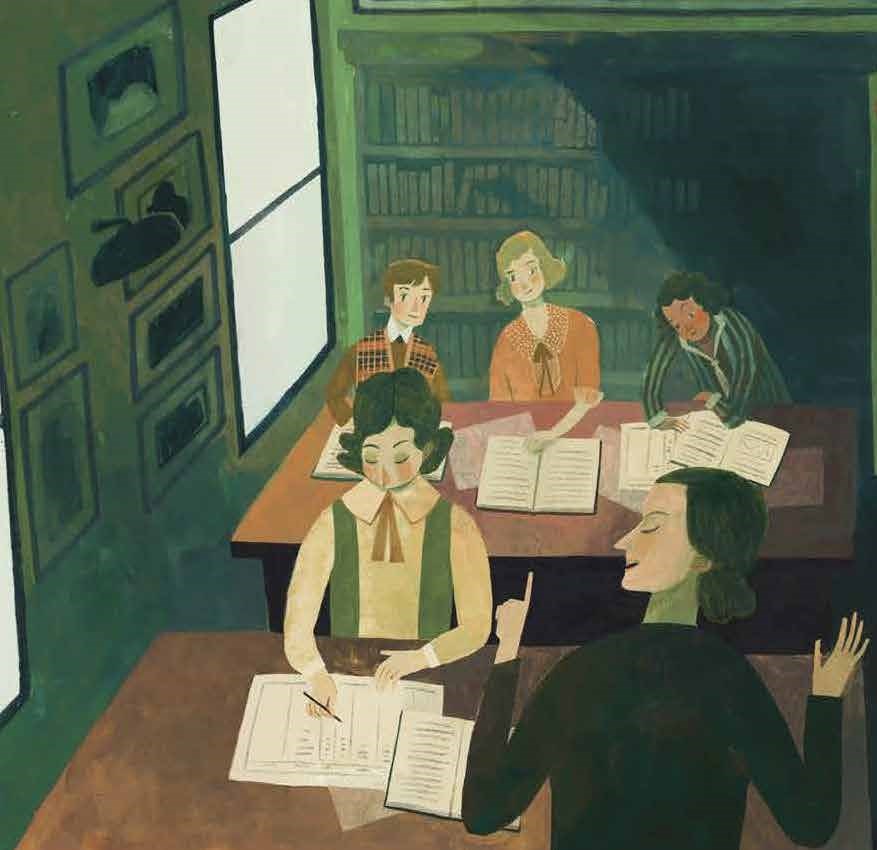
Many Indigenous children, in both Canada and the U.S., suffered the trauma of being removed from their families and placed in residential schools funded by the government and often controlled by different Christian denominations.  Deprived of their heritage, and often subject to physical and emotional abuse, these children would be lost to history if not for concerted efforts to publicize their experience and to demand restitution and atonement.  Little Shoes is a picture book by acclaimed author David A. Robertson (see my reviews here and here and here), a member of Norway House Cree Nation, illustrated by Maya McKibbin, of Ojibwe, Irish, and Yoeme heritage (Robertson and McKibbin have collaborated before). They have taken on the weighty task of presenting a catastrophic loss to young readers, but also offering hope and determination.  With poetic text and images of family life that are both familiar and mystical in tone, they have achieved this goal.

The endpapers feature constellations, introducing a central theme of each person’s place in the universe.  James, who understands the principles of astronomy from his science class, opens the curtains in his room to the moonlight. He asks his mother to clarify how and why his feet remain firmly on the ground if the Earth is spinning in space. The answer is only one of several which his mother will frame truthfully, and also use to elaborate on other questions which will naturally follow. She reassures him that his Kōkom’s, (grandmother’s) explanation about their origins is valid, but adds, “even though you’re from the stars, your home is right here with me.”
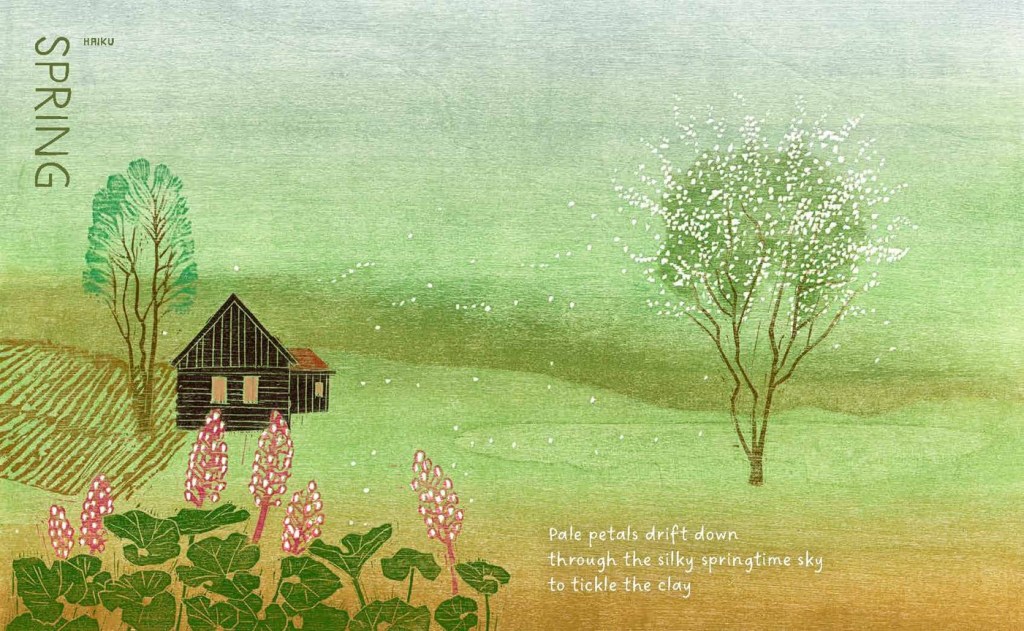
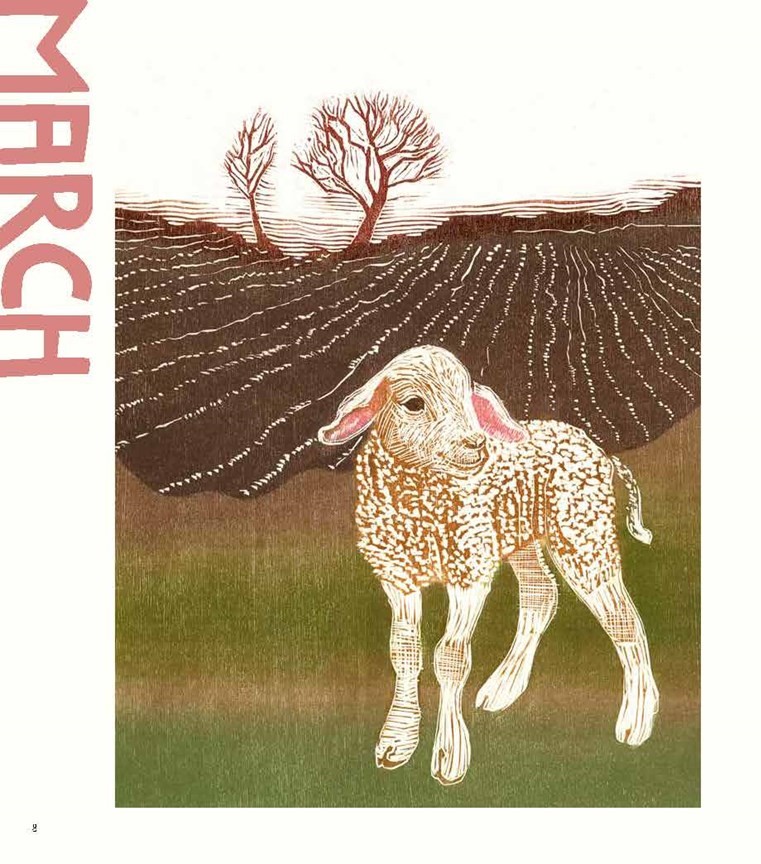
The love between a parent and child, and the enveloping warmth of his community, are anchors in James’s life.  His intense curiosity places demands on a parent who is obviously committed but exhausted, when he returns to her room with a request to hear about “every single constellation,” His own attempt to visualize and trace them in the night sky is insufficient.  The dialogues between children and their caregivers are open ended, and the book swerves from the dimensions of the cosmos to the specific history of injustice that remains unresolved.

James and his kōkom set out for one of their frequent walks, but his time it is transformed into a march.  A daily experience becomes a metamorphosis, and his grandmother takes on the role of teaching about a part of their lives that is far more difficult to internalize that the motions of the planets. The little shoes of the title are those of Indigenous children whose deaths are acknowledged by Kōkom with the haunting phrase that they “had gone to residential school but had not come home.”  Shoes as a metonym for children who have died seems to capture a sense of a life that is unnaturally cut short. Other articles of clothing are perhaps less universal, and small shoes also reflect the scale of the children relative to adults, both those who loved them and those who inflicted torture.  A similar allusion to this loss has been used in many memorials to child victims of the Holocaust. (Of course, while some of those children, like the Indigenous victims, died of abuse, neglect, and disease, many were murdered immediately upon arrival at a death camp.  Chronicling atrocities requires acknowledging both what they share and common and how they differ.)

Robertson and McKibben do not attempt a simplistic response to James’s fears. He interprets the frightening facts through the lens of loneliness, asking his mother how his own grandmother had coped with the deprivation of her isolation in the residential school.  His mother responds that her sister and she had “cuddled,” paralleled by McKibbin’s image of mother and son sharing the same physical contact. Their bond is unbreakable, even if mitigated by anguish.  The honesty of Little Shoes is an antidote to fear.